
| Quick Facts | |
|---|---|
| HEPA capture rate | at least 99.97% of particles at the 0.3-micron size (EPA) |
| AHAM sizing rule | smoke CADR at least two-thirds of the room's area in sq ft (AHAM Verifide) |
| Wildfire smoke sizing | smoke CADR roughly 1x the room's area in sq ft (AHAM) |
| EPA room-CADR example | a 500 sq ft room needs a minimum CADR of about 325 cfm at 8-ft ceiling height (EPA) |
| Classroom particulate reduction | about 50% drop in indoor PM within 10-15 minutes at maximum fan speed, purifier plus ventilation (peer-reviewed classroom study) |
| Ozone exposure ceilings | 0.05 ppm FDA medical-device limit; 0.10 ppm OSHA/NIOSH workplace limit |
| Ozone generator real-world output | documented at 0.50-0.80 ppm in one case, 5-10x public health limits, even with instructions followed (EPA) |
So, do air purifiers actually work?
Yes, for particles. A HEPA-filtered purifier reliably strips dust, pollen, smoke particles and pet dander from indoor air; it does nothing for gases, odors or the dust-mite allergen already settled on your carpet.
Shopping for a specific model? See the best air purifier we tested — 10 models compared on the specs that decide it.
The honest answer sits in two parts, and most marketing only tells you the first one. HEPA filtration itself is a settled, boring fact: a genuine HEPA filter captures at least 99.97% of airborne particles at 0.3 microns, the size physics makes hardest to trap, according to the EPA. Anything bigger or smaller gets caught even more easily. That's not a brand claim; it's the government test standard the filter has to pass to use the name at all.
Where the marketing gets ahead of the science is in what 'works' implies. A purifier that's aggressively good at pulling smoke particles out of the air will not touch the gas-phase VOCs riding alongside that smoke, and it won't do much for dust-mite allergens, which are heavy enough to settle onto surfaces before a fan ever pulls them in. Independent classroom testing backs up the particle side of the claim: pairing a purifier with normal room ventilation cut indoor particulate matter by roughly half within 10 to 15 minutes when the unit ran at maximum fan speed, a result that holds up if the room and the filter are actually matched to each other.
How an air purifier actually cleans a room
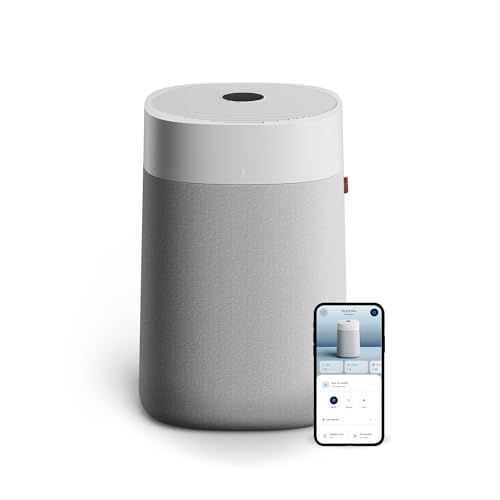
A fan pulls room air through a filter stack, usually a pre-filter, then activated carbon, then HEPA, and pushes the cleaned air back out. Nothing about the process is more complicated than that.
Strip away the marketing language and a purifier is a fan and a filter stack in a box. Room air gets pulled in, usually through a coarse pre-filter that catches hair and lint so it doesn't clog the more expensive layer underneath. Next is often an activated carbon layer: a bed of charcoal riddled with microscopic pores that adsorb gas molecules, including odors, some VOCs and cooking smells. The HEPA layer comes last, physically straining particles out of the airstream through mechanical interception, diffusion and impaction rather than any kind of static trick.
The output number that matters is CADR, Clean Air Delivery Rate, which the EPA describes as the volume of filtered air a unit delivers, rated separately for smoke, dust and pollen because those particle sizes behave differently in a filter. A high CADR on the box means a genuinely higher processing rate, not a marketing multiplier. Run the same unit in a room twice its rated size and the physics doesn't change: the air just takes twice as long to cycle through, and dilution from an open door or foot traffic can outpace it entirely.
What HEPA filtration can't touch
HEPA purifiers were built to catch particles, not gases. They won't neutralize smoke odor or VOCs, and they do little for dust-mite allergen already sitting on furniture and floors.
This is the gap that trips up a lot of buyers. A HEPA filter is a mechanical sieve with no chemistry to speak of, so it can grab the solid smoke particle floating past but leaves the gaseous compounds that give smoke its smell completely untouched. That's the whole reason activated carbon exists as a separate layer: gas adsorption is a different job than particle capture, and no CADR number covers it, since the EPA notes there's no widely used performance rating system for gas removal at all.
Dust-mite allergen is its own case. Mite waste particles are relatively large and heavy, and they tend to settle onto bedding, carpet and upholstery within minutes rather than staying airborne long enough for a fan to catch them. A purifier running in the corner of a bedroom isn't going to out-compete a mattress full of allergen sitting six feet away. Regular vacuuming, washing bedding in hot water and allergen-proof covers do the actual work there; the purifier is a supporting layer, not the fix.
Mold is the third blind spot, and the EPA is direct about it: portable air cleaners 'do not address the cause of mold.' A purifier can pull some spores out of circulating air, but it can't dry out a damp bathroom or fix a leaking pipe. Running one next to an active mold colony without fixing the moisture source just treats a symptom while the cause keeps producing more.
Why size and CADR decide whether it works in your room
A purifier only works if its CADR matches the room. AHAM's rule of thumb wants the smoke CADR at least two-thirds of the room's square footage, roughly doubled for wildfire smoke.
Most 'does it even work' complaints trace back to one of two causes: a bad filter, or a badly matched size. The industry's own sizing math is public. AHAM, the trade group behind the CADR certification program, recommends a smoke CADR equal to at least two-thirds of the room's area in square feet, assuming a standard 8-foot ceiling. A 12-by-10 room, 120 square feet, needs a unit rated for a smoke CADR of at least 80. Undersize that and the purifier is still 'working,' technically; it's just cycling the air too slowly to matter.
For wildfire smoke specifically, AHAM tightens the ratio to roughly 1:1, CADR equal to the room's full square footage, because outdoor smoke infiltration keeps replenishing the particle load faster than a marginal unit can keep up. The EPA's own reference table runs the same logic from the other direction: a 500-square-foot room needs a minimum CADR around 325 cfm. Buy for the room you'll actually run it in, not the living room in the product photo, and the 'does it even work' question mostly answers itself.
Ionizers, ozone, and whether purifiers are safe
Standard HEPA purifiers are safe. The exception is ionizing and ozone-generating models, which the EPA says no federal agency has approved for occupied spaces because of the ozone they release.
For a plain HEPA-and-carbon unit, safety isn't really in question. It's a fan and a filter, and the worst-case failure mode is a clogged filter that just stops working as well. The category that deserves real caution is ionizers and ozone generators, sometimes marketed under the same 'air purifier' label. These charge particles so they stick to walls and furniture instead of getting filtered, and as a side effect, or by design in dedicated ozone generators, they release ozone: a gas the EPA flatly calls a lung irritant capable of causing chest pain, coughing, throat irritation and shortness of breath even at low concentrations.
That's also the honest answer to whether an air purifier can make you sick: an ordinary HEPA model, essentially no; an ozone-emitting one, under the wrong conditions, yes. The FDA's ceiling for ozone output from medical devices is 0.05 parts per million, OSHA and NIOSH cap workplace exposure at 0.10 ppm, and the EPA has traced at least one ozone generator producing 0.50 to 0.80 ppm in real-world use, 5 to 10 times higher than public health limits, even when the manufacturer's instructions were followed. Headaches aren't on EPA's official list of ozone-exposure symptoms, which names chest pain, coughing, throat irritation and shortness of breath specifically. Still, ozone and other indoor air irritants are commonly self-reported headache triggers, so anyone sensitive is better off skipping the ionizing setting and sticking with plain HEPA filtration.

Are air purifiers worth it, or a waste of money?
A correctly sized HEPA purifier, run continuously in the room that needs it, is worth it for allergy, pet-dander and smoke situations. An undersized or wrong-tech unit left running for ambience is the version people call a waste of money.
The skepticism around air purifiers, and there's plenty of it in forum threads asking whether the things actually do anything, is usually a sizing complaint wearing a technology complaint's clothes. Someone buys a compact unit for a great room, runs it on the quiet, low setting to avoid the noise, and wonders why their allergies haven't budged. The filtration itself was never the failure point.
Where the math genuinely favors buying one: allergy and asthma triggers, pet dander, and particulate smoke, the three situations with the clearest research behind particle filtration. Where it's a lot shakier: chasing a 'fresh' smell or VOC odors with a HEPA-only unit, or expecting any purifier to fix a mold problem instead of the moisture causing it. If you want the shortlist once you know what you need, our best air purifiers guide ranks current HEPA models by CADR and room coverage, and the full air purifier hub is the place to start if you'd rather browse by use case first.
None of this makes a purifier a magic fix, and it was never sold as lab equipment. It's a household appliance with one well-documented job. Bought for the right room, sized against the AHAM number instead of the marketing square footage on the box, and run on HEPA rather than an ionizing mode, it does the particle-filtration job the research actually supports. Everything past that is a different appliance's problem.