Ninja vs Vitamix blender: how the brands compare
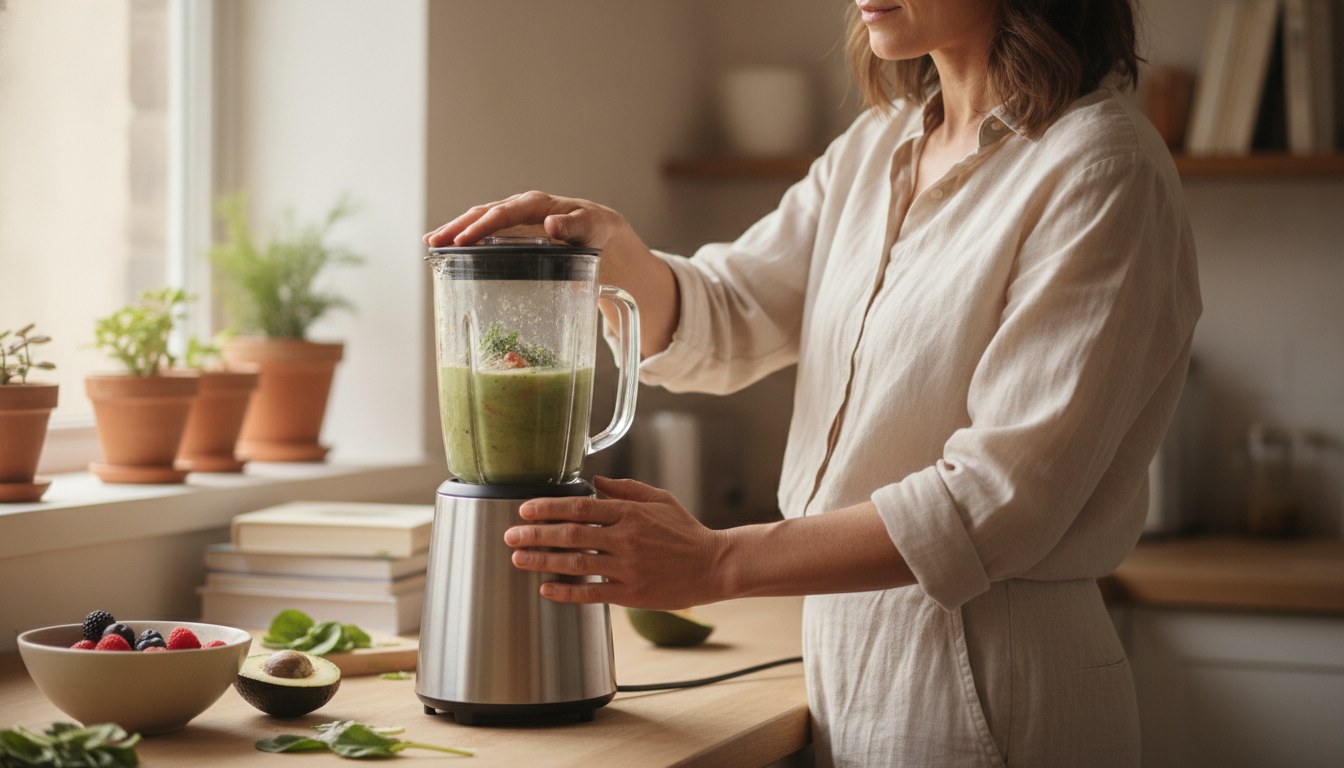
Ask five people which blender brand is "better" and you'll get five confident, contradictory answers. Ninja owners point to a full-size pitcher and a to-go cup for a fraction of what a single Vitamix container costs. Vitamix owners point to a machine still running smoothies a decade later. Both of them are right about their own kitchen, which is exactly why this comparison is worth doing properly instead of picking a side.
Ninja vs Vitamix blender comes down to price tier and use case, not one brand beating the other. Ninja sits in the budget-to-mid-range tier, with peak-watt motors built for smoothies, ice crushing, and food-processor combos. Vitamix sits at a premium tier, built around continuous horsepower, self-cleaning programs, and long-term durability.
| Spec | Ninja | Vitamix |
|---|---|---|
| Price tier (this comparison) | Budget to mid-range | Mid-range to premium |
| Motor power spec | Peak watts, up to 1800 peak watts | Continuous horsepower, commonly 2-2.2 HP |
| Largest container | 72 oz pitcher plus smaller to-go cups | 48-64 oz containers |
| Automatic blending programs | Auto-iQ timed pulse/pause presets on select models | 3-5 dedicated programs (smoothie, soup, frozen dessert, self-clean) standard on most models |
| Self-cleaning cycle | Not listed on models in this comparison | Standard on Propel, Explorian, and Ascent models, about 60 seconds |
| Food-processor attachments | Available on the Kitchen System (8-cup bowl) | Not offered on models in this comparison |
| Container material | BPA-free plastic | BPA-free plastic |
| Bundled accessories | To-go cups and lids included on several models | Tamper included; no to-go cups on models compared here |
Ninja vs Vitamix blender: what actually separates the two brands
Ninja builds affordable, feature-dense blenders with bundled cups and food-processor attachments; Vitamix builds fewer, pricier machines centered on motor durability and automated blending programs.
Shopping for a specific model? See our best blender picks — 10 models compared on the specs that decide it.
Ninja's approach is volume and versatility at a price most kitchens can justify without much debate. The Ninja Full Size & Personal Blender I All-in-One ships with a 72-ounce pitcher and two 24-ounce to-go cups under one 1800 peak watt motor base, while the Ninja Kitchen System pairs a similar pitcher with an 8-cup food-processing bowl for chopping and dough work a straight blender can't do. That range tops out in the mid-range tier in this comparison, which buys a lot of accessory bundling.
Vitamix's lineup reads differently from the first spec. The Vitamix Ascent X4 Blender lists five automatic blending programs, a self-cleaning cycle, and a 48-ounce container built around what the listing calls a professional-grade motor, and it sits at the premium end of this comparison's price range. Even Vitamix's lower-priced Propel and Explorian models keep the self-cleaning program and multiple blending presets as standard, features that don't show up on any Ninja model in this lineup regardless of price tier. Neither approach is wrong; they're built for different assumptions about how often the blender runs and how long it needs to last.
Price tier and what each one actually buys you
Ninja's compared models sit in the budget-to-mid-range tier; Vitamix's models run mid-range to premium, so a buyer choosing between the two brands is usually choosing a price bracket first and a brand second.
The price spread here isn't subtle. On the Ninja side, the budget-tier Ganiza Smoothie Blender lists a 900W motor and a 15-piece cup-and-grinder combo, while the flagship Ninja Full Size & Personal Blender I All-in-One tops the brand's range at the upper edge of mid-range. That's the entire Ninja tier in this comparison, start to finish, and it overlaps almost none of Vitamix's range.
Vitamix starts roughly where Ninja tops out. The most affordable model carrying the Vitamix name in this lineup, the Vitamix Propel Series 510 Blender, sits at the mid-range end of the brand's tier, and the range climbs to premium for the Ascent X4. A buyer strictly comparing price tiers will find every Vitamix model here costs more than every Ninja model, full stop; the real question isn't which brand is cheaper, it's whether the features that come with Vitamix's higher tier, self-cleaning programs, multiple blending presets, a motor built around sustained rather than peak output, matter enough to justify skipping Ninja's entire lineup.
Motor power: peak watts vs continuous horsepower
Ninja advertises peak wattage, a brief maximum draw, while Vitamix advertises continuous horsepower, a rating built around sustained output, so the two numbers aren't directly comparable on the box.
This is where a lot of Ninja vs Vitamix blender arguments go sideways, because the brands don't measure power the same way. Ninja's spec sheets lead with peak watts: 1800 peak watts on the Full Size & Personal Blender, 1100 peak watts on the Nutri-Blender Pro, 700 watts on the compact Fit model. Peak wattage is the motor's brief maximum draw, not what it holds through an entire blending cycle, which matters when comparing across brands rather than within one lineup.
Vitamix's listings lean on continuous horsepower instead, commonly 2 to 2.2 HP across the models compared here. That figure describes sustained output rather than a momentary spike, which is closer to what actually determines whether a motor bogs down halfway through a batch of frozen fruit or whole-food ingredients. Neither unit is more honest than the other on its own, but a buyer who converts a Ninja's peak-watt figure directly against a Vitamix horsepower rating and assumes they're the same kind of number is comparing two different things. If you want a deeper breakdown of what wattage figures actually tell you across a wider set of blenders, our blender wattage guide walks through peak versus running power in more detail.
Container capacity, automation, and cleanup
Ninja's containers run larger on the low end (a 72-ounce pitcher plus smaller to-go cups) while Vitamix containers cluster around 48 to 64 ounces, and Vitamix adds self-cleaning programs Ninja's lineup doesn't include at any price point here.
Container sizing tells its own story. Ninja's flagship pitcher holds 72 ounces, large enough for a full family batch, with the brand's compact and personal models running as small as 16 to 24 ounces for single servings. Vitamix's containers sit in a narrower band, 48 ounces on the Ascent X4 up to 64 ounces on the Propel Series 750 and both 5200 Blender listings, sized more consistently around a single mid-to-large batch rather than spanning family-size down to single-cup.
Automation is where Vitamix's price tag shows up most directly. The Propel Series 750 Professional-Grade Blender lists four automatic blending programs (smoothie, hot soup, frozen dessert, and dip and spread) plus a self-cleaning program that runs on warm water and a drop of dish soap in about 60 seconds. The Ascent X4 goes further with five programs and an on-screen tamper indicator. Nothing in Ninja's compared lineup lists an equivalent self-cleaning cycle; Ninja's automation instead comes through Auto-iQ presets on models like the Professional Plus Blender, which combine timed pulsing and pausing patterns rather than a dedicated cleaning mode. Buyers who blend daily and dread hand-washing a jar every time will feel that gap the most.
Container materials, BPA, and what the safety claims actually mean
Both brands sell BPA-free containers as a selling point, and the FDA's current safety assessment holds that BPA is safe at the levels approved for food packaging, so BPA-free labeling is a preference signal rather than a response to a banned or unsafe material.
Every Vitamix container referenced in this comparison, from the 5200 Blender's classic container to the Ascent X4's 48-ounce jar, is listed as BPA-free, and Ninja's pitchers and to-go cups carry the same designation across the lineup. It's worth being precise about what that claim actually means. The FDA's current perspective, based on its most recent safety assessment, is that BPA is safe at the levels currently occurring in foods, following a multi-year review completed by agency toxicologists, analytical chemists, and epidemiologists in 2014 that found no new information requiring a revision of that assessment. BPA remains an approved food-contact substance in the US outside of a narrow ban on baby bottles and sippy cups specifically.
That doesn't make BPA-free labeling meaningless, it just reframes it. Manufacturers market BPA-free containers because plenty of shoppers prefer to avoid the compound regardless of the FDA's current stance, not because federal regulators have deemed BPA-containing containers unsafe for general food contact. Both Ninja and Vitamix are responding to that consumer preference in this comparison, and neither brand's material choice here reflects a difference in food-safety compliance between them.
Whole-food blending: why motor headroom matters more than it sounds
Blending whole fruit, vegetables, skins, and ice rather than pre-juiced liquid asks more of a motor, and federal dietary guidance specifically favors whole produce over juice for fiber intake, which is the practical case for buying more motor than the label seems to require.
Federal dietary guidance recommends that at least half of daily fruit and vegetable intake come from whole produce rather than juice, since whole fruit retains more of its natural fiber than a juiced or strained version of the same produce. That guidance matters directly to this comparison, because turning whole fruit, vegetable skins, and ice into a smooth texture is a heavier job for a motor than blending liquid ingredients, and it's the load where the difference between Ninja's peak-watt spec and Vitamix's continuous-horsepower spec starts to show up in real kitchens rather than on paper.
Ninja's higher-wattage models, the Kitchen System and the Professional Plus Blender among them, are marketed specifically around crushing ice and powering through frozen fruit rather than just liquid smoothies, which puts them in range of the same whole-food blending job Vitamix's continuous-horsepower motors are built for. The practical takeaway isn't that one brand blends whole produce and the other doesn't; it's that a buyer planning to blend a lot of fibrous, whole-food ingredients on a regular basis has good reason to weight motor headroom higher in the decision than a bargain-tier model's price alone would suggest.
So which should you actually buy: Ninja or Vitamix
Choose Ninja if you want a full-size pitcher, bundled cups, and food-processor versatility at a lower price; choose Vitamix if daily use, automated programs, and long-term durability matter more than the upfront cost.
There isn't a single winner in Ninja vs Vitamix blender, and treating it like one flattens two genuinely different products into a fake tie-breaker. Ninja wins on price and bundled versatility: the mid-range Ninja Full Size & Personal Blender I All-in-One comes with a full pitcher, two to-go cups, and a motor rated for the toughest ingredients most home kitchens will throw at it, and the brand's Kitchen System adds real food-processor capability that no Vitamix model in this lineup even attempts.
Vitamix earns its price with automation and a reputation built on machines that keep running after years of daily smoothies, backed here by self-cleaning programs and multiple blending presets standard even on its lower-priced Propel models. A household blending once a day for years, or one that specifically wants a hands-off cleaning cycle, has a real case for paying the premium. A household blending occasionally, watching a budget, or wanting one machine that also chops and processes food will get more practical value out of Ninja's lineup. For a closer look at the automation and self-cleaning programs that justify the premium, our Vitamix blender guide breaks down the full lineup model by model.
Ninja wins on price, container versatility, and bundled accessories; Vitamix wins on automated blending programs and self-cleaning convenience. Motor power is a wash once you account for the units each brand uses to measure it. Buyers blending daily for years lean Vitamix; buyers who want one affordable machine that also chops and processes food lean Ninja.
Frequently asked questions
Is Vitamix actually better than Ninja, or just more expensive?
What's the price difference between Ninja and Vitamix blenders?
Why does Ninja list watts and Vitamix list horsepower?
Do Vitamix blenders really last longer than Ninja blenders?
Are Ninja and Vitamix blender containers BPA-free and is that important?
Which brand is better for blending whole fruits and vegetables?
Sources & references
- Bisphenol A (BPA) — U.S. Food and Drug Administration (FDA)
- Dietary Guidelines for Americans, 2020-2025: Recommendations from the U.S. Departments of Agriculture and Health and Human Services — American Academy of Family Physicians (AAFP), summarizing the Dietary Guidelines for Americans