Best Car Air Intake System (2026)
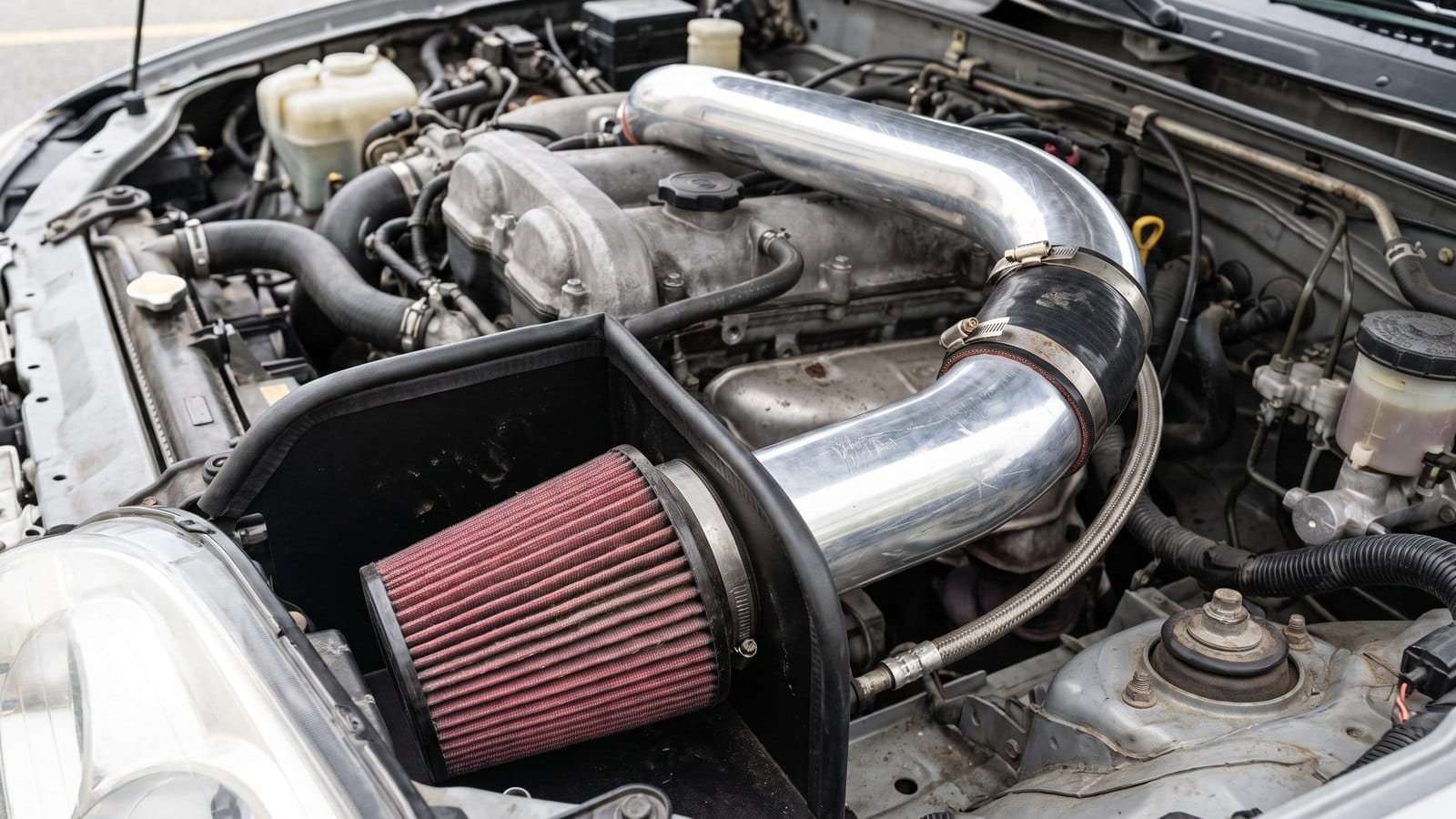
Ten intake kits. Only two of them tell you whether they are legal to fit in California. That gap tells you more about this category than any horsepower claim in it.
An engine breathes. Air goes in, fuel burns, power comes out. An intake kit replaces the airbox that feeds it, and the pitch is simple: let the engine breathe easier and it makes more power. Sometimes that is true. Often it is not, and the reason is usually where the kit puts the filter rather than how much air it flows. This guide is for someone about to spend real money on one. We looked at the ten best sellers and sorted them by what each listing actually documents, not by how loud the copy is. Fair warning: six of the ten are K&N kits running word-for-word identical marketing, so the promises tell you nothing about which one to buy.
The short version: Pick the aFe Momentum GT if it fits your car. It is the only kit here that seals the filter away from engine heat, uses a dry filter you cannot ruin, and prints its California legal number. Everything else on this list gives up at least one of those three.
- Only two of these ten kits print a Carb Executive Order number. In California and the states that follow it, that alone rules most of the list out.
- Warm air is thinner, so it carries less oxygen. A sealed airbox keeps the filter in cool outside air; a bare cone in the engine bay can cost you power in traffic.
- Oiled cotton filters can shed oil onto the engine's airflow sensor and make it underreport. Dry synthetic filters remove that risk completely.
- Every power figure in this category comes from the company selling the part. Treat it as a claim, not a measurement.
- Fitting an aftermarket part does not void your warranty. Under 15 U.S.C. 2302(c) the dealer must prove the part caused the fault.
Our Top 3 Picks

- Filter sits behind a heat shield instead of open to engine-bay heat
- A dyno printout ships with the kit rather than living only in the advert
- Washable filter, so there is nothing to buy again for a long time

- Enclosed filter rather than a bare cone in the engine bay
- Reuses the factory sensor housing, so a tune is usually not needed

- Prints Carb EO D-550-16 and states 50-state legal status
- Large filter area for a fairly small engine bay
- Straightforward fit that keeps the factory sensor position
Full Comparison — All 10 Car Air Intake System
1K&N Cold Air Intake System: High-Flow Air Filter
- Filter sits behind a heat shield instead of open to engine-bay heat
- A dyno printout ships with the kit rather than living only in the advert
- Washable filter, so there is nothing to buy again for a long time
2K&N Cold Air Intake System: High-Flow Air Filter
- Enclosed filter rather than a bare cone in the engine bay
- Reuses the factory sensor housing, so a tune is usually not needed
3aFe Power #TR-1021B-R Takeda Open Element Intake
- Prints Carb EO D-550-16 and states 50-state legal status
- Large filter area for a fairly small engine bay
- Straightforward fit that keeps the factory sensor position

4K&N Cold Air Intake System: High-Flow Air Filter
- Enclosed filter, a real advantage on a vehicle that sees dust and water
- Washable element rather than a consumable you replace

5K&N Cold Air Intake System: High-Flow Air-Filter
- Still supported for cars most manufacturers have stopped catering to
- Enclosed 57-series layout rather than an exposed cone

6aFe Power #51-72202 Momentum Sealed Intake
- Sealed airbox, so the filter draws cool air from outside the engine bay
- Dry synthetic media with no oil, which removes the airflow-sensor risk entirely
- Prints Carb EO D-550-22 and states 50-state legal status
- Window in the lid to check the filter without tools

7K&N Cold Air Intake System: High-Flow Air Filter
- Turbocharged application, the case where an intake has the clearest effect
- Enclosed tube design rather than a cone in open air

8K&N Cold Air Intake System: High-Flow Air Filter
- Built for the heavy-duty trucks rather than adapted from the 1500 kit
- Towing response is a more honest benefit than a peak horsepower number

9aFe Power #TR-2011B Takeda Open Element Intake
- Dry synthetic media, so no oiling and no sensor risk
- Gives an actual figure rather than a vague promise of more power

- Sells well enough to hold a place on the bestseller list
How They Compare
Top picks — strengths at a glance
Brands compared
All 10, Reviewed
1 K&N Cold Air Intake System: High-Flow Air Filter
This is K&N's 63-series kit for GM's full-size trucks and SUVs, part number 63-3082. The filter sits inside a moulded tube behind a heat shield rather than out in the open, which is the right side of the sealed-versus-cone question. K&N also puts a dyno printout in the box, so the power claim at least arrives with paperwork, even though the testing is their own. The filter is oiled cotton, so it washes and reuses, but you have to be careful with the oil at service time.
- Filter sits behind a heat shield instead of open to engine-bay heat
- A dyno printout ships with the kit rather than living only in the advert
- Washable filter, so there is nothing to buy again for a long time
- Oiled cotton filter, so too much oil can foul the engine's airflow sensor
- The listing prints no Carb number, so California legality is unproven
2 K&N Cold Air Intake System: High-Flow Air Filter
Part 63-3078, built for the 2011 to 2015 Camaro. Mechanically it is the truck kit in a different shape: same enclosed filter, same oiled cotton media, same dyno sheet in the box. The listing text is copied word for word from the rest of the K&N range, so read it for the fitment and ignore the promises.
- Enclosed filter rather than a bare cone in the engine bay
- Reuses the factory sensor housing, so a tune is usually not needed
- Listing copy is identical to every other K&N kit and says nothing Camaro-specific
- Oiled cotton filter, with the sensor risk that brings
- No Carb number printed
3 aFe Power #TR-1021B-R Takeda Open Element Intake
aFe's Takeda kit for the Accord and TLX V6, and one of only two here that prints a California number: Carb EO D-550-16, described as legal in all 50 states. That is worth a lot if you live somewhere that checks. The trade-off is the design. This is an open-element kit, so the filter sits exposed rather than in a sealed box, and it will drink warm engine-bay air when you are not moving. The Pro 5R media is oiled cotton too, so the sensor caution applies.
- Prints Carb EO D-550-16 and states 50-state legal status
- Large filter area for a fairly small engine bay
- Straightforward fit that keeps the factory sensor position
- Open cone design, so it takes in hot air in slow traffic
- Oiled cotton media, so over-oiling can upset the airflow sensor
4 K&N Cold Air Intake System: High-Flow Air Filter
Part 57-1566 for the 2012 to 2018 Wrangler and Wrangler JK. The filter is enclosed rather than open, and on a vehicle that spends time in dust and water that is the sensible layout. Worth thinking about before you buy: a Wrangler will dirty a filter far faster than a commuter car, and this one is oiled cotton, so you will be cleaning and re-oiling it more often than the quoted interval suggests.
- Enclosed filter, a real advantage on a vehicle that sees dust and water
- Washable element rather than a consumable you replace
- Oiled cotton on a vehicle that dirties filters quickly means frequent, careful service
- No Carb number printed
5 K&N Cold Air Intake System: High-Flow Air-Filter
Part 57-3045, covering the 2000 to 2005 Impala and Monte Carlo and the 1999 to 2003 Grand Prix. These are normally aspirated engines from two decades ago, which is exactly the case where an intake has the least room to help, because the engine can only pull in what the atmosphere pushes at it. The listing is also shorter than the rest of the K&N range and makes no claim about engine note. Buy it because your car needs an airbox, not because you expect to feel it.
- Still supported for cars most manufacturers have stopped catering to
- Enclosed 57-series layout rather than an exposed cone
- Normally aspirated engine of this era, so expect the smallest realistic gain
- Thinnest of the K&N listings, with little detail to judge by
- No Carb number printed
6 aFe Power #51-72202 Momentum Sealed Intake
aFe's Momentum GT for the 5.7 Hemi Challenger and Charger, and our pick of the ten. Everything the buying section above argues for, this kit actually does. The airbox is sealed, so the filter breathes cool outside air instead of hot engine-bay air. The Pro DRY S media is synthetic and needs no oil, so the sensor problem cannot happen to you. And it prints Carb EO D-550-22, so its legal status is documented rather than assumed. There is even a window in the lid so you can check the filter without taking anything apart.
- Sealed airbox, so the filter draws cool air from outside the engine bay
- Dry synthetic media with no oil, which removes the airflow-sensor risk entirely
- Prints Carb EO D-550-22 and states 50-state legal status
- Window in the lid to check the filter without tools
- Fits one engine family only, so most readers will need a different kit
7 K&N Cold Air Intake System: High-Flow Air Filter
Part 69-8006TTK for the 2015 to 2017 WRX. This is the only turbocharged car on the list, and that matters. A turbo is a fan force-feeding the engine, so making it easier to breathe on the intake side actually shows up, where a normal engine is limited by atmospheric pressure no matter what you bolt on. The filter is oiled cotton, which is worth weighing on a car that owners often tune, because a tuned engine leans harder on accurate sensor readings.
- Turbocharged application, the case where an intake has the clearest effect
- Enclosed tube design rather than a cone in open air
- Oiled cotton on a car that is often tuned, where sensor accuracy matters more
- No Carb number printed, on a model that gets modified constantly
8 K&N Cold Air Intake System: High-Flow Air Filter
Part 57-3066 for the 2007 to 2010 Silverado and Sierra 2500 and 3500. This is the only heavy-duty fitment on the list. K&N leans on towing in the copy, and that is the more believable claim, because better throttle response pulling a load is easier to feel than a peak power figure you would need a dyno to see. Standard oiled cotton filter in the usual enclosed housing.
- Built for the heavy-duty trucks rather than adapted from the 1500 kit
- Towing response is a more honest benefit than a peak horsepower number
- Oiled cotton filter, with the usual care needed at service time
- No Carb number printed
- Same generic copy as the rest of the K&N range
9 aFe Power #TR-2011B Takeda Open Element Intake
aFe's Takeda kit for the Lexus IS-F. The listing claims 16 horsepower and 15 lb-ft, which is the most specific figure on this page, and it comes with no chart, no test conditions and no explanation of how it was measured. The good news is the media: Pro Dry S is synthetic, so there is no oil to over-apply. The layout is open-element though, so the filter sits in engine-bay heat.
- Dry synthetic media, so no oiling and no sensor risk
- Gives an actual figure rather than a vague promise of more power
- That 16 hp number has no chart or test conditions behind it anywhere
- Open cone design, so hot air in slow traffic
- Very short listing with little technical detail to check
10 Volant 15460 Air Intake
Volant part 15460. The listed features are the weight of the box and its dimensions. There is no fitment information, no filter type, no enclosure detail and no compliance number. For a part that is cut for one specific engine, not saying which engine is a problem you cannot work around from the page itself. It appears here because it sells, not because the listing gives you anything to judge.
- Sells well enough to hold a place on the bestseller list
- The listing never states which vehicle it fits, which is the first thing you need
- No filter media or enclosure type given
- No Carb number, and no compliance information of any kind
8 Things to Consider Before Buying Car Air Intake System
Check legality first. Then check it fits your exact car. Then look at the filter. Power claims come last, because they are the one number nobody outside the company that sells the part has ever checked.
Our Final Verdict
The aFe Momentum GT is the one we would fit, if you drive a Challenger or Charger R/T. Look at what it does rather than what it claims. The filter sits in a sealed box, so it drinks cool outside air instead of hot engine-bay air. The media is dry synthetic, so there is no oil to over-apply and no sensor to ruin. And it carries Carb EO D-550-22, so its legal status is a documented fact instead of your problem. No other kit here does all three. If it does not fit your car, buy on the same logic rather than on the brand. Prefer a sealed box over a bare cone. Prefer dry media over oiled unless you enjoy filter maintenance. And if you live somewhere that follows California emissions rules, treat a missing EO number as a reason to keep looking.
Frequently Asked Questions
Do cold air intakes really add horsepower?
Sometimes, and usually less than the box says. Turbo engines respond more than normal ones. Every published figure comes from the company selling the kit, tested on one car. Expect a small change, and expect most of what you notice to be extra induction noise.
Will fitting one void my car warranty?
No, not on its own. US law at 15 U.S.C. 2302(c) stops a maker tying your warranty to their own parts, and the FTC says the dealer must show your part caused the fault before refusing a claim. A fault the intake genuinely caused can still be refused.
Are aftermarket intakes legal in California?
Only with a Carb Executive Order number. That code means the part was tested and cleared for your exact year, make, engine and model. Two of the ten kits here print one. Search CARB's free parts database before you buy.
Do I need an engine tune afterwards?
It depends on the kit. If it reuses the factory airflow sensor housing in the same spot, usually not. If it changes the tube around that sensor, the readings shift and the engine may set a fault code. Check the maker's own advice, and budget for the tune if they ask for one.
Should I choose an oiled or a dry filter?
Dry, for most people. Oiled cotton flows well and washes clean, but too much oil can coat the engine's airflow sensor and cause rough running or a warning light. A dry synthetic filter needs no oil at all, so that failure simply cannot happen.
Will it use more fuel?
Barely, either way. The real risk is indirect. A sensor fouled by filter oil makes the engine misjudge how much air is coming in, and fuelling suffers until it is cleaned. How you drive once the intake sounds louder matters more than the part does.