Best Ionic Air Purifier (2026)
Two of the ten devices here make ozone on purpose. One of them says on its own listing that it cannot be sold in California. Start there.
This category name covers three different machines, and they do not do the same job. Some trap dust in a filter. Some throw out charged particles that make dust cling to nearby surfaces. Two of them make ozone deliberately. That last group is the reason this page exists, because the difference is not a matter of taste. It is a matter of what regulators have already said about the technology, in writing, for years.
The short version: Buy a filter. Among these ten, the Hepa units from Levoit, Voopnu, Knka, Purivortex and Dhyala trap particles in physical media. The ionizers only charge particles so they stick to your walls, and the two ozone generators produce a gas the EPA calls a lung irritant.
- The EPA states ozone is a lung irritant and that at concentrations within public health standards it has little potential to remove indoor air contaminants.
- The Ivation listing states it cannot ship to California because it does not meet the state's Air Cleaner Regulation. CARB's ozone limit is 0.050 ppm.
- An EPA establishment number on ozone generator packaging identifies the factory only. The EPA says it implies no endorsement and no finding of safety or effectiveness.
- Ionizers do not remove dust. They charge it so it sticks to walls, floors and curtains, which is why Clarifion suggests one unit per room.
- Aham Verifide room sizes assume 4.8 air changes per hour, and a workable rule is Cadr of at least two-thirds the room's floor area.
Our Top 3 Picks

- Aham certification means an outside lab measured what it delivers, which almost nothing else here can say.
- Genuinely quiet on its lower settings, which is what decides bedroom use.
- Filters are widely stocked, so replacements are easy to find years later.

- States its ozone output plainly rather than hiding it.

- H13 filtration in a cabinet under seven inches square, which fits where nothing else will.
- 360-degree intake means a wall or sofa cannot starve it of air.
- Small enough to move room to room rather than committing it to one.
Full Comparison — All 10 Ionic Air Purifier
| Image | Products & Features | Rating | Price |
|---|---|---|---|
Editor's Choice |
| 9.5 | Check Price on Amazon Read Full Review |
Best Value |
| 9.3 | Check Price on Amazon Read Full Review |
Premium Pick |
| 9.1 | Check Price on Amazon Read Full Review |
 |
| 9.0 | Check Price on Amazon Read Full Review |
 |
| 8.8 | Check Price on Amazon Read Full Review |
 |
| 8.6 | Check Price on Amazon Read Full Review |
 |
| 8.4 | Check Price on Amazon Read Full Review |
 | 8Flashpet Small Filterless Air Purifiers
| 8.3 | Check Price on Amazon Read Full Review |
 | 9Ionic Pro Compact Filterless Air Purifier
| 8.1 | Check Price on Amazon Read Full Review |
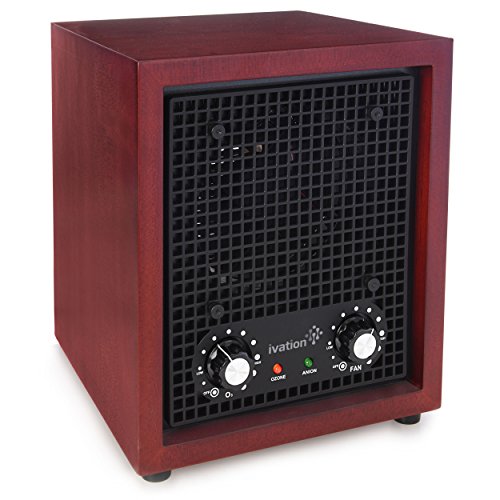 | 10Ivation Ozone Generator Air Purifier
| 7.9 | Check Price on Amazon Read Full Review |
How They Compare
Top picks — strengths at a glance
Brands compared
All 10, Reviewed
1 Levoit Air Purifiers
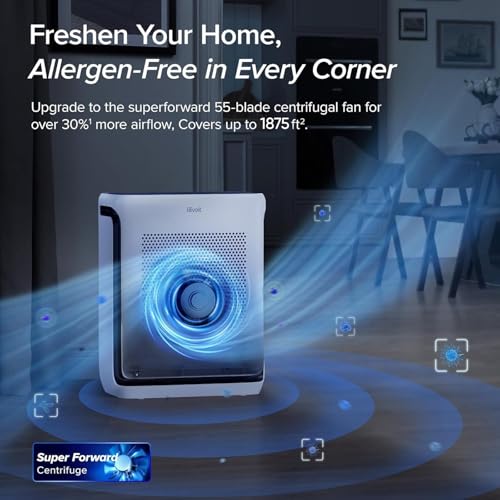
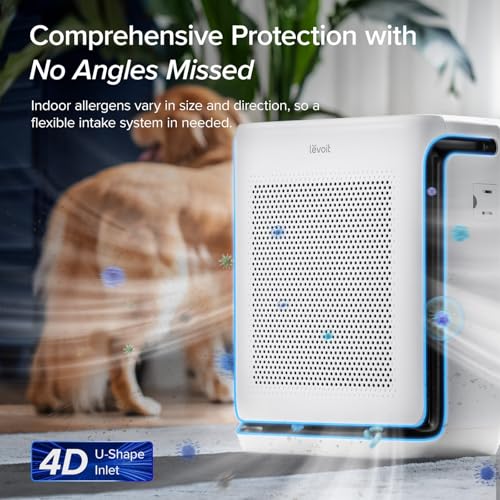
Levoit's listing leans on certification by Aham, which it correctly describes as an ANSI-accredited body that sets test standards. That matters more than any marketing line on this page. Aham certification means a lab outside the company measured what the machine delivers and compared it to what the box says. Most products in this feed make claims that nobody outside the company has checked. Parts of this listing return garbled text, so specifications beyond the certification are not readable and are not guessed at here.
- Aham certification means an outside lab measured what it delivers, which almost nothing else here can say.
- Genuinely quiet on its lower settings, which is what decides bedroom use.
- Filters are widely stocked, so replacements are easy to find years later.
- Develops a high-pitched whine after several months, and replacements tend to do the same.
- Airflow fades gradually long before any noise appears, so filters get left too long.
- Running it continuously shortens the fan's life more than intermittent use does.
2 Hadlook Ozone Generator 48
Hadlook sells ozone output as the headline feature, up to 48,000 mg an hour, and describes eliminating odours by changing the molecular structure of what it meets. The chemistry is real. So is the problem, because your airways are made of molecules too. The EPA's position is that ozone is a lung irritant and that at concentrations which stay within public health standards it has little potential to remove indoor air contaminants, and is ineffective against many odour-causing chemicals. This is not a filter and should not be treated as a home air purifier.
- States its ozone output plainly rather than hiding it.
- Produces ozone deliberately, which the EPA describes as a lung irritant.
- No filtration, so no particles are removed from the room.
- The EPA finds ozone ineffective against many odour compounds at concentrations that are safe to breathe.
3 Voopnu Air Purifiers
Voopnu states an H13 Hepa triple-layer filter fed by a 360-degree surround intake, in a cabinet measuring 6.69 by 6.69 by 9.84 inches. Pulling air from all sides rather than one face is sensible in a unit this small, because a small machine cannot afford a blocked side. The listed coverage runs to 1,076 square feet. Treat that as a manufacturer figure, since no Cadr number accompanies it and coverage without Cadr is a claim rather than a measurement.
- H13 filtration in a cabinet under seven inches square, which fits where nothing else will.
- 360-degree intake means a wall or sofa cannot starve it of air.
- Small enough to move room to room rather than committing it to one.
- The 1,076 square foot coverage claim has no Cadr figure behind it and is optimistic.
- Small cabinet means a small filter, so replacements come round sooner.
- Struggles in a large open-plan room despite the coverage claim.
4 Knka Air Purifier
Knka also claims certification by the Association of Home Appliance Manufacturers. The build is unusual: intakes front and back, outlets on both sides, and two cartridges rather than one, each running a three-stage stack that starts with a washable pre-filter. That washable layer is the practical detail. It catches hair and coarse dust, rinses clean, and keeps the finer media behind it working longer. Think of it as a strainer over a drain.
- Washable pre-filter rinses clean and makes the expensive media behind it last much longer.
- Aham certification, so the performance claims were independently tested.
- Dual intakes give more filter area than a single-face design.
- Two cartridges means buying two filters when the media is finally spent.
- The pre-filter needs actually rinsing, and performance drops if it is ignored.
- Bulkier than single-intake units of the same capacity.
5 Clarifion - Air Ionizers
Clarifion plugs straight into a wall socket and emits negative ions. There is no filter, which the listing presents as freedom from replacement costs, and that part is true. What follows from it is that particles are charged rather than captured, so they settle on surfaces near the unit instead of leaving the room. The recommendation to fit at least one in every bedroom, bathroom, dining room, living room and kitchen is itself informative: a device with that small a working radius is not cleaning a home.
- No filters to buy, so there is genuinely no running cost.
- Plugs straight into a socket and uses no floor space.
- Cheap enough to put one in several rooms.
- Charges particles rather than capturing them, so dust settles on walls and furniture instead.
- The maker's own advice to fit one per room tells you how small the effective radius is.
- Nothing is removed from the room, so it cannot help an allergy sufferer the way a filter does.
6 Purivortex Air Purifiers
Purivortex runs a three-layer stack, pre-filter then Hepa, and makes a point of filter depth. The listing states that where most purifiers of this size use a four-inch filter, this one uses more. Depth matters because a thicker filter holds more before it clogs and gives the air more media to pass through. It is a quieter kind of specification than a coverage claim, and a more useful one. No Cadr figure is stated.
- Deeper filter than most units this size, so it clogs more slowly.
- Three-layer stack starting with a pre-filter catches hair before it reaches the Hepa layer.
- Simple controls with nothing to go wrong.
- No Cadr figure and no independent certification to check the claims against.
- The comparison to other purifiers is the maker's own and cannot be verified.
- Deeper filters cost more to replace than standard ones.
7 Dhyala Air Purifier
Dhyala takes air in from front, rear and both sides, which is the same reasoning behind the Voopnu's surround intake: more open face area means less chance of the machine being starved by a wall or a sofa. It adds remote control through a phone app, so it can be started before you get home. One feature line is truncated to "Equipped with dual" and nothing follows, so whatever that specification was is unreadable and is left alone here.
- Intakes on four sides make it forgiving about where it sits.
- App control lets it run before you get home.
- Slim enough to sit beside furniture without blocking itself.
- A key feature line is truncated on the listing, leaving part of the specification unknown.
- No filter grade, Cadr figure or certification stated anywhere.
- App-dependent features stop working if the maker drops support.
8 Flashpet Small Filterless Air Purifiers
Flashpet is honest about its scope in a way the other filterless units are not. It is built for small enclosed and semi-enclosed pet spaces, and the listing names the cat litter box as the target. Judged as a litter box deodoriser rather than an air purifier, the narrow scope is a strength. Judged as a room purifier it is not one, and it does not really claim to be. There is no filter, so nothing is removed from the air.
- Honest about being built for a litter box rather than a room.
- No filters to replace.
- Small enough to sit inside an enclosed litter tray.
- Filterless, so nothing is removed from the air at all.
- Not a room air purifier and should not be bought as one.
- Needs to be very close to the odour source to do anything.
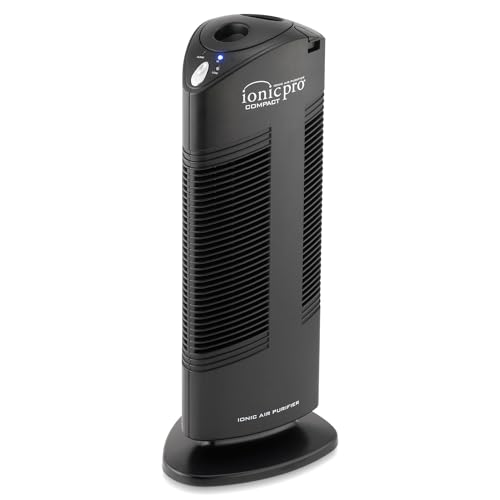
9 Ionic Pro Compact Filterless Air Purifier
The Ionic Pro is a compact filterless ionizer, and that classification is about all this listing supports. Its feature strings come through as strings of question marks, so no specification can be read from it. Rather than fill that gap with assumptions from similar products, this entry states what is known and stops. It shares the basic limitation of every filterless unit here: charged particles settle onto surfaces rather than being captured.
- No replacement filters.
- The listing's feature text is corrupted, so nothing can be verified from it.
- Filterless, so particles settle on surfaces rather than being captured.
- No ozone figure, Cadr or certification stated anywhere.
10 Ivation Ozone Generator Air Purifier
Ivation combines negative ions with deliberate ozone generation and claims coverage up to 3,500 square feet. The line that matters sits at the top of its own feature list: it cannot be shipped to California because it does not meet the state's Air Cleaner Regulation. Carb has capped ozone from portable air cleaners at 0.050 parts per million since 2010, and more than 9,000 devices have passed that test. This one tells you it did not. A coverage claim of 3,500 square feet with no Cadr figure does not offset that.
- The California restriction is disclosed on the listing rather than buried.
- Cannot be shipped to California because it fails the state Air Cleaner Regulation.
- Generates ozone deliberately, which the EPA describes as a lung irritant.
- Claims 3,500 square feet of coverage with no Cadr figure to support it.
11 Things to Consider Before Buying Ionic Air Purifier
Ask one question before any other. Does this machine remove particles from the room, or does it just move them somewhere you cannot see? Filters remove. Ionizers relocate. Ozone generators do neither well, and add a lung irritant while they fail.
Our Final Verdict
The honest answer to "which is the best ionic air purifier" is to buy one with a filter in it. The Levoit is the pick here because it claims Aham certification, which means an independent lab checked its performance against its claims rather than the maker checking its own homework. The Voopnu is the one to choose if space is tight, since it states an H13 triple-layer filter in a body under seven inches square. Knka earns a look for its washable pre-filter, which lowers what you spend later. The two ozone generators, Hadlook and Ivation, are not recommended for occupied rooms, and the Ivation cannot legally be sold in California at all. That is our position and the agencies' published guidance both.
Frequently Asked Questions
How do I know when the filter needs changing?
Do not wait for a noise. Airflow fades gradually and owners usually only notice once the motor starts to whine, by which point the machine has been underperforming for months. Hold your hand over the outlet once a month. If the push of air has weakened noticeably, change the filter before assuming the fan is at fault.
Why has my purifier developed a high-pitched noise?
It is a known pattern rather than bad luck. Owners report the noise appearing after several months, getting a warranty replacement, and the replacement doing the same thing on the same timeline. Many units at this price use sleeve-bearing motors, which are quiet and inexpensive but cope poorly with running continuously. If it will live in a bedroom, assume day one is the quietest it gets.
Are filterless purifiers cheaper to run?
Yes, and that is the whole pitch, because filters are the real recurring cost of owning a purifier. Be clear about the trade though: no filter means nothing is captured, only charged and moved onto your walls and floor. A washable pre-filter, which the Knka has, is the middle path, since rinsing the first layer makes the expensive layer last much longer.
Do ionic air purifiers actually work?
They change where the dust goes rather than removing it. Charged particles clump and settle onto nearby surfaces, so the air can measurably clear. The dust is now on your floor and walls instead of in the room's air. If you want particles taken out of circulation and held, that is a filter's job, not an ionizer's.
Is an ionizer the same thing as an air purifier?
No, and the shared shelf label causes most of the confusion. A filter purifier pulls air through media that physically traps particles. An ionizer emits charged particles and traps nothing. Several products in this feed are one or the other, and a few are both, so check for a stated filter grade before assuming.
Do ionizers make ozone, and does that matter?
Some do, as a by-product, and dedicated ozone generators make it on purpose. It matters enough that California caps ozone from portable air cleaners at 0.050 parts per million and requires certification. The EPA describes ozone as a lung irritant. If a product avoids stating its ozone output, that silence is worth noticing.
Why can some air purifiers not be shipped to California?
Because they fail CARB's air cleaner regulation, which has applied to portable units since 2010 and caps ozone emissions at 0.050 ppm. The Ivation unit here states exactly that on its listing. California also publishes a searchable list of certified devices, so you can check a model yourself before buying, wherever you live.
Should I buy an ionizer or a Hepa unit?
Buy the Hepa unit for dust, pollen and pet dander, because a filter physically removes them. Add activated carbon if smells are the real problem, since plain Hepa does not catch gases. An ionizer is at best a supplement to a filter, and never a replacement for one.
Are filterless purifiers really cheaper to run?
Yes, and for a straightforward reason. There is no filter to buy because there is no filtration happening. You save the replacement cost and give up the mechanism that removes particles from the room. Cheap to own is not the same as doing the job.
Related Guides