
| Quick Facts | |
|---|---|
| AHAM room-sizing rule | CADR at least two-thirds of the room's square footage |
| AHAM wildfire-smoke sizing | Smoke CADR equal to 100% of the room's square footage, not the usual two-thirds |
| AHAM AC-4-2022 standard | Adds a chemical gas removal rating (c-CADR) alongside particle CADR; finalized 2022 |
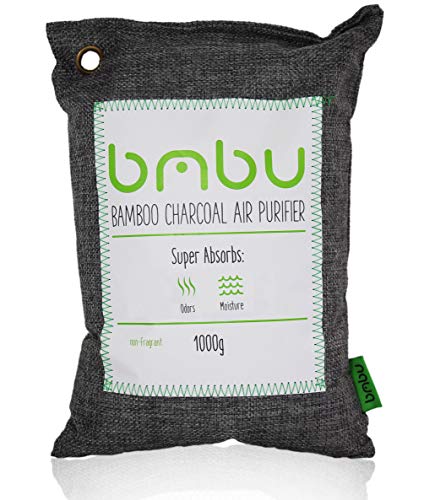
| Activated bamboo charcoal bag example | 1000g (2.2 lb) of activated charcoal in a single passive bag |
| EPA carbon-effectiveness guidance | Filter performance scales with the amount/thickness of carbon material used |
Do charcoal air purifiers actually work?
Yes, for gases and odors specifically: activated carbon adsorbs the VOC and odor molecules that pass straight through a HEPA filter, though it does nothing for dust or pollen.
Shopping for a specific model? See our air purifier buying guide — 10 models compared on the specs that decide it.
Ask do charcoal air purifiers work and the honest answer depends on what you're actually asking one to fix. HEPA filtration and carbon filtration solve two different problems, even when both live inside the same housing. HEPA media is a maze of fine fibers that physically traps particles as air is forced through it, which is what catches dust, pollen, pet dander and the particulate half of wildfire smoke. Odor and gas molecules are a different animal. They're small, gas-phase, and they slip through that fiber maze without slowing down.
That's where activated carbon does its work. It doesn't strain gas molecules out of the air; it adsorbs them, meaning odor and VOC molecules stick to carbon's surface through a chemical attraction rather than getting caught in a physical net. An air purifier with an activated carbon filter, or one with a carbon layer sitting ahead of the HEPA stage, is handling a genuinely separate half of the air-quality problem. The two technologies complement each other. A carbon-only unit that skips HEPA still won't touch dust and pollen, and a HEPA-only purifier still won't touch a stale-smoke smell. Shopping for a purifier that clears odors instead of masking them means shopping for the carbon spec specifically. The HEPA number on the box says nothing about that half of the job.
How activated carbon captures odors and VOCs
Activated carbon works through adsorption: its surface is riddled with microscopic pores that give even a modest amount of material a large internal surface for gas molecules to bond to.
Activated carbon starts as a carbon-rich material, commonly coconut shell, wood or coal, that's heated and chemically treated until its surface turns into a dense maze of microscopic pores. That pore structure is the mechanism. It gives a modest amount of carbon a very large internal surface for gas molecules to bond to. Odor compounds, volatile organic compounds (VOCs) from paint or cleaning products, and combustion gases from cooking or smoking all get trapped on that surface as air is pulled through the filter. This is the part that answers the VOC question directly: carbon is the component doing that work, not the HEPA stage.
The catch, and it's a real one, is quantity. The US Environmental Protection Agency's guide to air cleaners in the home is direct about it: choose a portable air cleaner with an activated carbon filter to address gases, and expect performance to track the amount of carbon in the filter, with a thicker bed outperforming a thin one. A lot of purifiers marketed around an air purifier carbon filter or an air purifier with carbon filter listing ship a mesh so thin it functions more like a scent mask than a working filter, and that layer saturates within weeks under normal cooking and pet odor. The honest shortcut for anyone shopping specifically for odor control is checking how much carbon media a unit actually holds, not whether the word charcoal appears in the listing.
What carbon filters can't do: dust, pollen and raw smoke particles
Carbon filters don't touch particulate matter at all, so a room with heavy dust, pollen or wildfire smoke still needs a HEPA stage doing the actual particle-trapping work.
This is the part that trips people up: carbon does nothing for particles. It has no fiber maze, no mechanical trap, nothing that would stop a dust particle, a pollen grain or the soot in wildfire smoke from sailing straight through. If the real complaint behind an air purifier for smoke search is visible haze or a dusty windowsill, carbon isn't the fix on its own. That's a job for HEPA media, and our smoke air purifier guide breaks down coverage numbers specifically for that particulate load.
Smoke is the trickiest case precisely because it's both problems at once: fine particulate matter plus a genuine gas-and-VOC load from combustion. That's why an air purifier smoke search usually needs a unit pairing HEPA with a real carbon stage, not either alone. Dust is simpler and mostly a particle problem, so if dust is the actual complaint, our dust air purifier guide is the more direct answer, since carbon adds little there beyond trimming the occasional musty smell that rides along with it.
Charcoal bags versus a built-in carbon prefilter
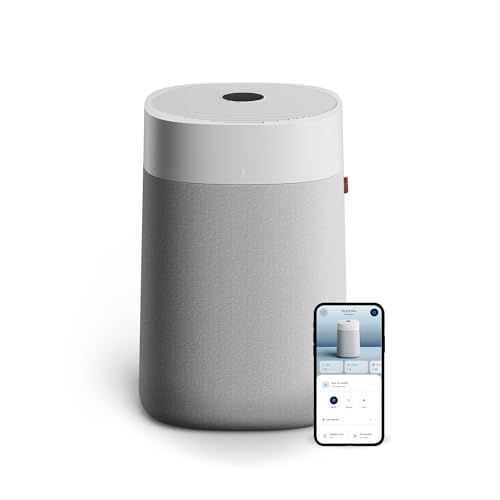
A standalone bag of activated charcoal and a purifier's built-in carbon prefilter use the same adsorption chemistry, but a bag works passively while a prefilter benefits from a fan pulling air through it.
Passive charcoal bags, the kind sold for closets, cars and litter areas, and the carbon prefilter tucked inside a purifier are doing identical chemistry: gas molecules bonding to a porous carbon surface. The difference is airflow. A bag sits still and relies on ambient air drifting past it, which works for a small, enclosed space but is slow in an open room. A purifier's fan forces far more air across the carbon in a given hour, so the same adsorption reaction happens at a much higher rate.
Quantity still decides the outcome either way. A bag with a genuinely large amount of activated charcoal will outperform a purifier with a token carbon prefilter dusted onto a HEPA pad, and a purifier with a substantial, replaceable carbon cartridge will outperform a small bag in anything bigger than a closet. For anyone comparing dedicated carbon and charcoal options side by side, including bag-style deodorizers, our charcoal air purifier picks line up options by how much adsorbent material they actually carry rather than how the listing describes it.
Sizing and standards: why gas removal doesn't have its own CADR yet
The familiar CADR number only rates particle removal; AHAM's newer AC-4-2022 standard adds a separate chemical CADR (c-CADR) score for gas and odor performance, though it isn't yet on every box.
Room-sizing advice for air purifiers almost always points back to CADR, the Clean Air Delivery Rate set by the Association of Home Appliance Manufacturers (AHAM). AHAM's own guidance puts the rule at a CADR equal to at least two-thirds of a room's square footage, and for wildfire smoke specifically, AHAM recommends sizing the Smoke CADR to the full square footage of the room rather than two-thirds of it, since smoke arrives in denser bursts than typical household dust. None of that number says anything about gas or odor performance, though. The US EPA is explicit that the CADR rating system is for particles only, and no equally standardized rating for gas removal exists across most of the industry yet.
AHAM has started closing that gap. Its AC-4-2022 standard, finalized in 2022, adds a chemical gas removal rating called c-CADR alongside the existing particle CADR, testing how well an air cleaner reduces common chemical gases and odors from sources like wildfires, building materials and household cleaners or paints. It's a genuinely useful number when a manufacturer publishes it, since it means someone independently tested the carbon stage rather than taking the phrase odor-eliminating at face value. The catch is adoption: plenty of purifiers on shelves today, including ones with a visible carbon layer, simply don't carry a c-CADR score yet, so the honest fallback is checking how much carbon media the unit actually holds.
Ozone generators and other odor gimmicks worth skipping
Anything marketed as an odor eliminator that works by generating ozone is not the same technology as activated carbon, and ozone itself is a lung irritant that offers no filtering benefit.
Not everything sold as an odor solution is carbon. Some devices marketed for smoke, pet odor or general household smell generate ozone instead, on the theory that ozone reacts with and breaks down odor molecules. It can, technically, mask or alter some odors, but ozone is also a lung irritant at the concentrations these devices produce indoors, and it doesn't discriminate between odor molecules and the lining of an airway. That's a meaningfully different risk profile from a passive carbon filter, which does its work through adsorption rather than a reactive gas.
If a product's marketing leans hard on words like eliminate or destroy odors rather than describing an actual carbon filter with a stated amount of media, that's worth a second look before buying, especially for anyone with asthma or a respiratory condition in the household. An air purifier with HEPA and carbon filter stages, both clearly specified, is the safer and more verifiable route to answering whether an air purifier can help with smells than a device whose main selling point is a technology public-health guidance treats as a pollutant.