Point-and-shoot vs DSLR camera: which fits how you shoot
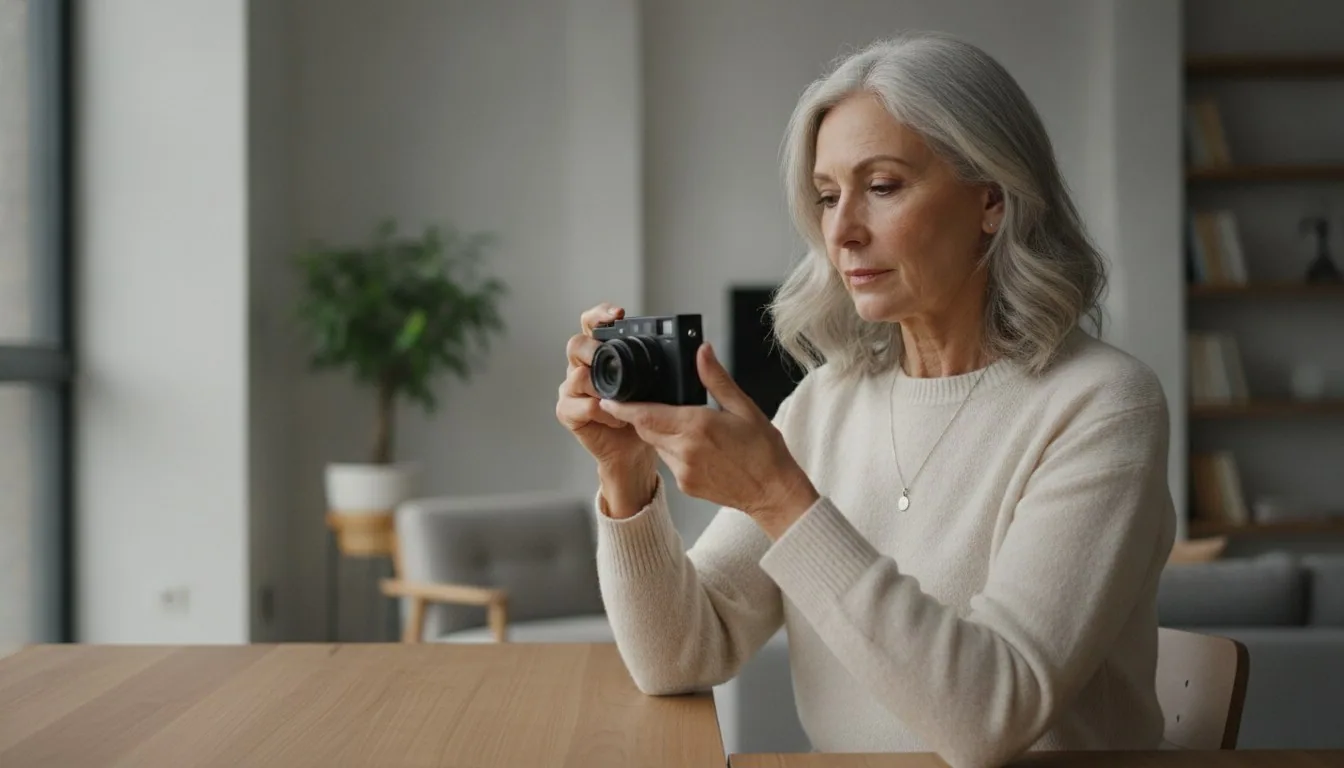
A point and shoot camera fits in a jacket pocket. A DSLR needs its own bag, and often a second lens riding along for the trip. That size gap isn't cosmetic; it's the whole decision, once you look past the spec sheets.
A point and shoot camera vs DSLR comes down to trade-offs: point-and-shoot models are smaller, simpler, and quieter, while DSLRs use larger sensors and interchangeable lenses for sharper low-light shots and more manual control. Choose point-and-shoot for portability and ease; choose DSLR for image quality and creative growth.
| Spec | Point-and-shoot camera | DSLR camera |
|---|---|---|
| Sensor size | Typically around 1/2.3-inch on budget models | APS-C or larger, roughly 15x more light-gathering area than a small compact sensor |
| Lens system | Fixed zoom lens, cannot be swapped | Interchangeable lens mount, supports wide-angle, telephoto and macro lenses |
| Body size and weight | Pocketable, often under a pound | Noticeably larger and heavier, often 2-3 lb with a kit lens |
| Low-light image quality | More visible noise as ISO rises | Cleaner high-ISO results thanks to larger sensor |
| Autofocus speed and shutter lag | Often slower, especially on budget contrast-detection systems | Faster, aided by dedicated phase-detection autofocus sensors |
| Learning curve | Minimal; built around automatic modes | Steeper; rewards learning manual exposure controls |
| Operating noise | Quiet, no mirror mechanism | Audible mirror slap and shutter on most models |
| Quick Facts | |
|---|---|
| 2025 global compact/fixed-lens camera shipments | about 2.44 million units (CIPA) |
| 2025 compact camera shipment growth | about 30% year over year (CIPA) |
| 2026 projected compact camera shipments | about 2.77 million units (CIPA forecast) |
| Canon EOS Rebel T7 (DSLR, double-lens kit) weight | about 3 lb |
Point and shoot vs DSLR camera: the core difference
A point-and-shoot camera packs a small fixed lens and a compact sensor into a pocketable body built for simplicity, while a DSLR uses a larger sensor, a mirror-and-prism viewfinder, and interchangeable lenses built for control.
Shopping for a specific model? See our digital cameras buying guide — 10 models compared on the specs that decide it.
Strip away the marketing copy and the difference is mechanical. A point and shoot camera is a sealed unit: one lens, one sensor, one job, and it's designed so a first-time user can pick it up and get a usable photo in seconds. A DSLR is a system built around a moving mirror that bounces light up into an optical viewfinder until the instant you press the shutter, at which point the mirror flips out of the way and the sensor gets exposed. That mirror is also why DSLR bodies are chunkier than either point-and-shoot compacts or mirrorless cameras — there's a mechanical assembly living inside that a fixed-lens compact simply doesn't need.
The practical fallout shows up the moment you go shopping. Point-and-shoot models in our best digital cameras roundup are built around one lens the manufacturer already chose for you, tuned for a mix of everyday shooting and travel. DSLR bodies in our DSLR digital cameras guide ship as a kit with one lens but are designed to accept others, which is the whole reason serious hobbyists tend to graduate toward them over time.
Sensor size and why it drives image quality
DSLR sensors are physically much larger than the sensors in most point-and-shoot cameras, which lets them collect more light per pixel and produce cleaner images, especially indoors or at night.
This is the one spec that actually explains most of what people notice about image quality. An APS-C sensor, the size found in entry-level DSLRs, has roughly 15 times the surface area of the 1/2.3-inch sensor common in budget point-and-shoot cameras, and more surface area means more photons hitting the sensor for a given exposure. More light gathered per shot translates directly into less visible noise, better color in shadows, and images that survive being viewed at full size instead of falling apart into speckled grain.
That doesn't mean every point-and-shoot photo looks bad. In good daylight, a modern compact with a 48MP or 64MP sensor — like several models in our best digital cameras lineup — produces sharp, usable images that most people are perfectly happy with. The gap opens up specifically in low light, where a small sensor has to boost its ISO sensitivity harder to compensate for less light gathered, and that boost is what introduces the grain and color smearing budget compacts are known for. A DSLR's larger sensor simply doesn't need to push as hard to get the same brightness, so it stays cleaner at higher ISO settings.
Worth saying plainly: sensor size is the spec sheet number that most overstates itself in casual comparisons, and it's also the one that most understates itself once you actually try shooting indoors after sunset.
Lenses, zoom range and creative control
DSLRs accept interchangeable lenses, letting you swap in wide-angle, telephoto, or macro glass for different jobs, while a point-and-shoot camera is locked to the single zoom lens it was built with.
This is the feature that separates a tool from a system. Buy a DSLR body and you're buying into an entire ecosystem of lenses, some built for portraits with a blurred background, some for distant wildlife, some for close-up macro work. Swap the glass and the same body does a genuinely different job. That flexibility is why photographers who plan to keep shooting for years tend to land on a DSLR or mirrorless system eventually, even if their first camera was a compact.
A point-and-shoot camera doesn't offer that path, and it's honest to say so rather than pretend it's a minor gap. What it does offer instead is a zoom lens already matched to the sensor and body, with no lens-shopping, no compatibility questions, and often a longer digital zoom range packed into a smaller lens than any DSLR kit lens could manage. Several point-and-shoot models we've reviewed advertise 16x or 18x zoom in a body barely bigger than a deck of cards — genuinely useful for travel, even if the image quality at full zoom won't match a DSLR with a dedicated telephoto lens attached.
Manual control follows the same pattern. Entry-level DSLRs typically expose full aperture and shutter-speed control alongside autofocus systems built around dedicated phase-detection sensors, giving photographers who want to learn manual exposure a real dial to turn. Point-and-shoot cameras generally keep those settings buried or absent entirely, leaning instead on auto modes, because the audience buying them wants results without a learning curve.
Size, weight and how much you'll actually carry it
Point-and-shoot cameras are built to disappear into a pocket or small bag, while a DSLR with even one extra lens usually needs its own dedicated bag.
This sounds like a small point until it's the reason a camera stays home. A DSLR body alone often runs close to a pound and a half once a kit lens is mounted (the Canon EOS Rebel T7 in our DSLR guide weighs about 3 pounds as a double-lens kit), and that weight only grows if a second lens comes along. A point-and-shoot camera, by contrast, is designed from the outset to slide into a jacket pocket or a small bag pouch without anyone noticing it's there.
That portability gap has a real effect on how often a camera gets used at all. The best camera for a spontaneous moment is the one already on you, not the one sitting in a closet because it was too much hassle to bring. Point-and-shoot cameras also run quieter than a DSLR's mechanical shutter and mirror slap, a genuine advantage for candid shots, quiet events, or wildlife where a loud click gives you away.
Speed, autofocus and getting the shot in time
DSLRs generally focus and fire faster thanks to dedicated phase-detection autofocus sensors and a mechanical shutter, while budget point-and-shoot cameras can lag noticeably between pressing the button and capturing the frame.
Shutter lag is one of those specs nobody puts on the box but everyone notices the first time they miss a shot because of it. A DSLR's dedicated autofocus module sits behind the mirror and does nothing else but track focus, which is part of why entry-level DSLR bodies can autofocus and fire in a fraction of a second. Point-and-shoot cameras, especially budget ones, often rely on slower contrast-detection autofocus through the main sensor, and older or cheaper models can have a full second of delay between button press and captured frame — long enough for a kid's expression or a pet's movement to change entirely.
This gap has narrowed in recent years as compact camera processors have gotten faster, but it hasn't closed. If the shots that matter to you are fast-moving — sports, wildlife, kids who won't sit still — the DSLR's autofocus system built around a 9-point or similar phase-detection array, like the setup in the Canon EOS Rebel T7, is going to miss fewer frames than a point-and-shoot camera leaning on contrast detection alone.
The market context: point-and-shoot cameras are actually making a comeback
Compact camera shipments rose sharply in 2025 while DSLR shipments kept declining, according to industry data from the Camera & Imaging Products Association, reflecting a real shift in what casual buyers are choosing.
It's worth knowing this isn't a static category. According to shipment data compiled by the Camera & Imaging Products Association (CIPA), the trade body that tracks the global camera industry, compact fixed-lens camera shipments rose to roughly 2.44 million units in 2025, an increase of about 30% over the prior year, while DSLR shipments continued a multi-year decline and now make up a small single-digit share of total camera shipments. CIPA's own forecast for 2026 projects compact camera shipments climbing further to around 2.77 million units, even as it expects that growth to moderate compared with 2025's surge.
That resurgence tracks with something anecdotal but plausible: a wave of younger buyers picking up point-and-shoot cameras specifically because they're not a smartphone, not because they out-resolve one. It doesn't change the underlying physics of sensor size, but it does mean the point-and-shoot category isn't a relic — it's actively growing again while DSLR volume keeps shrinking, largely because camera makers have shifted their interchangeable-lens development toward mirrorless bodies instead.
So which one should you actually buy
Buy a point-and-shoot camera if portability, simplicity and quiet operation matter most; buy a DSLR if you want the option to swap lenses and shoot cleanly in low light, and you're willing to carry the extra bulk.
There's no universal right answer here, and it's worth being suspicious of anyone who gives you one. If most of your photography happens in daylight, on trips, or in casual settings where you want something you'll actually bring along, a point-and-shoot camera like the options in our best digital cameras roundup will cover the job without asking you to learn exposure triangles first.
If you're shooting indoors often, want photos that hold up printed large, or expect to eventually add a second lens for portraits or wildlife, the DSLR digital cameras category is the better long-term investment, even with the added bulk and cost of entry. Models like the Canon EOS Rebel T7 sit at that entry point deliberately — built simple enough for a first-time DSLR owner, with the sensor size and lens-swapping headroom to keep growing into. Neither choice is a downgrade; they're built for different days.
A DSLR wins on image quality, autofocus speed and long-term flexibility because of its larger sensor and interchangeable lenses, while a point-and-shoot camera wins on portability, simplicity and quiet operation. Neither is the objectively better camera — the right pick depends on whether you value carrying it everywhere or growing into a lens system over time.
Frequently asked questions
Is a point and shoot camera better than a DSLR for beginners?
Can a point and shoot camera take pictures as good as a DSLR?
Why are digital cameras point and shoot models becoming popular again?
What is the main difference between a digital camera vs point and shoot model in terms of lenses?
Do DSLRs still make sense to buy in 2026 given the shift to mirrorless?
Is a DSLR too bulky to bring on a trip compared to a point and shoot camera?
Sources & references
- The compact camera trend isn't going away anytime soon, but Japan's experts warn that mirrorless may decline. This is what CIPA is predicting for 2026 — Digital Camera World (reporting official CIPA shipment data)
- CIPA Standards: Update History (DC-002 battery consumption measurement standard) — Camera & Imaging Products Association (CIPA)