How to clean an electric toothbrush
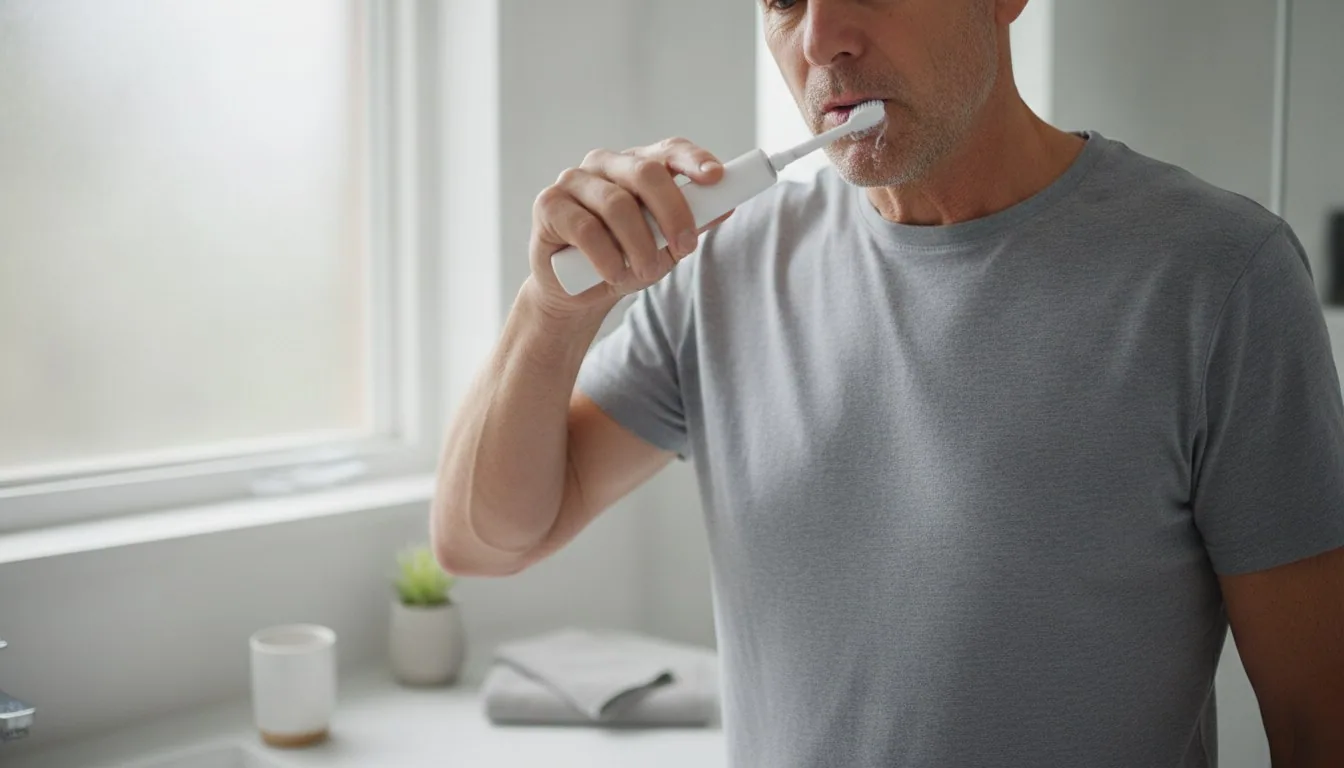
- Rinse the brush head and wipe the handle after every session; the buildup at the base is toothpaste and biofilm, not a defect
- Detach the head before rinsing so water and residue can actually get out from the connection point instead of trapping moisture inside
- Deep-clean the collar and charging contacts weekly with a soft brush or cotton swab, using diluted white vinegar for stubborn film
- The American Dental Association recommends replacing the brush head every three to four months, sooner if bristles look frayed or matted
- Never microwave, boil, or dishwasher an electric toothbrush handle; heat and submersion damage the battery and motor seals
Unplug the unit before any cleaning or filter work.
Detach the brush head
Pull the bristle head straight off the handle before rinsing anything. Cleaning the two pieces separately lets water reach the connection point instead of trapping residue inside it.
Rinse the head under warm water
Hold the head under warm running water for several seconds, running a thumb through the bristles to flush out trapped toothpaste and debris.
Wipe the handle with a damp cloth
Wipe the full length of the handle, including the grip and any seams, with a damp cloth or antibacterial wipe. Never submerge the handle itself.
Air-dry both pieces upright
Stand the head and handle upright somewhere open rather than capping the head back on immediately. A closed, moist environment encourages bacteria far more than open air does.
Scrub the collar weekly
Once a week, use a soft brush or cotton swab to clean out the rubber collar where the head attaches, since this spot traps the most dried paste and biofilm between quick daily rinses.
Clean the charging contacts
Check the metal charging pins at the base of the handle for a chalky mineral film and clear it with a dry or barely damp cotton swab, keeping liquid away from the port.
Spot-treat stubborn buildup with diluted vinegar
For residue that plain water won't shift, dab a cloth or swab dipped in a roughly equal mix of white vinegar and water onto the collar and housing, avoiding the charging contacts.
Replace the head on schedule
Swap the brush head every three to four months, or sooner if bristles look frayed or the indicator bristles have faded, following American Dental Association guidance.
| Quick Facts | |
|---|---|
| Recommended daily care | rinse head and wipe handle after every use |
| Deep-clean frequency | weekly, for collar and charging contacts |
| Brush head replacement | every 3-4 months (ADA) |
| Plaque reduction vs. manual brushing | 11% at 1-3 months, 21% after 3+ months (Cochrane, 56 trials) |
| Gingivitis reduction vs. manual brushing | 6% at 1-3 months, 11% after 3+ months (Cochrane, 56 trials) |
Why an electric toothbrush needs more cleaning than a manual one
A manual brush has one seam to rinse; an electric one has a motor housing, a charging contact, and a head-to-handle collar where toothpaste and saliva can hide and dry into a film.
Shopping for a specific model? See our full electric toothbrushes roundup — 10 models compared on the specs that decide it.
A manual toothbrush is a single molded piece — rinse the bristles, shake it dry, done. Learning how to clean an electric toothbrush means accepting that it adds a removable head, a rubber collar, and internal electronics that can't be submerged, which means the mechanically simplest move — running the whole thing under a tap — is off the table for the handle itself. That's the tradeoff for the stronger clean the motor provides.
Most of what people mistake for mold or manufacturing defect on the neck of the brush is actually dried toothpaste combined with the biofilm that forms wherever a wet surface sits still. The American Dental Association's toothbrush care guidance notes that a moist, enclosed environment is more conducive to microbial growth than open air, and the collar of an electric toothbrush is about as enclosed and moist an environment as bathroom hardware gets.
The fix isn't complicated, it's just a habit most people never picked up. A ten-second rinse and wipe after brushing, plus a slightly longer weekly pass on the collar and charging base, keeps the whole unit looking and smelling the way it did out of the box.
Daily cleaning routine for the brush head and handle
Rinse the detached head under warm water, wipe the handle with a damp cloth, and let both air-dry upright rather than capped or laid flat.
Pull the head off the handle before rinsing. It sounds like an unnecessary extra step when you're standing at the sink half-awake, but leaving the two pieces joined just traps water and paste residue in the one spot least exposed to air. Hold the bristle head under warm running water for a few seconds, working your thumb through the bristles to flush out trapped paste.
The handle itself never goes under the tap. Wipe the body, the neck, and especially the rubberized grip with a damp cloth or an antibacterial wipe, paying attention to any seams where the casing pieces meet. This is where soap-based residue tends to collect, and it's also where a lingering odor usually starts if it's skipped for more than a few days.
After wiping, stand both the head and the handle upright somewhere they can air-dry rather than immediately snapping the head back on or capping it. The ADA's general toothbrush storage guidance applies here directly: don't routinely store a toothbrush in a closed container, since trapped moisture is what encourages bacteria to build up in the first place.
Deep-cleaning the base, collar, and charging contacts
Once a week, scrub the collar where the head attaches and the metal charging contacts with a soft brush or cotton swab, using a mild vinegar solution for anything the wipe alone won't shift.
The collar — the small rubber or plastic ring the brush head slides onto — is the single dirtiest spot on the entire unit, and it's the one people skip because it's fiddly to reach. A soft-bristled brush (an old manual toothbrush works fine for this) or a cotton swab dipped in warm water can work into that ring and lift out the compacted paste that a wipe glides right over.
For buildup that doesn't come off with plain water, a mix of roughly equal parts white vinegar and water on a cloth or swab cuts through dried residue without risking the plastic or the seal around the motor. Dab rather than soak, and never let liquid pool around the charging contacts at the base of the handle — those metal pins are one of the few places actual water damage can happen if you're careless.
While you're in there, check the charging contacts themselves for a chalky white film, which is usually mineral buildup from hard water evaporating on the pins. A dry cotton swab, or one very lightly dampened, clears that without introducing new moisture into the charging port.
What to avoid when cleaning an electric toothbrush
Skip the dishwasher, boiling water, and full submersion of the handle; heat and standing water are what actually damage these units, not the toothpaste residue itself.
It's tempting to treat an electric toothbrush handle like any other kitchen or bathroom item and toss it in with a load of dishes, but the dishwasher's heat cycle can warp the plastic casing and degrade the battery well before its rated lifespan. The same goes for boiling water or a microwave — heat sanitizing works for some plastics, not for a sealed battery-and-motor assembly. If you take away one rule for how to clean an electric toothbrush safely, it's this: water goes on the head, never on the handle's electronics.
Submerging the handle fully, even briefly, risks the same outcome as dunking any battery-powered device: water finds its way past a seal that was only ever rated for splash resistance, not immersion, unless the manufacturer explicitly states otherwise. Check your specific model's water-resistance rating before assuming it can handle more than a rinse of the head and a wipe of the body.
Harsh abrasives on the bristle head are worth avoiding too. Bleach and strong household cleaners can degrade the nylon bristles faster than normal wear would, which defeats the purpose of a careful cleaning routine in the first place.
Does an electric toothbrush clean better than manual brushing
Clinical research shows electric toothbrushes reduce plaque and gingivitis more than manual brushing on average, though the size of the benefit depends heavily on brush type and technique.
A 2014 Cochrane systematic review pooling 56 trials and 5,068 participants found that powered toothbrush users saw an 11 percent reduction in plaque at one to three months of use and a 21 percent reduction after three months or more, compared with manual brushers. For gingivitis, the same review reported a 6 percent reduction at one to three months and 11 percent after three months.
That benefit isn't uniform across every powered brush on the market. The Cochrane review specifically flagged oscillating-rotating brushes as the technology with the most consistent statistically significant edge over manual brushing, while some side-to-side sonic models showed a smaller or less consistent advantage in various trials. In plain terms, the motor helps, but which motion it uses matters more than the fact that it's electric at all.
None of this makes a manual brush ineffective. Good technique — two minutes, twice daily, covering every surface — closes most of the gap regardless of which brush is in your hand. The electric brush's real advantage is consistency: a built-in timer and a motion you don't have to sustain yourself tend to produce more even results across a whole population of users, which is what these trials are actually measuring. If you're weighing whether to switch, our electric toothbrushes guide covers how the different brush motions and features compare.
When to replace the brush head
Swap the brush head every three to four months per American Dental Association guidance, or sooner if the bristles look frayed, splayed, or discolored.
Cleaning an electric toothbrush keeps it sanitary; it doesn't restore bristles that have physically worn down. The ADA's toothbrush guidance recommends replacing any toothbrush, electric or manual, at least every three to four months, since worn bristles lose their ability to sweep plaque off the tooth surface even when they look intact to a casual glance.
Many electric toothbrush heads build in a visual cue for this — bristles dyed a color that visibly fades with wear, which is a manufacturer's proxy for the same three-to-four-month window rather than a separate standard. Treat a faded indicator as a reminder, not a hard deadline; if bristles are splaying outward or look ragged sooner than that, replace them early.
Illness is the other trigger worth acting on immediately. Swapping the head after a cold, flu, or any mouth infection avoids reintroducing the same organisms once symptoms clear. Electric toothbrushes replacement heads are sold by brush type and model, so matching the connector style to your specific handle matters more than chasing a particular bristle pattern. Our guide to the best electric toothbrushes is a reasonable place to start if the handle itself, not just the head, is due for retirement.
Frequently asked questions
How often should I clean my electric toothbrush?
Can I put my electric toothbrush head in the dishwasher?
Why is there gunk or black buildup around the base of my electric toothbrush?
Does an electric toothbrush clean better than a manual one?
How often do electric toothbrushes replacement heads need to be swapped?
Can I use vinegar to clean my electric toothbrush?
Sources & references
- Toothbrushes — American Dental Association
- Powered/electric toothbrushes compared to manual toothbrushes for maintaining oral health — Cochrane