Best Exercise Bikes (2026)
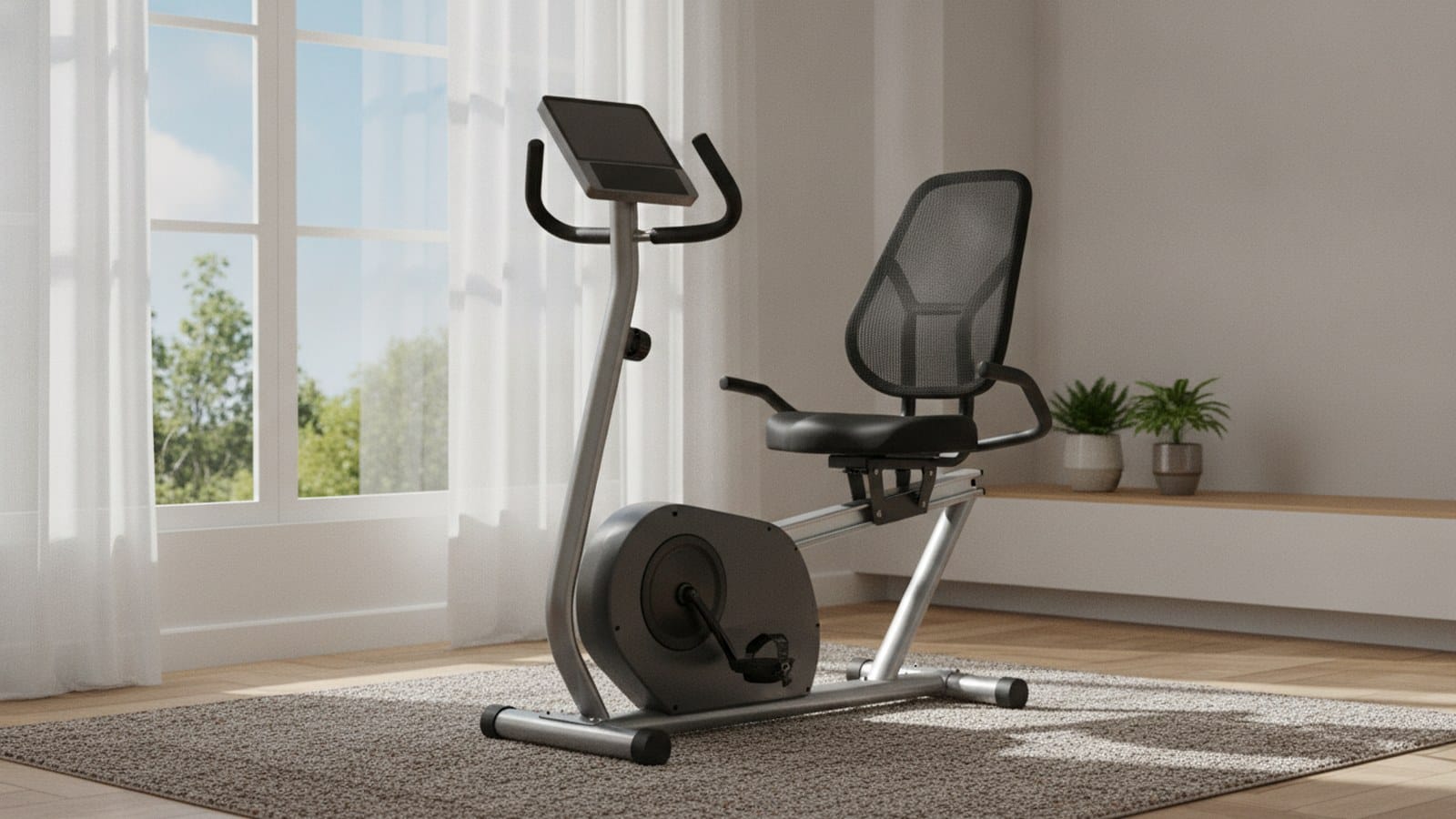
One bike here spins a 25 pound flywheel. Another spins 5.5 pounds. That gap decides how the pedals feel more than any other number on the page.
Start by noticing what is actually in this list. Seven are exercise bikes. Two are under-desk ellipticals with no seat, and one is a mini pedal unit you use with your own chair. They serve a genuine purpose but they are a different machine, so they are described here as what they are rather than ranked as bikes. Among the real bikes the split is between sitting upright and reclining back, and that choice is about your joints more than your fitness.
The short version: The Yosuda is the pick for a smooth ride, with a 25 lb flywheel on a heavy steel frame. Choose a recumbent instead if your knees or back object to leaning forward, and the Niceday offers the finest control at 16 resistance levels. Three items in this feed are not bikes at all.
- Flywheel weight drives smoothness. This feed spans 25 lbs on the Yosuda to 5.5 lbs on the Jelens, more than a fourfold difference.
- Recumbent bikes spread your weight across a backed seat and change the knee angle, which is why they suit sore knees, hips and backs.
- Magnetic resistance uses magnets near a spinning wheel with no contact, so it is quiet and there is nothing to wear out.
- The CDC asks adults for 150 minutes of moderate activity weekly, or 75 vigorous, plus strengthening on two or more days. It can be split into short blocks.
- Three of the ten items are not exercise bikes: two under-desk ellipticals and one mini pedal exerciser.
Our Top 3 Picks

- Automatic mode moves the pedals for you, which suits limited mobility.
- Twelve manual levels for active use.
- Sound-dampened wheel keeps it usable in a shared room.

- Twelve manual speeds plus twelve automatic modes for use while working.
- Quiet enough to run under a desk in a shared office.
- Low-impact leg movement without leaving your chair.

- States frame gauge at 2.00mm steel instead of vaguely claiming strength.
- Magnetic resistance on industrial-grade bearings runs quietly.
- Pairs with a training app for structured sessions.
Full Comparison — All 10 Exercise Bikes
| Image | Product | Features | Price |
|---|---|---|---|
Editor's Choice |
| Check Price on Amazon Read Full Review | |
Best Value |
| Check Price on Amazon Read Full Review | |
Premium Pick |
| Check Price on Amazon Read Full Review | |
 |
| Check Price on Amazon Read Full Review | |
 |
| Check Price on Amazon Read Full Review | |
 |
| Check Price on Amazon Read Full Review | |
 |
| Check Price on Amazon Read Full Review | |
 |
| Check Price on Amazon Read Full Review | |
 |
| Check Price on Amazon Read Full Review | |
 |
| Check Price on Amazon Read Full Review |
How They Compare
Top picks — strengths at a glance
Brands compared
All 10, Reviewed
1 Putnen Under Desk Elliptical Machine
Putnen's under-desk elliptical runs a 12-level manual mode alongside an automatic mode that drives the pedals for you. That automatic mode is the meaningful difference, because it keeps the legs moving without effort from the user, which is why the listing names sedentary office workers and seniors with limited mobility. Like the Merach it is a low-impact movement aid rather than a bike, and it should be bought as one.
- Automatic mode moves the pedals for you, which suits limited mobility.
- Twelve manual levels for active use.
- Sound-dampened wheel keeps it usable in a shared room.
- Not an exercise bike, despite sitting in this category.
- Automatic mode is assisted movement rather than exercise.
- Needs desk clearance that many desks do not have.
2 Merach Under Desk Elliptical Machine
MERACH's under-desk elliptical gives 12 manual speed levels and 12 automatic modes, on a silent wheel designed to be used while you work. Judge it against sitting still and it wins easily. Judge it against a bike and the comparison does not hold, because there is no seat, no riding position and no real resistance range. It exists to break up long stretches of sitting, which is a genuine benefit and a narrower one than cardio training.
- Twelve manual speeds plus twelve automatic modes for use while working.
- Quiet enough to run under a desk in a shared office.
- Low-impact leg movement without leaving your chair.
- Not an exercise bike and no substitute for one.
- No seat, riding position or meaningful resistance range.
- Pedal height means it does not fit under every desk.
3 Merach Exercise Bike
MERACH's indoor cycling bike states a reinforced inverted triangle frame in 2.00mm steel, which is more informative than the usual claim of sturdiness because it gives both the shape and the thickness. A triangle resists twisting, and 2.00mm is a real number you can compare. Resistance is magnetic on industrial-grade bearings, and the bike pairs with the company's own training app for anyone who wants structured sessions.
- States frame gauge at 2.00mm steel instead of vaguely claiming strength.
- Magnetic resistance on industrial-grade bearings runs quietly.
- Pairs with a training app for structured sessions.
- No flywheel weight stated, which is the number that decides ride feel.
- The saddle is firm enough that most riders add a cover.
- App value depends on staying inside one maker's ecosystem.
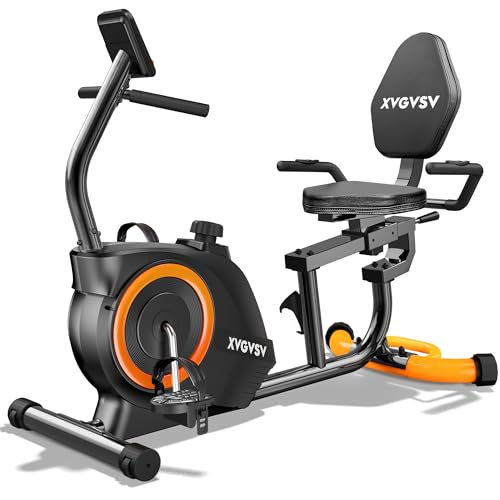
4 Xvgvsv Recumbent Exercise Bike
Xvgvsv states commercial-grade steel construction and, more practically, that the bike arrives 85 percent pre-assembled. Assembly is the quiet reason home equipment goes unused, because a machine still in its box in the hallway delivers nothing. Cutting that job down to a few bolts changes the odds that it is ridden in week one. The recumbent frame is described as ergonomically adjustable for personalised comfort.
- Arrives 85 percent assembled, so it is in use the same day.
- Commercial-grade steel frame feels solid under load.
- Ergonomic adjustment covers a range of body sizes.
- Neither flywheel weight nor resistance level count is stated.
- Backrest position is fixed on some configurations, which shows on long rides.
- Commercial-grade is a description rather than a measured specification.
5 Merach Recumbent Exercise Bikes
This Merach recumbent covers the basics without much fuss: 8 levels of quiet magnetic resistance, Bluetooth pairing to the company's app, and a bottle holder. The bottle cage sounds trivial and is not, because the main reason people cut a session short at home is getting up for something. Against its sibling model it lacks the eight-position seat and the dual-belt drive, so it is the simpler of the two Merach recumbents here.
- Quiet eight-level magnetic resistance suits early mornings.
- Bottle cage keeps you from breaking a session to fetch a drink.
- Bluetooth app tracking for people who want the numbers.
- Fewer adjustment options than its sibling, with no stated backrest positions.
- Eight levels cap out quickly for anyone reasonably fit.
- No flywheel weight or seat position count published.
6 Rygeo Pedal Exerciser Mini Exercise Bike
The Rygeo is a set of pedals on a small frame, used with a chair you already own, and it works for arms as well as legs by placing it on a table. That arm option is genuinely useful and nothing else in this feed offers it. Resistance comes from a tension knob rather than levels, so adjustment is by feel rather than by number. It is built for low-intensity movement, and the listing is honest about that.
- Works for arms as well as legs, which nothing else here does.
- Uses a chair you already own and stores in a cupboard.
- Honest about being built for low-intensity use.
- Tension knob rather than numbered levels, so progress cannot be tracked.
- Slides on hard floors unless braced against a wall.
- Low intensity only, and not an exercise bike.
7 Merach Recumbent Exercise Bikes
This Merach recumbent pairs a silent dual-belt drive with a high-inertia design, and adds a car-style resistance adjustment across 8 levels. The eight seat and backrest positions are the useful part for anyone who does not fit standard equipment, because getting the seat distance right is what keeps the knee tracking properly rather than grinding. A belt drive rather than a chain is what makes this a reasonable choice for a flat or a shared room.
- Silent dual-belt drive genuinely suits a flat or a shared room.
- Eight seat and backrest positions cover a wide range of leg lengths.
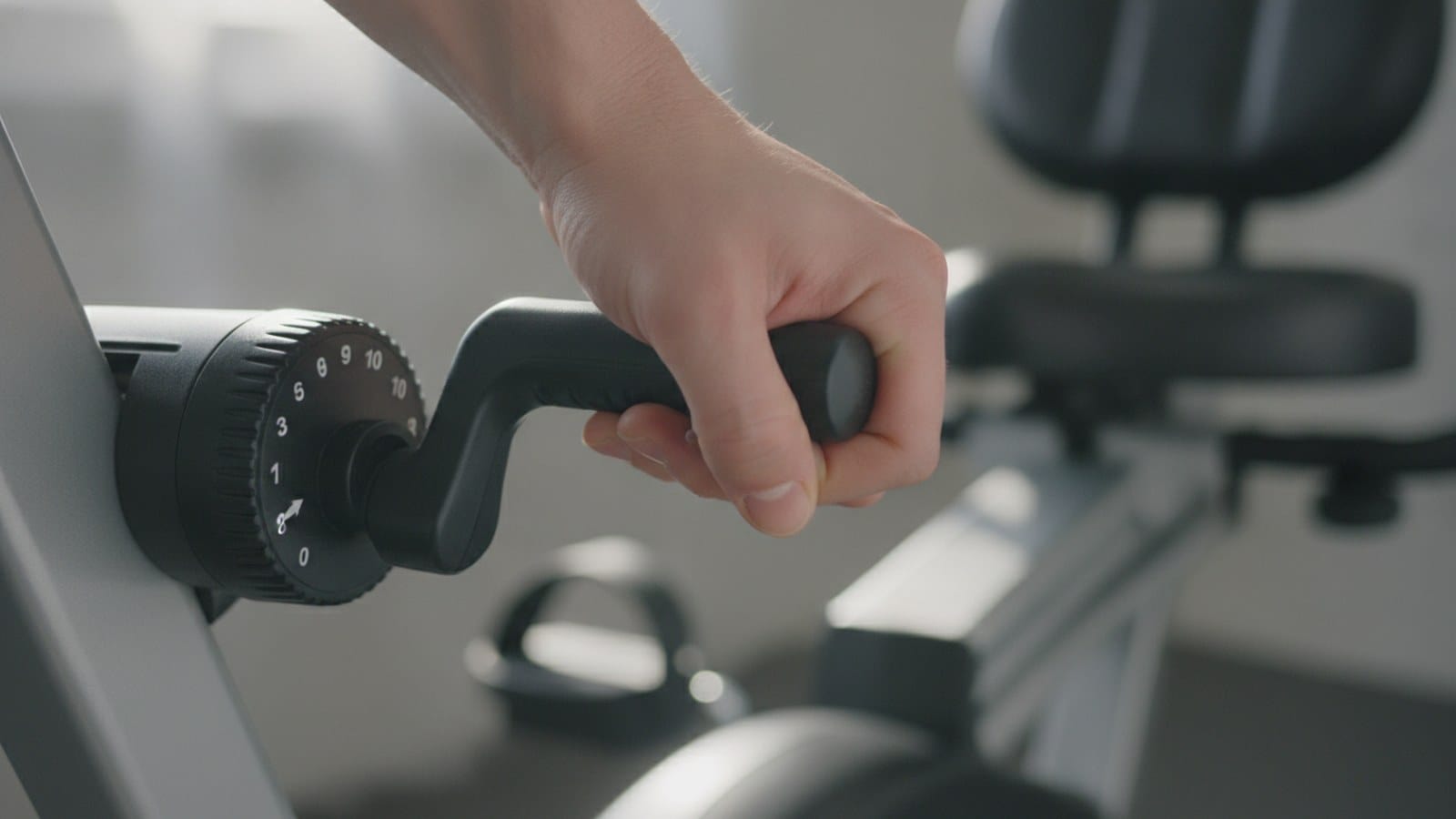
- Car-style lever makes changing resistance mid-ride easy.
- Eight levels run out quickly; fitter riders reach level five within a week.
- The stock seat benefits from a cushion for longer sessions.
- No flywheel weight published.
8 Yosuda Exercise Bike
Yosuda states a 25 lb flywheel on a heavy-duty steel frame, and that combination is why this is the pick for ride feel. The weight carries the pedals through the dead spot at the top and bottom of each stroke, which is what separates a smooth machine from one that stutters. The heavy frame matters for the same reason: momentum that large needs something rigid underneath it. Parts of the listing return garbled characters, so nothing beyond the stated flywheel and frame is claimed here.
- 25 lb flywheel gives by far the smoothest pedal stroke here.
- Heavy steel frame stays planted during hard efforts.
- Upright position suits genuine training rather than gentle movement.
- The stock saddle needs a gel cover to be tolerable beyond about ten minutes.
- Upright riding loads the knees and lower back more than a recumbent.
- Part of the listing is garbled, so other specifications cannot be read.
9 Niceday Recumbent Exercise Bike
Niceday's recumbent offers 16 progressive resistance levels, double what the other recumbents here provide. That is not about reaching a harder top end. It is about the size of each step. Building back up after injury or illness often fails at the point where the next level up is too big a jump, and finer steps remove that wall. The listing positions it for physical therapy use and notes the reduced load on the back.
- Sixteen resistance levels give both finer steps and more headroom than the eight-level bikes.
- Supportive seat that owners find comfortable without adding a cushion.
- Whisper-quiet magnetic resistance with heart-rate handles built in.
- No flywheel weight stated, so ride smoothness cannot be judged before buying.
- Recumbent frames take noticeably more floor space than uprights.
- Console is basic, showing little beyond time, distance and pulse.
10 Jelens Caromix Folding Exercise Bike
The Jelens folding bike covers upright and semi-reclined positions in one frame and packs down when you are finished, which is the answer for a small flat with no spare corner. The compromise is stated plainly in its own specification: a 5.5 lb aluminium flywheel. Against the YOSUDA's 25 lbs that is a different class of ride, and the stroke will feel less smooth. An LCD monitor tracks time and basic session data.
- Folds away, which is the whole argument in a small flat.
- Covers upright and semi-reclined positions in one frame.
- LCD monitor tracks the basics.
- 5.5 lb flywheel is the lightest here and the stroke stutters because of it.
- A folding frame flexes more than a fixed one under hard pedalling.
- Small seat on a folding frame is the least comfortable here without a cushion.
11 Things to Consider Before Buying Exercise Bikes
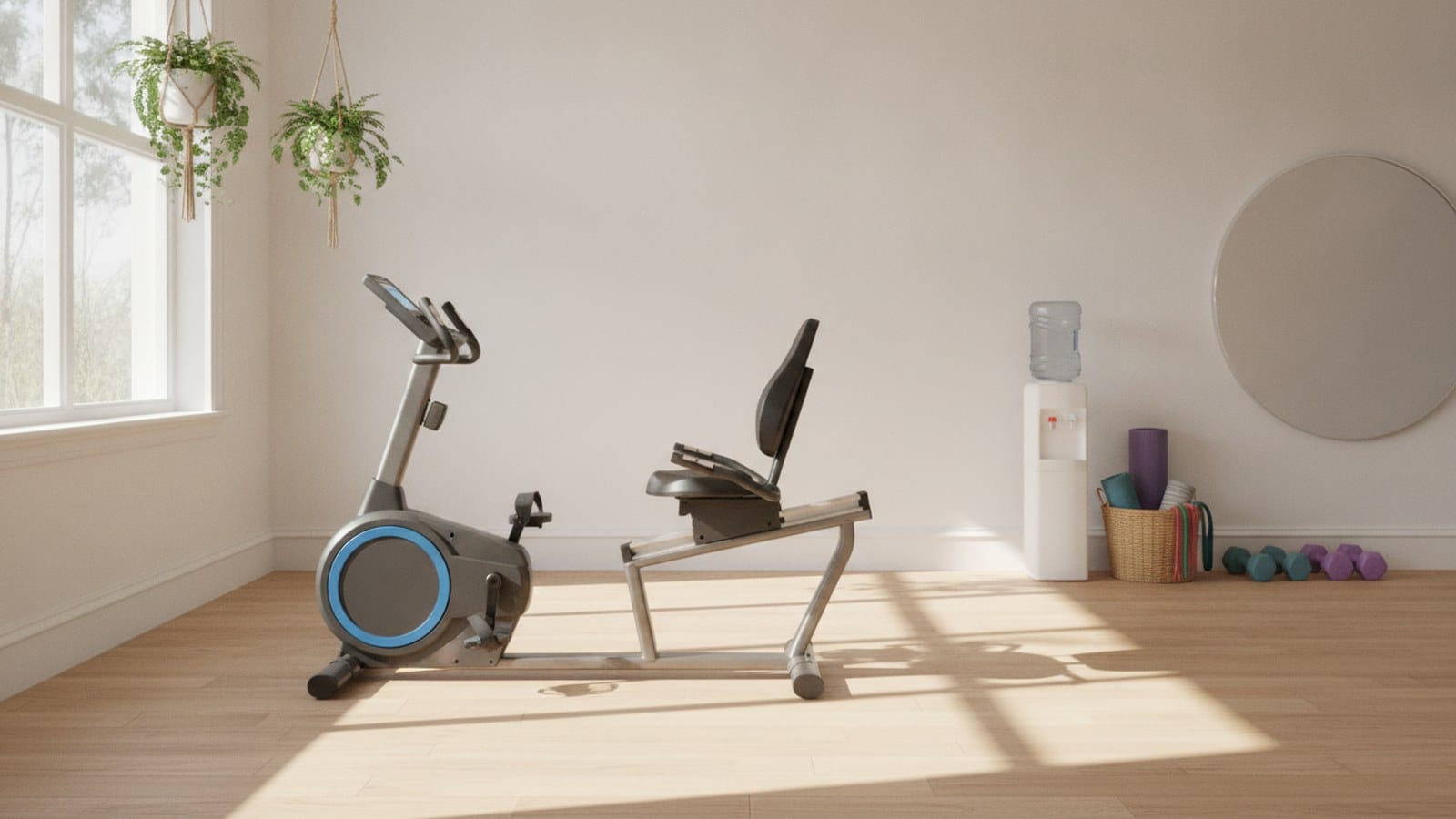
Three decisions, in order. Reclined or upright, which your back and knees answer. Flywheel weight, which decides smoothness. Then resistance levels, which decide how finely you can progress.
Our Final Verdict
The Yosuda is the pick if you want a bike that feels good to pedal, because a 25 lb flywheel on a heavy steel frame is the closest thing here to a smooth road-bike stroke. For anyone whose knees, hips or back rule out leaning forward, take a recumbent, and the Niceday is the most adaptable of them with 16 progressive resistance levels. The Merach recumbent with the 8-position seat and silent dual-belt drive is the one for a shared room. The Xvgvsv is worth choosing if you dread flat-pack assembly, arriving 85 percent built. The Jelens folds away neatly, but its 5.5 lb flywheel means you are paying for storage with ride quality. The two under-desk ellipticals and the Rygeo pedal unit are fine at their own job and are not substitutes for any of the above.
Frequently Asked Questions
Are these bikes comfortable enough to use regularly?
The stock seat is the weak point at this price, and owners commonly find it uncomfortable past about ten minutes. A gel seat cover fixes it cheaply and is worth budgeting for from the start. On recumbents, check whether the backrest angle adjusts or only the seat position, because a fixed backrest is what you notice on longer sessions.
Will the resistance be hard enough for me?
If you are already reasonably fit, probably not on an eight-level bike. Owners report reaching level five of eight within the first week, which leaves little room to progress. The Niceday's sixteen levels give finer steps and more headroom. Magnetic resistance at this price is smooth and quiet, but it is calibrated for gentle use rather than hard training.
How hard is assembly?
Easier than the box suggests. Owners in their sixties report finishing in around an hour and a half, with clearly marked parts and holes that line up. The Xvgvsv arrives 85 percent built. Start every bolt before fully tightening any of them, or the frame fights you on the last one.
Should I get a recumbent or an upright bike?
Let your joints decide. A recumbent reclines you into a backed seat and changes how your knee bends, so it suits sore knees, stiff hips and bad backs. An upright puts you over the pedals like a road bike, suits harder efforts and takes less room. If you have a specific injury, ask your clinician rather than a buying guide.
Does flywheel weight really matter?
It is the difference you notice first. Your legs cannot push evenly all the way round, so there is a dead spot top and bottom. A heavy flywheel keeps spinning through it and carries the pedals. A light one lets the stroke stutter. Comparing 25 lbs against 5.5 lbs in this feed, that is not a subtle gap.
What is magnetic resistance and is it better?
Magnets sit near the spinning metal flywheel and drag it back without touching it. Because nothing rubs, there is nothing to wear out and almost no noise. Older bikes pressed a pad against the wheel, which worked but wore down and was loud. For home use, magnetic is better on both counts.
How much do I need to ride to see a benefit?
The CDC's target for adults is 150 minutes of moderate activity a week, or 75 minutes of vigorous, plus strengthening work twice a week. That is 30 minutes over five days. It does not have to be continuous, so three ten-minute stints in a day counts the same as one half-hour.
Is an under-desk elliptical as good as an exercise bike?
No, and it is not trying to be. It keeps your legs moving while you sit and work, which breaks up long sedentary stretches. There is no seat, no riding position and a limited resistance range. Treat it as a way to sit less, not as cardio equipment.
Are these usable after a knee injury?
Stationary cycling is low impact, and recumbents load the knee less than uprights because of the reclined position and the pedal placement. That is general, not medical advice about you. Anyone rehabilitating a specific injury should get the machine and the resistance level cleared by their physiotherapist or doctor first.
Related Guides


