How to prevent heat damage from curling irons and flat irons
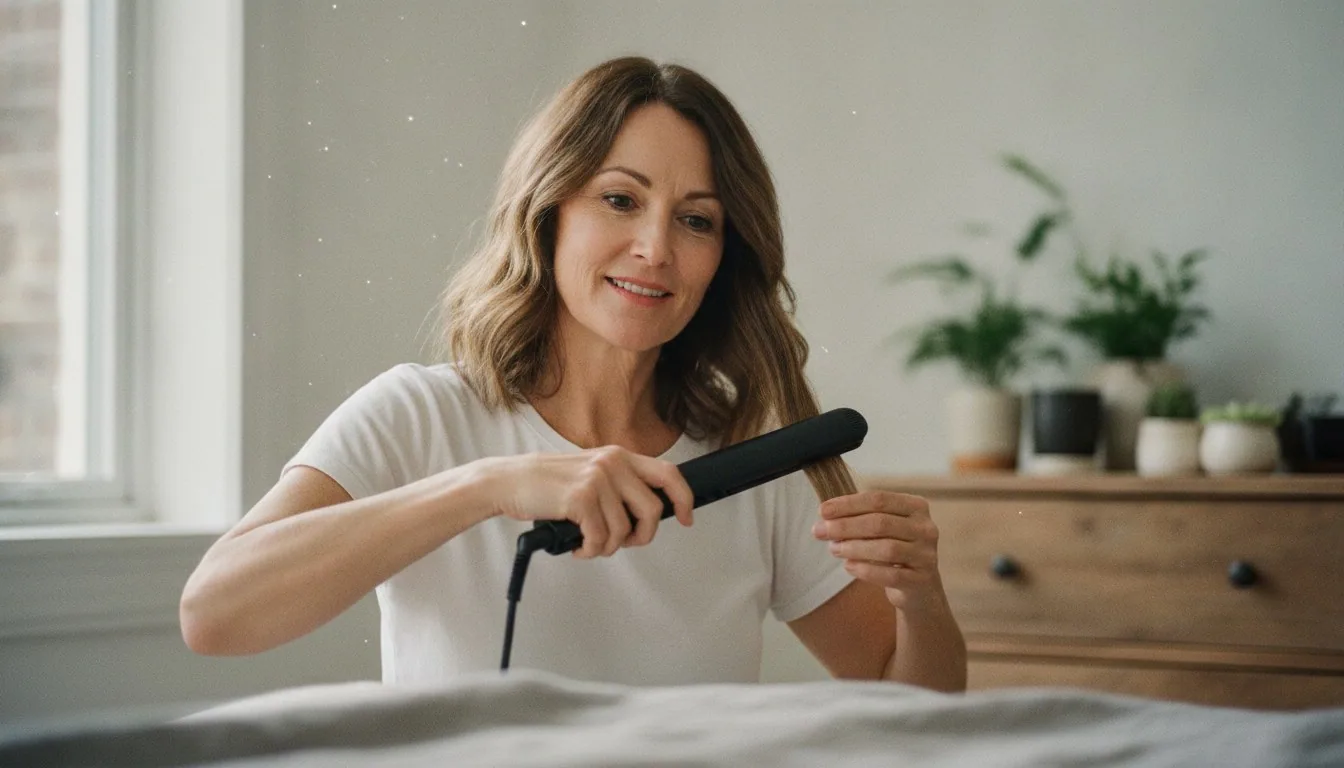
- Heat protectant and fully dry hair matter more than the number on the temperature dial, per the American Academy of Dermatology's guidance on styling without damage.
- A flat iron or curling iron can climb toward roughly 450°F within about five seconds of switching on, per NIH-published pediatric burn research, so 'hot enough' arrives faster than most people expect.
- Curling irons need less contact time than intuition suggests; the American Academy of Dermatology's guidance is about a second or two per section, not a slow count to ten.
- Structural heat damage doesn't reverse. A 2011 Journal of Cosmetic Science study found cosmetic pretreatments can cut hair breakage after thermal stress, but prevention still beats repair.
- Spacing out heat-styling days does more for long-term hair condition than any single product, since damage from repeated high heat is cumulative rather than a one-time event.
Unplug the unit before any cleaning or filter work.
Wash hair and let it dry completely
Never bring a flat iron near damp hair. The American Academy of Dermatology limits flat irons to fully dry hair for a reason: trapped moisture flashes into steam against a hot plate, and that does more damage than the same pass on dry strands.
Work a heat protectant through every section
Distribute it evenly, paying extra attention to ends and thinner sections that heat through fastest. It won't make reckless heat harmless, but at a reasonable setting it cuts down how much moisture the hair loses during styling.
Start at a low or medium setting
Dial in low or medium first and only raise it if a slow, single pass genuinely isn't doing the job. Reserve anything near the top of the dial for hair that's thick, healthy, and rarely styled with heat.
Section hair and keep the iron moving
Work in thin, manageable sections and glide through in one slow pass rather than parking the plates in one spot. Three quick repeat passes over the same section do more damage than one unhurried pass.
Limit curling iron contact to a second or two per section
Wrap the section and release; don't hold for a slow count. Thinner sections curl through evenly in that window, while thick chunks tempt you into holding longer, which is where the extra damage creeps in.
Space out heat-styling days
Follow the American Academy of Dermatology's guidance of no more than every other day, and stretch that further for fine, color-treated, or chemically relaxed hair. Damage from repeated high heat adds up; the days you skip matter as much as the protectant you apply.
Check for early signs before repeating the routine
Pull a strand of wet hair between your fingers occasionally. If it snaps or won't stretch, back off on frequency and heat before styling the same way again rather than pushing through.
Let the tool cool on a heatproof surface before storing it
Set the iron on a heatproof mat or in its heat-resistant pouch until it's fully cool, away from where hands or bare feet can reach it. This is a hair-care habit and a burn-prevention one at the same time.
| Quick Facts | |
|---|---|
| Flat iron / curling iron heat-up ceiling | up to about 450°F (232°C) within roughly 5 seconds of power-on (NIH-published pediatric burn research) |
| AAD-recommended flat iron frequency | no more than every other day, on fully dry hair, low or medium setting |
| AAD-recommended curling iron contact time | about 1 to 2 seconds per section |
| Lab flat-ironing temperature studied for thermal damage | above 200°C / 392°F (Journal of Cosmetic Science, 2011) |
| Households using a heatproof storage bag after styling | only 12%, per one NIH-published pediatric burn injury study |
Why flat irons and curling irons damage hair in the first place
Heat above roughly 200°C reshapes the internal protein bonds in hair, and that reshaping doesn't undo itself once the tool cools down.
Shopping for a specific model? See our flat irons buying guide — 10 models compared on the specs that decide it.
Hair is keratin protein wrapped in overlapping cuticle scales, and a flat iron's plates don't just smooth those scales down, they push heat into the fiber's core. A 2011 study in the Journal of Cosmetic Science ran flat irons above 200°C (392°F) against hair samples and found that thermal stress degrades keratin in the cortex, the inner layer doing most of the structural work inside each strand. That's a different kind of damage than a dry, dull look from too much shampoo; it's mechanical.
The frustrating part is that hair can't repair this the way skin repairs a scrape. It's dead tissue by the time it leaves the scalp, so once the protein bonds along a section have reshaped under heat, brushing more gently or switching shampoos won't put them back. That's the entire reason the American Academy of Dermatology frames flat iron use around avoiding the damage rather than fixing it afterward: dry hair only, a low or medium setting, and no more than every other day. Everything past this point is really just an expansion on those three rules.
How to prevent heat damage from a flat iron, day to day
Day-to-day prevention comes down to protectant on dry hair, a moderate setting, and moving the iron instead of parking it on one section.
A heat protectant for a flat iron does one simple job: it forms a thin barrier between the plate and the hair shaft so less direct heat reaches the protein underneath. It won't stop damage at reckless settings, but at a reasonable temperature it measurably reduces how much moisture the hair loses during styling. Apply it to hair that's fully dry; the American Academy of Dermatology is specific that flat irons belong on dry hair only, since trapped water flashes into steam against a hot plate and does more damage than the same pass on dry strands would.
The other habit worth building is patience with the dial. A single slow pass does less damage than three quick passes over the same section, and repeated passes are the real culprit behind localized breakage near the ends. Not every iron holds its set temperature evenly across the whole plate, either; a unit with poor temperature regulation can run hotter at the edges than the display suggests, which is one reason it's worth comparing plate technology and heat consistency before buying rather than after. Our flat iron buying guide walks through what separates consistent, well-regulated plates from ones that spike, and the best flat irons roundup narrows that down to specific picks if the tool currently in your bathroom is the actual problem.
How to avoid hair damage from a curling iron
Curling irons need less contact time than flat irons, and barrel size changes how much heat concentrates in one spot.
A curling iron concentrates heat around a single barrel instead of spreading it across two flat plates, which changes the math on contact time. The American Academy of Dermatology's guidance here is blunt: leave the barrel in place for only a second or two per section, not the slow ten-count some tutorials suggest. Wrapping thinner sections helps too, since a thick chunk of hair takes longer to heat through evenly, and that extra dwell time is exactly what turns a curling session into a heat-damage session.
Barrel size matters for a related reason: a smaller barrel needs less time in contact to shape the same curl, while a larger barrel styling the same section can mean holding longer just to get the bend to set. If the curling iron currently in rotation forces you to hold sections for what feels like forever to get any curl at all, that's less about technique and more about a mismatch between barrel size and hair texture. Our best curling irons guide breaks down barrel sizing by hair length and texture, which is a more useful fix than pushing the dial higher on a tool that isn't shaping efficiently to begin with.
Choosing a safe heat styling temperature for your hair
There's no single safe number; the American Academy of Dermatology's practical rule is low or medium for most hair, saving anything near a dial's maximum for hair that's thick, healthy, and rarely styled with heat.
Some flat irons and curling irons can climb toward 450°F within about five seconds of being switched on; that's the ceiling documented in NIH-published pediatric burn research on these tools, not a target to aim for. The American Academy of Dermatology's practical answer to what a safe heat styling temperature looks like isn't a specific number at all; it's a setting, low or medium for most hair, with anything near the top of the dial reserved for hair that's thick, healthy, and rarely styled with heat. Manufacturers print that top number because it's achievable, not because it's advisable for daily use.
Fine, fragile, color-treated, or chemically relaxed hair tolerates noticeably less heat than thick or coarse strands before the same visible damage shows up, which is standard salon-floor knowledge even without an exact degree figure attached to it. If a lower setting isn't giving you the result you want, the more useful fix is usually a slower pass or a fresh, sharp plate edge rather than turning the dial up; cranking the heat to compensate for a dull tool or rushed technique is how a lot of avoidable damage happens in the first place. That's the trade worth making every time: a slightly slower routine now costs less than the trim that undoes months of growth later.
Recognizing heat damage before it gets worse
Straw-like texture, hair that won't stretch and spring back when wet, and split ends clustering at the same length are the practical signs to check before styling again.
A quick self-check: pull a strand of freshly washed, wet hair between your fingers. Healthy hair stretches somewhat before returning to length; hair that won't stretch at all, or that snaps instead, is already past the point where a conditioner fixes it. Straw-like texture, dullness that survives a wash, and split ends that all cluster around the same length are the other tells worth watching for, especially along sections that get the most repeat passes.
None of this reverses once it's set in; hair is dead protein by the time it leaves the follicle, and that's exactly why every recommendation above is front-loaded before the iron ever turns on. These tools cause damage beyond hair, too, and it's a detail worth sitting with: NIH-published research on pediatric burns from hair irons found that a fifth of the young patients studied needed surgical excision and skin grafting, and only 12% of households in that study reported storing a cooling iron in a heatproof bag afterward. Letting a flat iron or curling iron cool somewhere it can't be grabbed is a genuinely small habit that closes off a real risk, not just a hair-care footnote.
Frequently asked questions
How do I know if my hair has heat damage?
Is heat damage from a flat iron reversible?
What temperature is safe for a flat iron?
How often can I use a flat iron without damaging my hair?
Does heat protectant spray actually work?
Can a curling iron damage hair as much as a flat iron?
Sources & references
- Hair styling without damage — American Academy of Dermatology (AAD)
- Beauty is pain: pediatric burns resulting from hair curling and flat irons — PMC / National Institutes of Health (NIH)
- The effect of various cosmetic pretreatments on protecting hair from thermal damage by hot flat ironing — Journal of Cosmetic Science, via PubMed (National Institutes of Health)