Wired vs wireless headphones: which should you buy
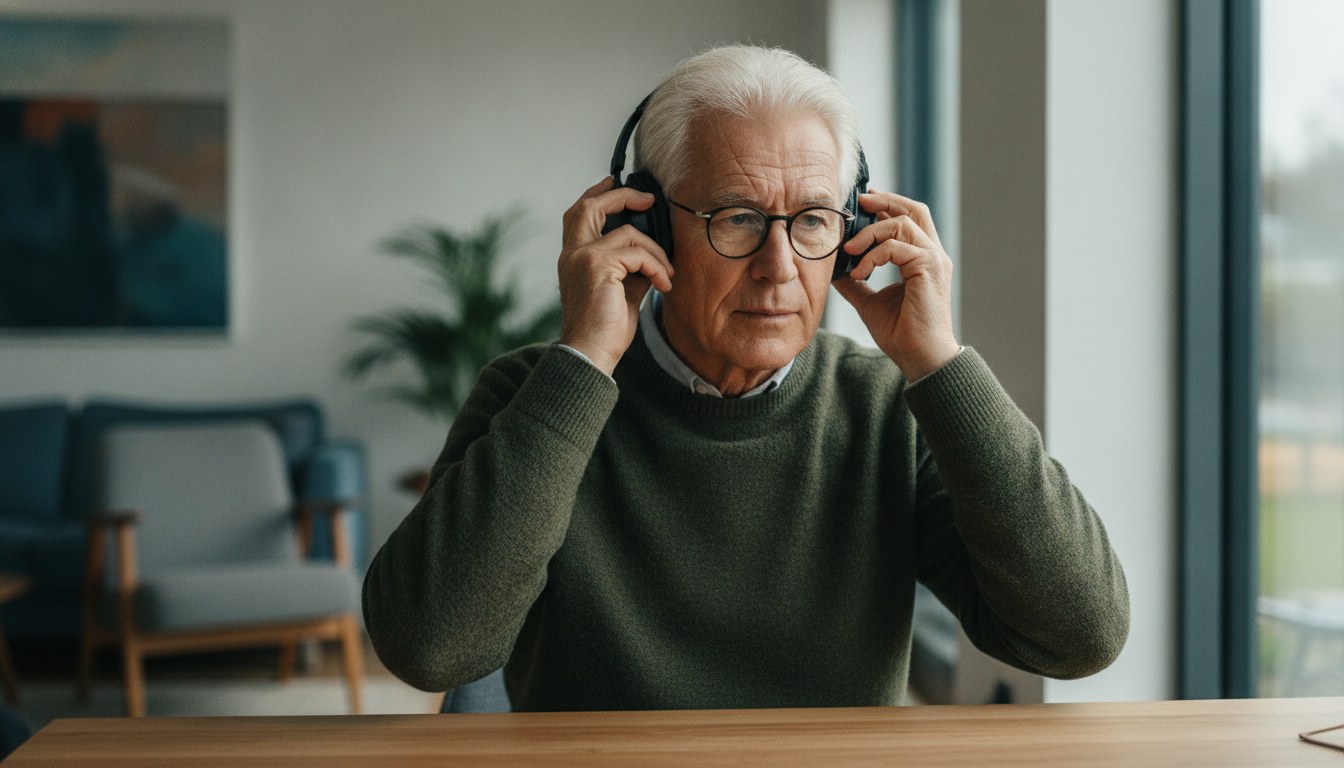
The headphone jack didn't disappear because engineers hated cables. It disappeared because most listening happens on the move now, and a wire snagging on a doorknob is a worse experience than a battery that needs a nightly top-up. Neither format has actually won the argument, though — each one just wins a different afternoon.
Wired vs wireless headphones comes down to what you're doing: wired wins on latency, price-to-performance, and zero battery anxiety, while wireless wins on freedom of movement, phone compatibility, and features like active noise cancellation. Desk gamers and budget shoppers lean wired; commuters and phone-first listeners lean wireless.
| Spec | Wired headphones | Wireless headphones |
|---|---|---|
| Audio latency | Effectively none | About 100-200 ms on standard SBC Bluetooth; lower on 2.4GHz gaming links |
| Sound signal path | Uncompressed, direct connection | Compressed and decompressed via a Bluetooth codec |
| Battery dependency | None required for passive listening | Requires charging; runtime is finite |
| Freedom of movement | Limited by cable length | No cable to manage or snag |
| Phone compatibility | Often needs a USB-C adapter on jack-less phones | Native fit for most current phones |
| Feature set | Limited to passive components | Supports active noise cancellation, touch controls, multipoint pairing |
| Price-to-performance at a given build quality | Typically stronger, since no battery or radio hardware is needed | Costs go partly toward battery, radio, and charging hardware |
| Quick Facts | |
|---|---|
| Typical SBC Bluetooth latency | 100-200 milliseconds |
| NIOSH recommended noise exposure limit | 85 dBA averaged over 8 hours |
| NIOSH exposure time reduction per 3 dBA increase | 50% shorter safe exposure time |
Wired vs wireless headphones: how the connection actually differs
Wired headphones send an analog or digital signal straight down a cable with no compression step, while wireless headphones compress audio, transmit it over Bluetooth, and decode it on the other end — a process that takes time and occasionally loses data.
Shopping for a specific model? See top-rated headphones models — 10 models compared on the specs that decide it.
A wired connection is about as simple as audio gets: an amplifier pushes a signal down a copper cable and the drivers in your headphones move air. There's no codec negotiation, no pairing handshake, and nothing to encode or decode. That simplicity is exactly why, in the wired vs wireless headphones debate, wired remains the default in recording studios and on esports desks.
Wireless headphones have to solve a harder problem. Bluetooth has a limited amount of bandwidth, so audio gets compressed before it's sent and decompressed once it arrives. The codec handling that job matters a lot. SBC is the mandatory baseline codec every Bluetooth headphone supports, and it does the job at a modest bitrate. Newer LC3, the codec built for Bluetooth LE Audio, needs far less data to sound as good — Bluetooth SIG's own testing found LC3 running at 160 kbps outperformed SBC running at 345 kbps on a standard listening-quality scale.
That efficiency gain matters for battery life and multi-device features, but it doesn't erase the fundamental difference: wired is a straight line, wireless is a translation. Most listeners can't hear the translation on a well-implemented pair of wireless headphones. Some can, especially on complex orchestral or bass-heavy material, and that's a fair reason to keep a wired pair around.
Sound quality: does wired really sound better
A well-made wired pair has a slight technical edge because nothing gets compressed, but a modern wireless headset using LC3 or aptX Adaptive can sound close enough that most listeners won't notice the difference on typical music or a video call.
This is the argument that never quite dies, and for wired vs wireless headphones the honest answer is 'it depends on the codec and the source material.' Wired audio bypasses compression entirely, so a lossless file played through a decent wired headphone will always have more headroom than the same file squeezed through Bluetooth. If you're listening to high-resolution masters or mixing audio for work, that headroom is worth paying for.
But for the vast majority of everyday listening — podcasts, streaming music, video calls — the gap has narrowed a lot. Bluetooth SIG's LC3 testing showed that codec closing most of the perceptible quality gap even at lower bitrates than the old SBC standard. The bottleneck these days is often the streaming service's bitrate, not the headphone's connection type.
Where wired still has a clean, unambiguous win is consistency. A cable doesn't drop frames when a microwave turns on nearby, doesn't need a firmware update, and doesn't degrade as a battery ages. If rock-solid, unchanging fidelity matters more to you than convenience, that consistency is the real selling point — not some universal wired-sounds-better rule.
Latency: why gamers still care about the cable
Wired headphones carry essentially zero added delay, while standard Bluetooth audio using the SBC codec runs somewhere in the 100 to 200 millisecond range — enough lag to throw off fast-paced games or lip-synced video.
For anyone who games competitively, latency is where the wired vs wireless headphones choice gets serious: it's the gap between when a sound is generated and when you actually hear it. On a wired connection that gap is negligible; electricity moves through copper about as fast as anything can. On Bluetooth, audio has to be compressed, transmitted, and decompressed, and each of those steps adds a few milliseconds. Standard SBC-based Bluetooth commonly lands in the 100-200 millisecond range depending on the device and implementation, which is a noticeable delay if you're tracking a fast-moving target on screen.
Manufacturers know this is a pain point, which is why competitive-focused wireless gaming headsets typically skip Bluetooth for a dedicated 2.4GHz USB connection instead — it behaves much closer to wired latency while still cutting the cord. If you want that combination, our gaming wireless headphones guide walks through models built around exactly this kind of low-latency wireless link.
For casual single-player games or watching TV, a little latency rarely matters because the audio and video are usually synced by the source device rather than raw through-the-air timing. But if you're playing anything competitive or doing rhythm-based gaming, wired — or a 2.4GHz wireless dongle built to behave like it — is still the safer bet.
Battery, convenience, and everyday practicality
Wired headphones never need charging and never run out mid-call, but wireless headphones free you from a cable that can catch on furniture, gym equipment, or a car door — and most people find that freedom worth the charging habit.
On the everyday-convenience front, wired vs wireless headphones is really a trade of one hassle for another. There's no getting around it: wireless headphones are one more thing to remember to charge. Run one down to zero in the middle of a commute and you're back to holding your phone up to your ear like it's 2005. Wired headphones don't have this failure mode at all — plug in and you're listening, indefinitely, with no runtime clock ticking.
What you get in exchange for that battery management is real freedom of movement. No cable means no snagging your headphones on a doorknob, no wire brushing against your jacket every time you turn your head, and no accidentally yanking your phone off a table. For runners, commuters, and anyone doing chores while listening, that's not a small convenience — it's the difference between headphones you forget you're wearing and headphones you're constantly adjusting.
There's also the phone problem. A lot of current phones dropped the headphone jack years ago, so wired listening on a phone usually means a USB-C dongle or a case that supports one. It works, but it's an extra part to lose. If most of your listening happens through a phone rather than a laptop or gaming console, that alone tips the practicality argument toward wireless.
Where wired headphones still win
Wired headphones remain the stronger pick for tight budgets, desk-bound gaming, and situations where a dead battery simply isn't an option.
Price-to-performance is the clearest case. Because a wired headphone doesn't need a battery, Bluetooth radio, or charging circuitry, more of the manufacturing cost goes straight into the drivers and build quality. That's a big part of why a well-reviewed wired gaming headset can undercut a similarly capable wireless model while matching or beating it on comfort and mic quality — our best headphones roundup includes several wired picks that make this trade-off explicit.
Desk setups are the other obvious win. If your headphones live at a desk next to a PC or console anyway, there's no mobility benefit to going wireless, but there is a latency and battery-anxiety cost. Plugging in once and never thinking about charge level again is a legitimate advantage for anyone gaming for hours at a stretch.
Finally, wired is the fallback that never fails. Airplane entertainment systems, gym equipment jacks, and older audio gear all still expect a 3.5mm plug. Keeping one wired pair around, even if your daily driver is wireless, covers you when a device doesn't support Bluetooth at all.
Where wireless headphones still win
Wireless headphones make the most sense for phone-first listening, workouts, TV viewing from a couch, and anyone who wants active noise cancellation or multi-device pairing.
The single biggest wireless advantage is that modern phones are built around it. No jack, no dongle, no cable getting in the way of your pocket. If your main listening device is a phone, wireless is the path of least resistance every single day, not just occasionally.
Wireless also unlocks features that a cable simply can't deliver: active noise cancellation processing, touch controls, voice assistant access, and pairing with two devices at once so a call can interrupt your music without you touching a cable. None of that is theoretical — it's the whole reason wireless headphones now dominate retail shelves.
TV watching is a specific use case worth calling out on its own. A dedicated wireless TV headphone setup lets you keep the volume exactly where you want it without a cable running across the living room or disturbing anyone else in the house. Our wireless TV headphones guide covers transmitter-based systems built specifically for that job, which is a different design problem than phone-paired Bluetooth earbuds.
A quick word on volume, regardless of format
Hearing damage risk comes from loudness and exposure time, not from whether the sound arrives through a cord or Bluetooth, so the same volume habits apply to both.
It's easy to assume the wired-vs-wireless decision has hearing-health implications, and it mostly doesn't. The National Institute for Occupational Safety and Health sets a recommended exposure limit of 85 A-weighted decibels averaged over an eight-hour period, and for every 3 dBA increase above that, the safe exposure time is cut in half. That threshold applies to whatever is generating the sound in your ears, cable or no cable.
What does change between formats is how tempted you are to crank the volume. Wireless headphones, especially ones with noise cancellation, tend to get used in louder environments — a train platform, a gym floor — where people push volume up to compensate for ambient noise. Passive wired headphones without cancellation can invite the same habit for the opposite reason: no cancellation means more ambient noise to drown out.
Either way, the fix is the same: use noise cancellation or comfortable ear seals to lower the volume you actually need, rather than fighting the outside world by turning things up.
Wired headphones win on latency, signal integrity, and price-to-performance, which is why they still dominate at gaming desks and budget shelves. Wireless headphones win on everyday freedom and features like noise cancellation, which is why they dominate phones and commutes. Most serious listeners end up with one of each rather than picking a permanent winner.
Frequently asked questions
Do wired headphones really sound better than wireless?
Is Bluetooth lag noticeable for gaming?
Why did phones stop having a headphone jack?
Do wired headphones need charging?
Are wireless headphones bad for gaming?
Should I buy both wired and wireless headphones?
Sources & references
- A technical overview of LC3 — Bluetooth SIG (Bluetooth Technology Website)
- Noise-Induced Hearing Loss — National Institute for Occupational Safety and Health (NIOSH), Centers for Disease Control and Prevention