| Quick Facts | |
|---|---|
| Nightly awakenings with age | 3-4 times per night; about 6.5-7 hours total sleep (MedlinePlus) |
| Medium-firm vs firm for low-back pain | odds ratio 2.10 for less disability, 313 adults (The Lancet, 2003) |
| Medium-firm review evidence | 39 studies; about 48% back-pain drop and 55% better sleep over 28 days (J Orthop Traumatol, 2021) |
| Repositioning to prevent pressure sores | every 1-2 hours in bed (MedlinePlus) |
| Topper thickness range in this guide | three-inch to five-inch foam builds |
| Alternating air-pressure pad specs | 130 air cells, about 22-23 dBA pump, up to 300 lb support |
Does a senior actually need a different mattress topper?
Not a special one, but the priorities shift. Fragmented sleep, achier joints, and less time in deep sleep make cushioning and pressure relief matter more with age than they did at 30.
Shopping for a specific model? See our best mattress topper picks — 10 models compared on the specs that decide it.
Sleep changes on its own schedule as we get older, and not for the better. MedlinePlus, the National Library of Medicine's consumer health service, notes that older people wake an average of three to four times a night, spend less time in deep, dreamless sleep, and often log only about six and a half to seven hours total. Pain and discomfort from long-term illness sit high on its list of reasons why. None of that is caused by a topper, and none of it is fixed by one either.
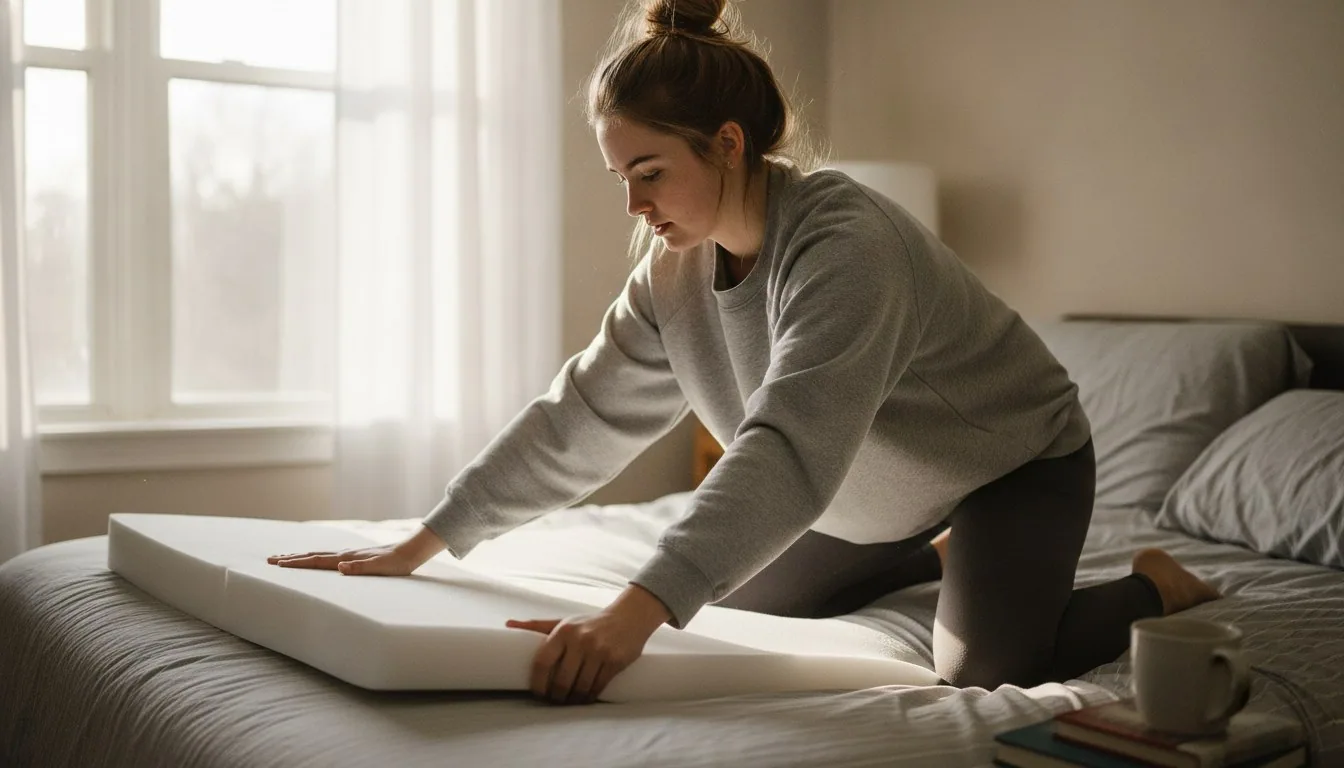
What a topper can do is change the surface those lighter, more easily interrupted hours play out on. Adding a few inches of foam over a mattress that has grown too firm, or lumpy in the wrong spots, takes pressure off the hips and shoulders that a lighter sleeper never notices. That is a real, modest benefit, not a cure. If a mattress has genuinely collapsed in the middle, a topper only papers over the sag, and the honest move is to budget for a replacement rather than layer foam on a failing base. A mattress topper for seniors, then, is best understood as a surface tweak, not a rescue for a bed that has already given out.
Choosing a mattress topper for seniors with back pain
Aim for medium-firm. Controlled trials link a medium-firm sleeping surface to less back pain and disability than a hard one, and a topper is an inexpensive way to soften a bed that skews too firm.
Back pain is the complaint that sends most older shoppers looking at toppers, and here the research points clearly in one direction. A randomized, double-blind trial published in The Lancet in 2003 followed 313 adults with chronic low-back pain and found that a medium-firm mattress outperformed a firm one. Patients on the medium-firm surface had roughly double the odds of improvement in disability (odds ratio 2.10), and pain on rising was significantly lower (p=0.008). Firmer is not better past a certain point.
A 2021 review in the Journal of Orthopaedics and Traumatology, led by Gianfilippo Caggiari, pulled together 39 studies and reached the same conclusion: a medium-firm surface promotes comfort, sleep quality, and spinal alignment. One trial it cited recorded a back-pain drop of roughly 48% and a 55% improvement in sleep quality after 28 days on a medium-firm bed. A topper cannot turn a soft mattress firm, but it can push a too-hard one toward that medium-firm zone, which is the more common problem in an older bed that has compacted over the years. For an older adult weighing a mattress topper for seniors mainly to calm back pain, medium-firm is the target. For a side-by-side look at which models support the lumbar area specifically, our mattress topper for back pain guide sorts them by exactly that.
Pressure relief and preventing bed sores
For a senior who spends long stretches in bed, pressure relief becomes a safety issue, not just comfort. A foam, gel, or air topper spreads load off bony areas, but it works alongside regular repositioning, not instead of it.
There is a second, more medical reason older adults look at toppers, and it deserves plainer talk. A mattress topper for seniors who are largely confined to bed carries a different brief than one bought for occasional stiffness. When someone spends most of the day and night lying down, steady pressure on the skin over bony spots can break it down into a pressure sore. MedlinePlus flags the hips, tailbone, and heels as the usual sites and advises changing position every one to two hours to keep pressure off any single spot. Its recommended surfaces are specific: a foam mattress, or one filled with gel or air.
That is where a certain kind of product in this category parts ways from an ordinary comfort topper. The models tracked for this guide include alternating air-pressure pads from Vive and Lunderg, built for hospital beds and bedridden care rather than a good night's sleep for a healthy back. The Vive pad cycles air through 130 cells and runs its pump at about 22 dBA; the Lunderg version measures 23 dBA and supports up to 300 pounds. These sit closer to medical equipment than bedding. The line worth holding onto is that no topper, foam or air, treats a pressure ulcer or removes the need to reposition. It lowers risk. A caregiver's schedule does the rest.
Foam type, thickness, and staying cool
Memory foam gives the deepest cushioning but traps heat; gel-infused foam and bamboo-derived covers push back on that. Thickness is a trade-off, since more foam means more pressure relief but a higher, harder-to-exit bed.
Material is where the spec sheets get noisy. Among the toppers tracked for this guide, thickness runs from a three-inch gel memory foam layer on the bedsmile topper, which carries a CertiPUR-US certification for foam content and emissions, up to a five-inch build from SHOUREN and a four-inch dual-layer, seven-zone design from ChiXpace. More inches mean more cushioning, and for a very light or very bony sleeper that can matter. It also raises the height of the bed, and for anyone who already finds standing up from a low mattress a strain, a tall topper can quietly make getting out of bed harder. That is a genuine trade-off, not a footnote, so the best-fitting mattress topper for seniors balances cushioning against the height of the finished bed.
Heat is the other recurring issue, since dense memory foam sleeps warm and older skin often runs cooler and drier. Several picks answer it with covers of rayon derived from bamboo, like the Niagara Sleep Solution topper, or gel infusions meant to draw heat away. Whether that is enough depends on the sleeper. If foam construction is the deciding factor for you, our foam mattress topper guide breaks the options down by density and feel.
Weight, washability, and staying put
The unglamorous details decide whether a topper helps day to day. Prioritize a washable cover, a deep-pocket or non-slip design that won't slide, and a weight you can handle at sheet-changing time.
The features that get the least marketing attention are often the ones that matter most for an older household. A cover you can machine wash is close to essential, because spills and accidents grow more common with age and a topper you cannot clean gets thrown out early. The top-ranked pick in our roundup, the SameBed Mattress Topper Queen, leans on this practicality: a fully machine-washable design and a stretch skirt that grips mattresses from eight to twenty-one inches deep, so it holds its place on a taller bed.
Staying put is not a small thing here. A topper that creeps and bunches overnight is a trip hazard for someone already unsteady on their feet in the dark, which is why non-slip gel dots and anchor straps, like the four on the bedsmile topper, are worth looking for rather than dismissing as a gimmick. Weight matters too, mostly at sheet-changing time, when wrestling a heavy foam slab is harder on arthritic hands. For the full ranked comparison with current specs, our best mattress topper for seniors guide lays the ten models we tracked side by side.