Best Power Backup for Home (2026)

A blackout doesn't wait for you to read the fine print. The ten power backup units in this guide split into two camps: pocketable battery banks meant to keep a phone or Cpap alive, and wheel-it-into-the-hallway stations built to carry a fridge through an outage. Knowing which camp you actually need saves you from overspending or, worse, buying too little.
Home power backup isn't one product category so much as three problems wearing the same name. Some buyers want a quiet battery for a Cpap machine or a router during a short outage; others need a station that can hold a refrigerator, a sump pump, and a few lights for hours. The ten units here span both extremes, from a 2.54 lb unit you can carry one-handed to a 77 lb LFP station meant to anchor a home backup setup. Wattage, battery chemistry, recharge speed, and outlet count all pull in different directions, so the right answer depends entirely on the load you're protecting. We pulled current Amazon specifications, product images, and pricing for the ten most relevant models, then scored each on capacity, charging speed, output, and how cleanly its real feature set matches a common use case. Picks that earned a higher rank delivered more usable capability for the money, not just bigger numbers on the box. What follows is a quick verdict, the spec dimensions that separate these units, and a candid look at where each one fits and where it falls short.
The short version: The Jackery Explorer 1000 v2 Portable Power Station takes our top spot, pairing a 1,070Wh LiFePO4 battery with 1,500W AC output and a 0-to-100% emergency charge in roughly an hour. For the smallest budget, the Daran Portable Power Station 89.6Wh LiFePO4 Battery 100W is the value pick, slim enough to fit in a bag yet still LiFePO4 inside.
- Top overall is the Jackery Explorer 1000 v2 Portable Power Station: 1,070Wh LiFePO4, 1,500W AC output, ~1-hour emergency recharge.
- Best value is the Daran Portable Power Station 89.6Wh LiFePO4 Battery 100W, about the size of a smartphone at 2.54 lb.
- Premium pick is the Jackery HomePower 3000 Portable Power Station: 3,072Wh, 3,600W output (7,200W surge), UL-certified UPS.
- Capacity spans 89.6Wh to 3,584Wh, so match watt-hours to the runtime you actually need.
- Several units (Explorer 1000 v2, EB3A, Goldenmate, Daran) advertise LiFePO4 chemistry rated for thousands of charge cycles.
Our Top 3 Picks

- 1,500W AC output with 3,000W surge peak
- 0-to-100% emergency charge in about an hour
- Over 70% capacity after 4,000 charges
- Three AC, two Usb-c, Usb-a and DC car ports
- 30 dB quiet overnight charging mode

- ETL-certified with a compact 9 x 5.5 x 7.5-inch body
- Two 110V pure sine wave AC outlets
- Three charging methods including solar input
- Battery management for voltage and temperature control
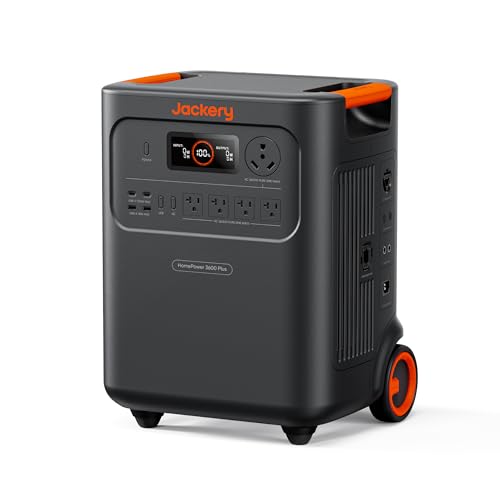
- 3,600W output, 7,200W in parallel
- 3,584Wh LFP battery expandable up to 21kWh
- Plug-and-play with MTS, no complex installation
- 0-to-100% recharge in about two hours via hybrid Ac+dc
Full Comparison — All 10 Power Backup for Home
| Image | Product | Features | Price |
|---|---|---|---|
Editor's Choice |
| Check Price on Amazon Read Full Review | |
Best Value |
| Check Price on Amazon Read Full Review | |
Premium Pick |
| Check Price on Amazon Read Full Review | |
 |
| Check Price on Amazon Read Full Review | |
 |
| Check Price on Amazon Read Full Review | |
 |
| Check Price on Amazon Read Full Review | |
 | 7Goldenmate 1000VA/800W Lithium UPS Battery Backup and Surge |
| Check Price on Amazon Read Full Review |
 |
| Check Price on Amazon Read Full Review | |
 |
| Check Price on Amazon Read Full Review | |
 |
| Check Price on Amazon Read Full Review |
How They Compare
Top picks — strengths at a glance
Brands compared
All 10, Reviewed
1 Jackery Explorer 1000 v2 Portable Power Station
A 1,070Wh LiFePO4 battery and 1,500W AC output (3,000W surge) let the Explorer 1000 v2 run multiple appliances at once, from a fridge to an electric pot. What pushes it to the top is the recharge: with emergency charging enabled in the Jackery app, it refills from 0 to 100% in roughly an hour, and the LFP pack holds over 70% capacity after 4,000 charges. Three pure sine wave AC outlets, two Usb-c, a Usb-a, and a DC car port round out a versatile spread.
- 1,500W AC output with 3,000W surge peak
- 0-to-100% emergency charge in about an hour
- Over 70% capacity after 4,000 charges
- Three AC, two Usb-c, Usb-a and DC car ports
- App is required to access the fastest emergency charging mode
- Lower capacity than the 3,000Wh-plus HomePower stations for whole-home loads
2 EnginStar Portable Power Station 300W 296Wh Battery Bank
At 9 x 5.5 x 7.5 inches and well under 8 lb, the EnginStar is the grab-and-go option for camping, hunting, or a short outage. Its two 110V pure sine wave AC outlets make it suitable for a Cpap machine and other sensitive gear, and it accepts three charging methods including any compatible 12-25V solar panel. An advanced battery management system handles voltage and temperature protection. It sits at #2 for delivering the essentials in a genuinely portable package.
- ETL-certified with a compact 9 x 5.5 x 7.5-inch body
- Two 110V pure sine wave AC outlets
- Three charging methods including solar input
- Battery management for voltage and temperature control
- 296Wh capacity limits runtime for larger appliances
- Solar panel is not included
3 Jackery HomePower 3600 Plus Portable Power Station
This is the heavyweight of the group: 3,600W output (7,200W in parallel) and a 3,584Wh LFP battery that's expandable up to 21kWh, enough to run pumps, heaters, and dryers. Jackery pitches it as essential home backup with a plug-and-play design that pairs with an MTS for no-complex-installation setup, and it refills 0-100% in about two hours via hybrid Ac+dc. Despite the output, it's billed as the lightest 3.6kWh LFP station, though near 77 lb it still stays put.
- 3,600W output, 7,200W in parallel
- 3,584Wh LFP battery expandable up to 21kWh
- Plug-and-play with MTS, no complex installation
- 0-to-100% recharge in about two hours via hybrid Ac+dc
- Heaviest unit here at about 77.16 lb
- Solar panel is optional, not included
4 Bluetti Elite 30 V2 Portable Power Station 600W
The Elite 30 V2 weighs just 9.4 lb, so it's easy to carry from room to room when a storm hits. It puts out 600W continuous with a 1,500W surge from its 288Wh LiFePO4 battery, and a 10ms UPS keeps connected devices from dropping during a blackout. Eight charging modes and a 380W fast wall charge add flexibility, and BLUETTI's UltraCell tech is claimed to cut power consumption by 50%. A genuinely lightweight pick for shorter outages.
- Only 9.4 lb for easy carrying
- 600W continuous, 1,500W surge output
- 10ms UPS keeps devices from dropping
- Eight charging modes with 380W fast wall charge
- 288Wh capacity suits short outages, not long ones
- 600W continuous output trails the larger stations here
5 Bluetti EB3A Portable Power Station
The EB3A pairs a 600W AC inverter with a 268Wh LiFePO4 pack and recharges from 0 to 80% in 30 minutes through a single cable. A built-in Mppt controller takes up to 200W of solar, so it doubles as a small solar generator with a panel added. The LiFePO4 cells are rated for over 3,000 recharges, roughly a 10-year lifespan. It's a compact, dependable choice for camping, trips, and short outages at #5.
- 0-to-80% recharge in 30 minutes
- 600W AC inverter with 268Wh LiFePO4 battery
- Built-in Mppt controller takes up to 200W solar
- LiFePO4 cells rated for over 3,000 recharges
- 268Wh capacity limits runtime under heavy loads
- 600W output trails the larger stations here
6 Jackery HomePower 3000 Portable Power Station
The HomePower 3000 is our premium pick for buyers who want to carry real household loads. It delivers 3,600W output with a 7,200W surge from a 3,072Wh LFP battery and ships with two 200W solar panels included, which sets it apart from the optional-panel models here. A UL-certified UPS takes over the instant the grid drops, and ChargeShield 2.0 with AI manages charging. It refills fully in 1.7 hours via hybrid AC and DC, or 2.2 hours on AC alone.
- 3,600W output with 7,200W surge
- 3,072Wh LFP battery for home essentials
- Two 200W solar panels included in the box
- UL-certified UPS with near-instant switchover
- Heavy at about 59.52 lb
- Sits among the higher-capacity, less portable units here
7 Goldenmate 1000VA/800W Lithium UPS Battery Backup and Surge
Unlike the portable stations here, the Goldenmate is purpose-built as a 1000VA/800W UPS battery backup. Its LiFePO4 (230.4Wh) pack is rated past 10 years and more than 5,000 charge cycles, and eight Nema 5-15P outlets combine surge protection with battery backup in a plug-and-play unit. A pure sine wave output and an LCD panel reporting real-time battery and power conditions make it a tidy fit for a desk or network gear during brief outages.
- Eight Nema 5-15P outlets with surge protection
- LiFePO4 pack rated past 10 years, 5,000+ cycles
- Pure sine wave output
- LCD panel with real-time battery and power info
- 230.4Wh capacity suits brief outages, not long runtimes
- Built as a stationary UPS rather than a portable station
8 Daran Portable Power Station 89.6Wh LiFePO4 Battery 100W
Our value pick is also the smallest unit here: about 6.5 x 3.3 x 4 inches and just 2.54 lb, roughly the size of a phone. The Daran packs an 89.6Wh LiFePO4 battery (not NCM) rated for 3,500+ cycles, with 100W output (200W peak) across seven outputs including AC and PD fast charging. It charges 0-80% in 1.5 hours and runs fanless and silent, which makes it ideal for keeping a laptop or Cpap going overnight without noise.
- Pocketable at about 2.54 lb
- 89.6Wh LiFePO4 battery rated for 3,500+ cycles
- 100W output (200W peak) across seven outputs
- Fanless, ultra-quiet operation
- 89.6Wh capacity is the smallest here, for light loads only
- 100W output won't run home appliances
9 Jackery Explorer 2000 v2 Portable Power Station
For buyers wanting serious capacity without a back-breaking unit, the Explorer 2000 v2 carries a 2,042Wh LiFePO4 battery and three AC ports totaling 2,200W output, yet weighs just 39.5 lb. It charges 0-80% in 66 minutes with AC fast charging, runs in a sub-30dB Silent Charging Mode, and the LiFePO4 pack is rated to last up to 10 years. It lands at #9 as a capable high-capacity option for outages and off-grid trips.
- 2,042Wh capacity with 2,200W across three AC ports
- 39.5 lb, lighter than many 2kWh units
- 0-to-80% in 66 minutes with AC fast charging
- Sub-30dB Silent Charging Mode
- Heavier than most picks here at about 39.5 lb
- 0-80% recharge takes 66 minutes, not the fastest refill here
10 Anker Solix C1000 Gen 2 Portable Power Station
The Solix C1000 Gen 2 stands out for recharge speed: upgraded HyperFlash tech fully refills at 1,600W, claiming a full charge in 49 minutes. It delivers 2,000W (3,000W peak) from a 1,024Wh LiFePO4 battery across ten ports, and Anker's InfiniPower design is rated for a 10-year lifespan. Compact enough to move room to room, RV, or campsite, it rounds out the list as a quick-charging option for outage prepping and off-grid use.
- Full charge in 49 minutes via HyperFlash
- 2,000W output (3,000W peak) across ten ports
- 1,024Wh LiFePO4 battery
- 10-year InfiniPower lifespan rating
- 1,024Wh capacity trails the 2kWh-plus stations here
- No solar panel included (optional add-on)
8 Things to Consider Before Buying Power Backup for Home
Start with the load, not the logo. Add up the watts of everything you'd run at once during an outage, then look for a station whose continuous AC output clears that number with headroom for startup surges. From there, weigh battery chemistry, recharge time, port mix, and weight against what you're willing to spend.
Our Final Verdict
The Jackery Explorer 1000 v2 Portable Power Station earns the top recommendation for most homes: a 1,070Wh LiFePO4 pack, 1,500W AC output with a 3,000W surge, and a roughly one-hour emergency recharge cover the common outage without overbuying. On the tightest budget, the Daran Portable Power Station 89.6Wh LiFePO4 Battery 100W is the value pick, a fanless, smartphone-sized unit for phones, a laptop, or a Cpap. When you need to carry real household loads, the Jackery HomePower 3000 Portable Power Station is the premium choice, with 3,072Wh, 3,600W output (7,200W surge), and a UL-certified UPS. Buy down the list only if a specific size, port count, or weight suits you better.
Frequently Asked Questions
What is the best power backup for home overall?
The Jackery Explorer 1000 v2 Portable Power Station is our top pick across the ten models compared. It pairs a 1,070Wh LiFePO4 battery with 1,500W AC output (3,000W surge peak) and can recharge from 0 to 100% in about an hour with emergency charging enabled through the Jackery app, which covers most short-outage needs without the bulk of a 3,000Wh-plus station.
What size power backup do I need for my home?
Match watt-hours to runtime and continuous watts to your load. A small unit like the Daran at 89.6Wh suits phones, a laptop, or a Cpap for a few hours; mid-size stations such as the Jackery Explorer 1000 v2 (1,070Wh) or Bluetti EB3A (268Wh) handle electronics and small appliances; and the Jackery HomePower 3000 (3,072Wh) or HomePower 3600 Plus (3,584Wh) are built to carry a fridge and other home essentials through a longer blackout.
Which of these can keep a refrigerator running during an outage?
Look at continuous output and capacity together. The Jackery HomePower 3000 lists 3,600W output and 3,072Wh, and the HomePower 3600 Plus delivers 3,600W with 3,584Wh, both described as backup for home essentials including a fridge. The Anker Solix C1000 Gen 2 delivers 2,000W with 1,024Wh, enough for a fridge for a shorter stretch. Add up your appliance wattage first, then leave surge headroom for the compressor.
Are LiFePO4 power stations worth it for home backup?
For frequent use, yes. LiFePO4 (LFP) cells are rated for far more charge cycles than standard lithium. The Jackery Explorer 1000 v2 advertises over 70% capacity after 4,000 charges, the Bluetti EB3A cites over 3,000 cycles equal to roughly 10 years, and the Daran lists 3,500+ life cycles. If your unit will sit on standby and cycle occasionally, that longevity pays off.
How quickly can these units recharge?
Recharge speed varies widely. The Anker Solix C1000 Gen 2 claims a full charge in 49 minutes, the Jackery Explorer 1000 v2 advertises 0 to 100% in about an hour with emergency charging via its app, and the Jackery HomePower 3600 Plus lists 0-100% in roughly two hours through hybrid Ac+dc. If outages come back-to-back, faster refill times keep you covered.
Do these power stations work with solar panels?
Most accept solar, though the panel is usually sold separately. The Bluetti EB3A has a built-in Mppt controller supporting up to 200W of solar input, the EnginStar charges from any compatible 12-25V panel, and the Jackery HomePower 3000 actually ships with two 200W solar panels included. Check each listing for whether the panel comes in the box before planning an off-grid setup.
Related Guides


