| Quick Facts | |
|---|---|
| PSI range, car-marketed washers | 2,100–3,500 max PSI |
| Flow rate range | 1.76–2.5 GPM |
| Common nozzle angle set | 0°, 15°, 25°, 40° quick-connect tips |
| Weight range | about 13 lb (compact wheeled) to 65 lb (wall-mount reel) |
| Hose length range | 20 ft coiled hose up to 100 ft retractable reel |
| Pressure washer ER visits (CPSC data via Consumer Reports, 2014) | 6,057 visits; 14% hospitalized |
Is it safe to pressure wash your car?
Yes, with the right nozzle and distance, a pressure washer is a normal, safe way to clean a car; how you aim and hold the wand matters more than which model you own.
Shopping for a specific model? See our pressure washers buying guide — 10 models compared on the specs that decide it.
Pressure washing a car is closer to using a firm rinse than a surgical tool, provided the nozzle is set to spread the water rather than concentrate it. A washer's PSI rating describes total force, but what actually reaches the paint is force divided by the area the spray covers. Open the nozzle to a wide fan and that same machine pushes far less force into any single point than a narrow jet does. That's the entire safety story in one sentence: angle and distance matter more than the number printed on the pump.
Are pressure washers good for cleaning cars in the first place? For the grime that actually accumulates on a daily driver, the answer is yes, decisively: brake dust baked onto wheels, bug splatter on the bumper, and a winter's worth of road salt in the wheel wells all come off faster under real pressure than under a garden hose. A hose and a bucket can still get a car clean, but a pressure washer cuts the scrubbing time and does a better job on textured plastic trim and wheel arches where a mitt can't reach.
None of that means every setting and every angle is fine everywhere on the car, but overall, it is safe to pressure wash your car when you match nozzle and distance to the panel. The next few sections cover where the real risk sits: nozzle choice, the parts of the car worth avoiding, and what changes if you're running an electric unit instead of gas.
Why nozzle angle matters more than raw PSI
A wide fan nozzle held back from the surface is what keeps a pressure washer safe on paint; the pinpoint tip is the setting that actually causes damage.
Most car-focused pressure washers on the market ship with a set of quick-connect tips spanning something like 0°, 15°, 25°, and 40°, plus a dedicated foam cannon for pre-soaking with soap before the rinse. The 0° tip is a pinpoint jet built for stripping concrete and loosening caked mud, not for anything with a clear coat on it. The wider tips in that same set exist specifically because manufacturers expect buyers to point these machines at vehicles, not just driveways.
So does a pressure washer damage car paint on its own? Not really. The washer is just a pump. Damage shows up when someone parks a narrow-angle tip a few inches from a panel and holds it there, especially over a spot where the clear coat is already thin, chipped, or bubbling with rust. Consumer Reports, drawing on Consumer Product Safety Commission injury data, advises skipping the zero-degree tip altogether and sticking to fifteen degrees or wider for routine spraying. That guidance lines up with why these nozzle sets ship with wider angles in the first place. Swap to a fan tip, keep the wand moving, and give the surface real distance, and the same PSI reading becomes routine.
Are pressure washers safe for cars with sensors, cameras, and trim?
Pressure washers are generally safe around modern car electronics and trim as long as the spray stays wide-angle and avoids direct, close-range contact with seams, sensors, and badges.
Modern cars carry more exposed electronics than they used to: parking sensors embedded in the bumper, a backup camera near the license plate, blind-spot pods tucked into the mirrors. None of that hardware is watertight the way a submarine hatch is; it's sealed against rain and road spray, not a jet aimed directly at the housing from a few inches away. Are pressure washers safe for cars with backup cameras and parking sensors? Generally, yes, if the spray glances across those areas the way rain would rather than blasting straight into a seam or connector.
The same logic applies to weatherstripping around doors and windows, badges, and any vinyl decals or wraps. A fan-pattern spray moving steadily across these surfaces does what it's supposed to and moves on. A pinpoint jet held still against a rubber seal can force water past it and into the door cavity, which shows up later as a musty smell or a fogged interior light. Skip pressure washing altogether on peeling decals or lifted trim edges. That's a job for a soft cloth, not the wand.
Choosing pressure washers for cars: what actually matters
The features worth prioritizing for car washing are a soap or foam attachment, a set of interchangeable nozzle angles, and a manageable weight, not the highest PSI number on the box.
A pressure washer kit for car use is usually built around the same core parts: a wand, a set of quick-connect nozzle tips, and a foam cannon that lays down soap before the trigger ever touches the high-pressure setting. Among the car-marketed models we track, max pressure runs roughly 2,100 to 3,500 PSI with flow rates between about 1.76 and 2.5 GPM, plenty of cleaning power at the wide-angle settings, with room to back off for anything delicate. Weight varies more than the spec sheets suggest it should. A compact wheeled unit built for driveway use can run around 13 pounds, while a wall-mounted model with a 100-foot retractable hose reel can top 60 pounds once it's bolted up.
For anyone shopping specifically with a vehicle in mind, our car pressure washer guide breaks down the current lineup by price, hose length, and what's actually in the box, which matters more for car washing than the PSI rating alone.
Electric vs gas: which is the safer pick for routine car washing?
Electric pressure washers are the simpler, lower-risk choice for weekly car washing: lighter, quieter, and free of the carbon monoxide and fuel-handling risks that come with a gas engine.
Gas pressure washers hit higher pressure and flow than most electric models, but that extra output comes from a small engine that needs fuel, exhaust ventilation, and periodic maintenance. Running one inside a closed garage is a genuine carbon monoxide risk, the same as any other gas engine. Electric units skip all of that. Plug in, pull the trigger, done. No fuel to spill near a car's paint, no engine to warm up, no exhaust to keep clear of.
The trade-off is electrical, not mechanical: any corded tool used around running water needs a grounded, GFCI-protected outlet, and the cord itself should stay off wet pavement rather than coiled in a puddle underfoot. That's a five-second habit, not a real limitation. An electric model covers most driveway car-washing routines without the fuel can and the noise: a rinse every week or two, a foam pre-soak, wheels and wheel wells included. Our electric pressure washer roundup is the place to compare current options if that's the direction you're leaning.
The safety question nobody asks: where does the water go?
Pressure washing a car safely also means keeping the soapy runoff out of the street; federal and state stormwater rules classify that wash water as a pollutant that has to stay off pavement and out of storm drains.
Nearly every guide to washing a car focuses on the paint and skips a question regulators actually care about: where does the water go once it leaves the hood? The U.S. Environmental Protection Agency's Office of Water classifies residential car-wash runoff as a stormwater issue, recommending that vehicles be washed in a driveway or yard rather than the street, that wash water be directed toward grass or gravel instead of pavement, that detergent use stay limited, and that runoff not reach a storm drain untreated. Minnesota's state stormwater program goes a step further, noting that even soap labeled biodegradable or phosphate-free still is not safe to send down a storm drain, and that some phosphate-replacement chemicals in those detergents can be more toxic than the phosphates they replace.
None of that makes pressure washing a car unsafe. It just widens what safe actually covers. Washing on grass, using less soap than the bottle suggests, and steering runoff away from the gutter costs nothing extra and keeps a driveway wash out of the storm drain entirely. So yes, it is safe to pressure wash your car and stay within local stormwater rules, provided the runoff doesn't reach a curb or storm drain untreated.
Pressure washing is safer for your car than for your hands
The wand poses more real risk to the person holding it than to the car's paint, since direct contact with the water stream can injure skin in a way a typical cut wouldn't.
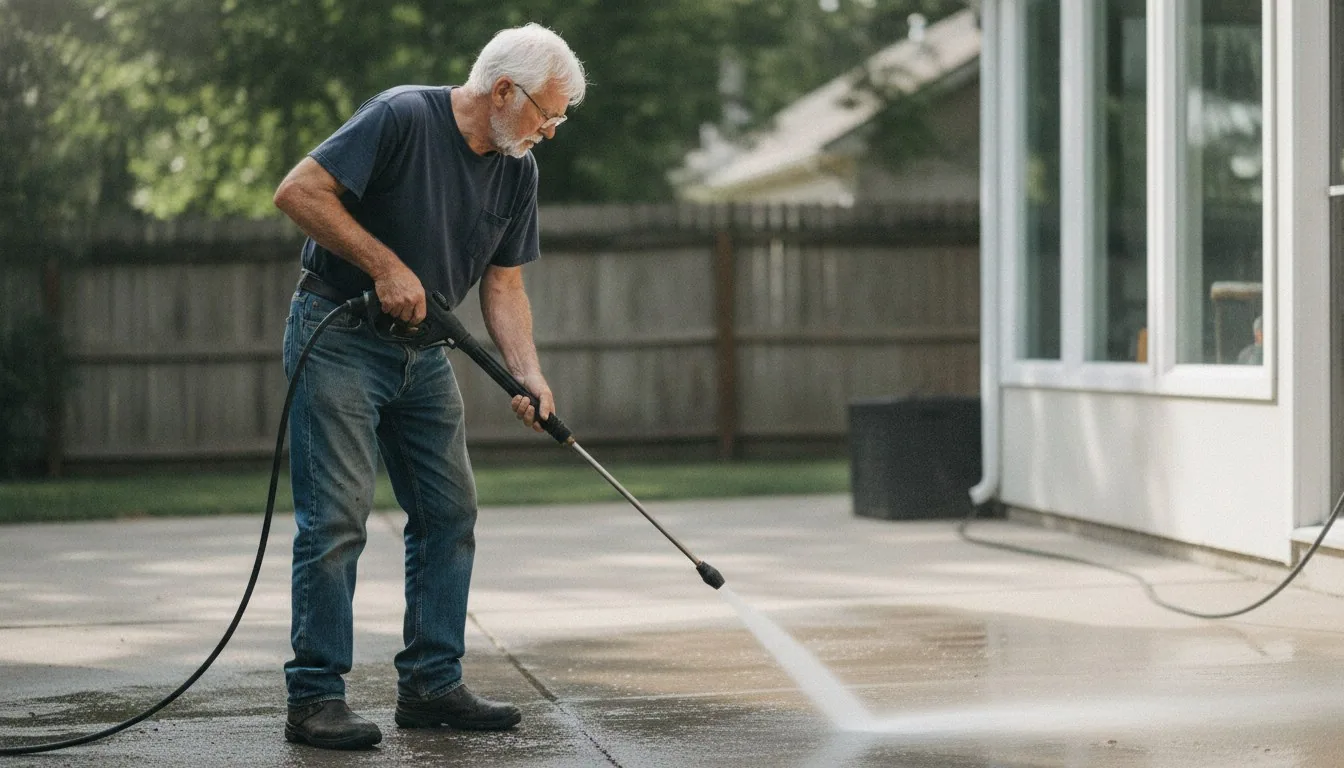
Car paint gets most of the attention, but the person holding the wand is more exposed to real injury than the fender is. The University of Kentucky's occupational health and safety office describes direct contact with a pressure washer's stream as something that "abrades away the skin layer by layer," producing wounds that heal slowly and can scar, a different, more serious injury than a typical cut or scrape. Consumer Reports' review of Consumer Product Safety Commission data puts a number on that risk: an estimated 6,057 people visited emergency rooms in one recent year with pressure-washer-related injuries, 14 percent of them serious enough to need hospitalization, with lacerations the single most common cause.
None of that should be alarming, it's the same category of common sense as not running a lawnmower over your own foot. Long sleeves, closed shoes instead of flip-flops, goggles, and keeping the nozzle pointed at the car instead of your hand cover most of the actual risk. The car will be fine either way; the goal is making sure you are too.