How to clean and maintain your vacuum's filters
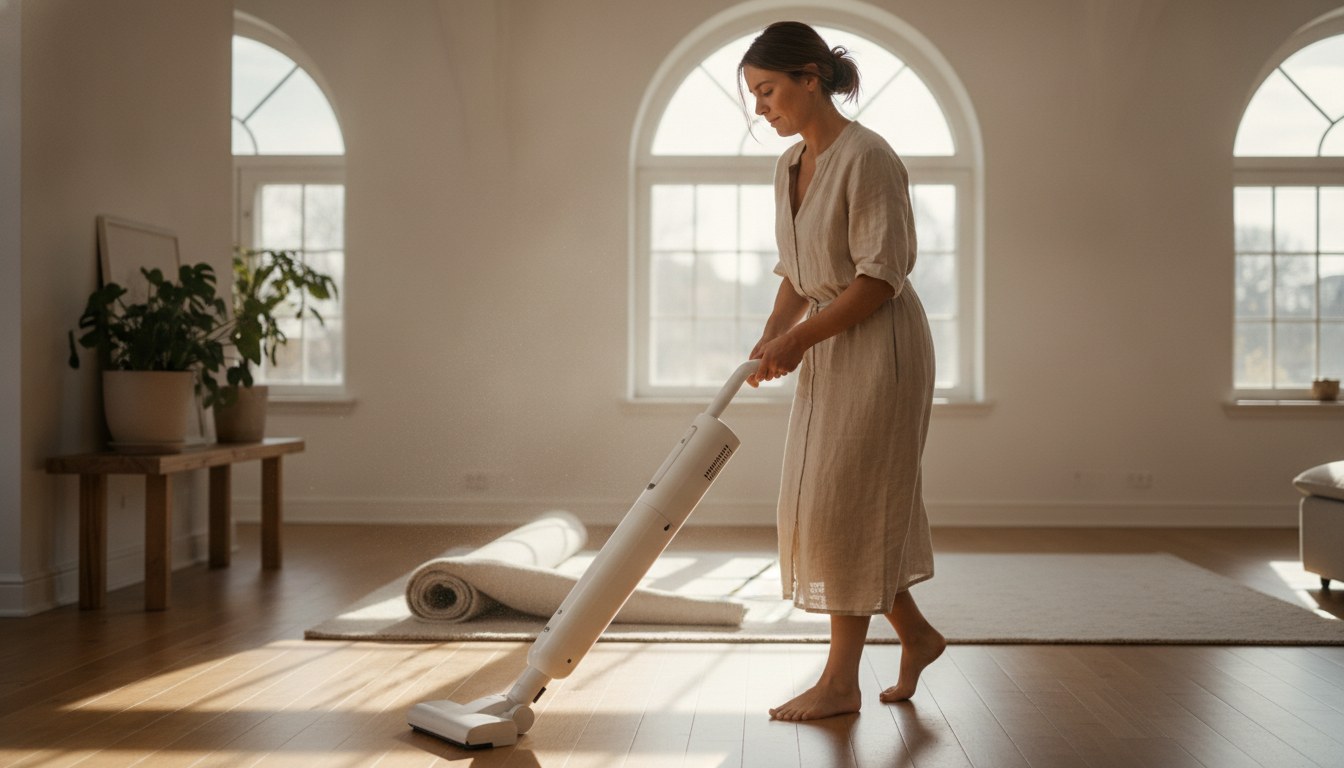
- Not every filter can be washed. A washable foam or HEPA-rated pre-filter takes plain water; a non-washable pleated HEPA cartridge or a bag gets replaced instead, since wetting it can collapse the pleats or seal that make it work.
- Drying matters as much as washing. The EPA's mold guidance puts the safe window at 24 to 48 hours before damp material is prone to growing mold, and a filter reassembled while still damp sits inside a warm, dark housing, close to ideal conditions for it.
- Vacuuming carpets and furniture at least once a week is the shared recommendation from the EPA and a peer-reviewed practice parameter for keeping dust mite allergen exposure down, and that pace only works if the filter behind the motor isn't already clogged.
- A controlled study of 50 homes found that a double pass with a HEPA vacuum, run in perpendicular directions, cut house dust mite allergen loading in carpets by a mean of 80.8 percent.
- Keeping indoor relative humidity between 35 and 50 percent slows dust mite reproduction, since mites need above 65 percent RH to thrive and their numbers drop once humidity falls under 50 percent, per the same practice parameter.
Unplug the unit before any cleaning or filter work.
Unplug it and empty the bin or bag
Disconnect the vacuum from power before opening any panel, then empty the dust cup into the trash or pull the bag if it's a bagged model. Starting with an empty canister makes it obvious which parts are actually dirty versus just full.
Pull the filter and check whether it's washable
Most machines list the filter type in the manual, but a foam or cloth-covered filter is almost always washable, while a rigid pleated cartridge usually isn't. When in doubt, treat it as non-washable rather than risk collapsing the pleats.
Rinse washable filters in plain water only
Hold the filter under a cool tap and squeeze gently until the water runs clear, skipping soap or detergent, which leaves residue that mats the material and attracts more dirt later.
Air-dry fully before reinstalling
Set the filter somewhere with airflow and leave it for a full day, sometimes two, checking that the center feels dry, not just the surface. A filter reinstalled damp risks mold and a musty smell inside the housing.
Check the belt and clear the brush roll
Flip the vacuum over, remove the base plate, and look for a stretched or cracked belt, a slow or stopped brush roll, or hair wound tight around the roller. Cut tangled hair free with scissors and replace a worn belt rather than stretching its life further.
Wipe the canister and reset any indicator
Wipe the dust cup or bag compartment with a dry cloth to clear the fine dust clinging to the walls, reassemble everything, and reset a filter-life or maintenance indicator if the model has one so it tracks from a clean baseline.
| Quick Facts | |
|---|---|
| HEPA filtration standard (EPA) | removes at least 99.97% of particles down to 0.3 microns |
| Recommended vacuuming frequency for dust mite control (EPA / practice parameter) | at least once a week |
| Allergen reduction from a double HEPA-vacuum pass (peer-reviewed, 50 homes) | mean 80.8% cut in house dust mite allergen loading |
| Relative humidity range to slow dust mite growth (practice parameter) | 35% to 50%; mites need above 65% RH to thrive |
| Mold risk window for a damp filter left wet (EPA) | 24 to 48 hours before damp material is prone to mold |
How often you actually need to clean a vacuum filter
There's no single number that fits every machine, but a washable pre-filter is worth checking every one to two weeks under normal use, while a non-washable HEPA cartridge or a bag gets swapped on its own separate schedule.
Shopping for a specific model? See our best vacuums picks — 10 models compared on the specs that decide it.
Bagged and bagless machines wear their filters differently, and that changes how often you should be looking at them. A bagless vacuum relies on its filter to do more of the separating work, since there's no paper bag catching the bulk of the dirt first, so the filter loads up faster and needs more frequent attention. A bagged machine's filter mostly protects the motor from what slips past the bag, which is why it can often go longer between checks.
The EPA recommends vacuuming carpets and furniture at least once a week to keep dust buildup down, and that's a useful anchor point: run the machine that often and the filter behind it is working every week too, not sitting idle. A practical habit is to glance at the pre-filter every time you empty the bin, and give it a real check every one to two weeks, more often in a house with shedding pets or a lot of foot traffic. Waiting for suction to visibly drop means you've already been vacuuming with a half-working machine for a while. If you're not sure which type of machine you're maintaining, or you're shopping to replace one that's past saving, our vacuum hub lays out how upright, canister, stick, and cordless models differ before cleaning schedules even matter.
How to clean a HEPA or foam vacuum filter without ruining it
Cleaning a vacuum filter safely comes down to knowing which kind you own: a washable foam or HEPA-rated pre-filter gets rinsed in plain water, while a non-washable pleated HEPA cartridge is built to be replaced, not soaked.
Not every filter labeled HEPA is meant to touch water, and that's the detail people skip. Some vacuums with HEPA filters use a washable pre-filter stage in front of a sealed, non-washable HEPA cartridge behind it; others build the whole HEPA stage as one washable foam-and-mesh unit. The manual, or a quick look at the filter itself, usually settles it: foam and cloth-covered filters are almost always washable, while a rigid pleated cartridge that looks like a folded paper fan usually isn't, since wetting it can collapse the pleats that give it its surface area.
For the washable kind, plain water is the whole method. Run it under a cool tap, squeeze rather than wring, and skip soap or detergent, since residue left in the foam attracts more dirt than it removes and can mat the material over time. That's really the entire answer to how to clean a HEPA vacuum filter: no scrubbing, no dish soap, no dryer, just water and patience. Air-dry it fully before it goes back in, and give it real time. The EPA's mold guidance notes that damp material generally avoids mold if it dries within 24 to 48 hours, which in practice means a filter should sit out for a full day, sometimes two, not the twenty minutes it takes to look dry on the surface. Canister vacuums in particular tend to put this washable stage right behind the handle, an easy spot to reach; our canister vacuum guide is worth a look if easy filter access is something you actually want in your next machine.
Filters, bags, and belts that can't be washed
A pleated HEPA cartridge, a paper bag, and a worn drive belt aren't cleaning projects; they're replacement parts, and trying to rinse or patch any of them usually costs more suction than it saves.
Some parts of a vacuum are consumables no matter how careful you are with them. A non-washable HEPA cartridge is one: once it's visibly gray, torn at an edge, or simply old, it gets replaced rather than rinsed, since water pulled through those tight pleats does more damage than the dust ever did. Bags work the same way; a paper or cloth bag in a bagged vacuum is emptied by throwing it out and putting in a new one, never shaken clean and reused, since a used bag's pores are already partly clogged with fine dust that a shake-out doesn't clear.
Belts are the other consumable, and they fail more obviously. A drive belt that's stretched or cracked lets the brush roll spin slower than the motor, or stop turning altogether, which shows up as a burning-rubber smell, a squeal, or carpet that stops showing clean pass lines under the vacuum head. Knowing how to replace a vacuum belt is mostly about access rather than skill: unplug the machine, flip it over, remove the base plate or brush roll cover, slide the old belt off the motor shaft and roller, and loop the new one back around both before reassembling. Manuals vary enough in the exact screws and clips that it's worth a quick look at yours before starting, but the sequence rarely changes.
Emptying the bin, cleaning the canister, and what it does for allergen exposure
A dust cup or canister that's packed past half full restricts airflow before the filter even gets a chance to work, and regular emptying paired with weekly vacuuming is what the research on dust mite allergens is actually built around.
Airflow is the whole point of a vacuum, and a canister crammed to the top fights the motor the same way a clogged filter does. Emptying a bagless bin around the half-to-two-thirds mark, rather than running it until it's packed solid, keeps suction closer to what the machine was built to deliver. Wipe the canister itself with a dry or barely damp cloth every few empties, since fine dust clings to the plastic walls and can work its way back into the airstream if it's left to build up.
This routine connects directly to allergen control, not just performance. A peer-reviewed practice parameter on dust mite exposure lists regular vacuuming, at least weekly, with HEPA filtration or a central vacuum vented outside, as a strong, evidence-graded recommendation, and a separate study of 50 homes found that a double pass with a HEPA vacuum cut house dust mite allergen loading by a mean of 80.8 percent. None of that works if the bin is already full or the filter is caked, since a blocked machine just recirculates what it can't hold. Keeping indoor humidity between 35 and 50 percent helps too, since mites need over 65 percent relative humidity to thrive and their numbers fall once it drops under 50. Newer hybrid machines complicate the routine further: cordless vacuums that wash and vacuum in one pass carry a water tank, a roller brush, and a filter, each on its own separate care schedule instead of one combined step, so check the label for each part rather than assuming a single rinse covers the whole machine.
Signs your vacuum needs more than a quick clean
If suction is still weak after a clean filter, a fresh belt, and an empty bin, the problem is usually a hidden blockage or a motor that's simply worn out, and no amount of rinsing fixes either one.
Cleaning solves the maintenance problems, but it doesn't solve every problem. A hose or wand with a clog partway down chokes airflow just as badly as a dirty filter, and it's worth pulling the hose straight and checking for anything lodged in a bend before blaming the filter again. A filter that's been washed many times can also just wear out. Foam loses some of its density with repeated compressions, and mesh can stretch, so a filter that looks clean but is a few years old may simply not seal or filter the way it did when new.
Motors wear too, and that's the honest limitation here: a tired motor pulls less air no matter how spotless the filter is, and no cleaning routine restores compression that's mechanically gone. If you've worked through the filter, the belt, and the bin and suction still lags, that's a sign the machine itself, not your maintenance, is the limiting factor. Comparing what a new model actually offers is a more useful next step at that point than chasing one more repair, and our vacuum buying guide is a reasonable place to start that comparison.
Frequently asked questions
How often should you clean a vacuum filter?
Can you wash a vacuum filter?
How do you clean a HEPA vacuum filter without damaging it?
How do you know when to replace a vacuum belt?
Does using a coin-operated car-wash vacuum count as cleaning or maintaining my home vacuum?
Do 2-in-1 machines that wash and vacuum need filter cleaning too?
Sources & references
- Asthma Triggers: Gain Control — US Environmental Protection Agency (EPA)
- What is a HEPA filter? — US Environmental Protection Agency (EPA)
- Environmental assessment and exposure control of dust mites: a practice parameter — Annals of Allergy, Asthma & Immunology (Joint Task Force on Practice Parameters)
- Evaluation of HEPA vacuum cleaning and dry steam cleaning in reducing levels of polycyclic aromatic hydrocarbons and house dust mite allergens in carpets — Journal of Environmental Monitoring
- A Brief Guide to Mold, Moisture and Your Home — US Environmental Protection Agency (EPA)