
| Quick Facts | |
|---|---|
| HEPA filtration efficiency | removes at least 99.97% of particles at 0.3 microns (EPA) |
| Minimum CADR for a 300 sq ft room | about 195 CFM (EPA sizing guidance) |
| Recommended indoor humidity ceiling | 50% relative humidity (EPA) |
| Portable humidifier cleaning cadence | empty and wipe daily; deep-clean about every third day (EPA) |
| Humidifier water type | distilled or boiled-and-cooled water reduces germ growth (CDC) |
What an air purifier and a humidifier each actually do
An air purifier pulls particles - and sometimes gases - out of room air by pushing it through a filter; a humidifier releases water vapor to raise the room's moisture level. One subtracts, the other adds.
Shopping for a specific model? See the best air purifier we tested — 10 models compared on the specs that decide it.
Strip away the marketing and the two machines aren't cousins. An air purifier is a fan pushing air through a filter, most commonly a HEPA filter rated to capture at least 99.97% of particles down to 0.3 microns, per the U.S. Environmental Protection Agency's HEPA filter guidance. Some models add an activated-carbon layer for smoke and cooking odors, since HEPA media alone doesn't touch gases. Sizing matters more than most shoppers expect: the EPA's guide to air cleaners in the home recommends a minimum Clean Air Delivery Rate (CADR) of about 65 CFM for a 100-square-foot room, climbing to roughly 195 CFM at 300 square feet and 390 CFM at 600 square feet. A humidifier does none of that filtering. It's a reservoir and a mechanism - ultrasonic disc, evaporative wick, or steam element - that adds water vapor to dry air. Neither device does the other's job, which is why the pairing question is so common in the first place; our air purifier hub breaks down every filtration subtype we cover before you compare specific picks.
When an air purifier is the actual fix
If your symptoms trace back to dust, pollen, pet dander, mold spores, or smoke particles, an air purifier addresses the cause directly; a humidifier does nothing for any of them.
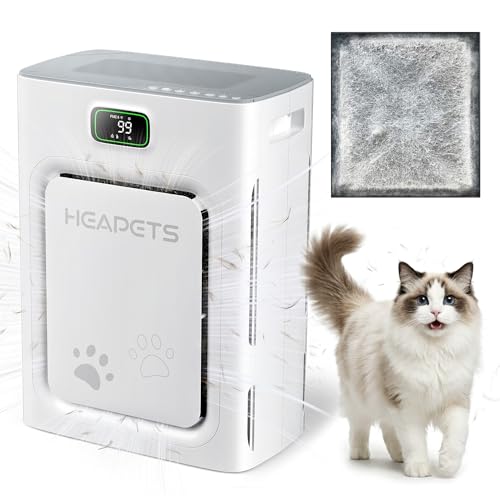
Airborne particles are the purifier's whole reason for existing. Dust, pollen, pet dander, mold spores, and wildfire or cooking smoke all get pulled into the filter and trapped there - assuming the unit is sized correctly for the room, which is where a lot of buyers go wrong, since an undersized unit just recirculates dirty air more slowly. If sneezing, itchy eyes, or a persistent cough are the trigger, start with our air purifier guide for allergies, which walks through filtration tiers and room-size math for exactly this complaint. Households with cats or dogs run into a related but distinct problem: dander is finer than typical dust and stays airborne longer, so CADR sizing matters even more than usual. Smoke is its own category - both wildfire smoke and lingering cigarette or cooking smoke carry gas-phase compounds that a HEPA-only filter can't touch, which is why the EPA guide specifically calls out activated carbon for that use case. For a ranked shortlist across every use case, our best air purifiers guide compares current filtration specs side by side. None of this moisturizes anything. A purifier can run at full tilt in a bone-dry room and your skin will still crack.
When a humidifier is the actual fix
Dry skin, cracked lips, nosebleeds, static shocks, and winter congestion usually trace back to low humidity, not airborne particles - a humidifier addresses that directly, and a purifier does not.
Heated indoor air in winter routinely drops well below comfortable humidity, dry enough to crack knuckles, static-shock you at every doorknob, and leave a sleeping toddler with a raw throat by morning. A humidifier's job is narrow and specific: add water vapor until the room sits in a comfortable range. The EPA's guidance on home humidifiers draws a hard ceiling here too - don't push relative humidity above 50%, because past that point you're not helping anyone, you're growing mold and feeding dust mites in the carpet. That's a real trade-off worth sitting with: the device meant to fix dry-air symptoms can, left on a cranked setting, recreate the exact conditions an air purifier then has to work overtime to clean up. Cool-mist and warm-mist (steam) models both work; steam units carry a burn risk around kids and pets that cool-mist doesn't. Whichever type you pick, it's solving a moisture problem, full stop - it isn't filtering anything out of the room.
Air purifier vs humidifier vs dehumidifier: the third device
A dehumidifier removes moisture from the air rather than adding it - it targets damp, musty, or mold-prone spaces, and it's a different tool from both a purifier and a humidifier.
The three devices get lumped together in searches, but only two of them touch moisture, and they pull in opposite directions. A humidifier adds water vapor; a dehumidifier pulls it back out, typically by condensing it onto a cold coil and draining or collecting it. Basements, laundry rooms, and any space that smells musty or grows visible mold on drywall are dehumidifier territory, not humidifier territory - adding moisture there would make things worse. An air purifier sits outside that axis entirely: it doesn't change humidity in either direction, it filters particles regardless of how wet or dry the air is. The EPA is blunt about this boundary - a portable air cleaner does not address the cause of mold or musty odors, because that cause is moisture, not airborne particulate. If mold is the actual complaint, a dehumidifier, paired with fixing the moisture source, does more than any filter will.
Air purifier vs humidifier for allergies: which one actually helps
For classic allergy triggers - dust mites, pollen, pet dander, mold spores - an air purifier does the heavier lifting; a humidifier helps only indirectly, and can backfire if it's overused.
Allergy sufferers get pointed toward both devices, and the honest answer is that they're not equally useful. Pollen, dust-mite waste, pet dander, and mold spores are physical particles suspended in air, and a correctly sized HEPA purifier is built to capture them - that's the direct fix. A humidifier's connection to allergies is more indirect: dry sinus passages can make an existing allergic response feel worse, and some people find mild humidity soothing for irritated nasal tissue. But push the humidity too high and you create a better breeding ground for two of the biggest allergy triggers there are, dust mites and mold, which is exactly why the EPA's 50% ceiling matters more here than in almost any other use case. If allergies are the driving complaint, size the purifier to the room first and treat a humidifier as, at best, a secondary comfort measure kept on a strict humidistat.
Upkeep and safety: what each one actually demands of you
An air purifier needs periodic filter swaps and a large enough CADR rating; a humidifier needs near-daily cleaning to avoid growing the exact germs and mold it's supposed to help you avoid.
The upkeep gap between these two devices is bigger than most buying guides admit. A HEPA filter typically needs replacing on a schedule set by the manufacturer, and a pre-filter needs vacuuming in between - low-effort, infrequent, easy to forget for months without consequence. A humidifier is a different commitment entirely. Per the EPA's guidance on home humidifiers, portable units should be emptied and wiped dry daily, with a deeper clean roughly every third day to keep scale and microorganisms from building up in standing water. The CDC's guidance on waterborne germs at home backs this up, recommending distilled or boiled-and-cooled water and daily emptying specifically to cut down on germ growth in the reservoir. Skip that maintenance and a humidifier can aerosolize the same bacteria and mold it's meant to keep your sinuses clear of - genuinely one of the more counterintuitive facts in this whole comparison. Also worth flagging: avoid any air purifier that intentionally generates ozone as a selling point. No federal agency has approved ozone-generating devices for occupied rooms, per the EPA, regardless of what the marketing copy claims.