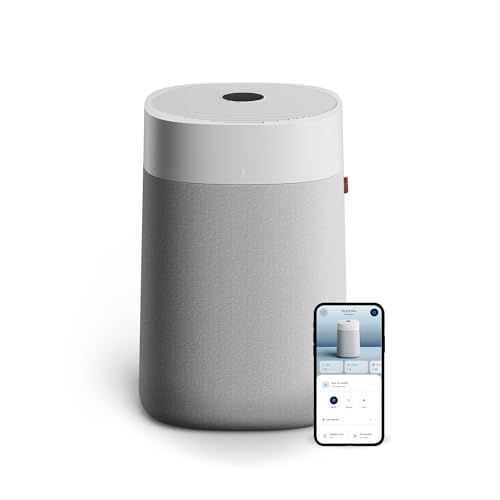
| Quick Facts | |
|---|---|
| True HEPA capture rate | at least 99.97% of particles at 0.3 microns (EPA/DOE standard) |
| AHAM CADR sizing rule | smoke CADR at least two-thirds of the room's square footage |
| EPA CADR example | a 200 sq ft room needs roughly 130 CFM minimum CADR |
| Recommended indoor humidity for mold/dust-mite control | 30-50% relative humidity (EPA) |
| LEVOIT Core 300-P smoke CADR | 143 CFM, AHAM VERIFIDE tested |
| VOOPNU low-speed noise level | as low as 22 dB |
Do air purifiers actually help with allergies?
Yes, in the sense that HEPA filtration measurably reduces airborne pollen, mold spores, and dander - EPA-reviewed research links that to real symptom improvement, though the effect is often modest rather than dramatic.
Shopping for a specific model? See our best air purifier picks — 10 models compared on the specs that decide it.
The U.S. Environmental Protection Agency has looked at this question directly, and its verdict is a qualified yes. Multiple studies using portable HEPA air cleaners found improvement in at least one allergy or asthma symptom. That's about as close to an official green light as you'll get, and it comes with an asterisk the EPA doesn't hide: the improvements don't always show up as major, and they rarely clear every symptom at once. Not every 'air purifier allergy relief' claim printed on a box means the same thing, which is exactly why that fine print matters more than the headline.
So can air purifiers help with allergies enough to notice day to day? For most households, an air purifier for allergies earns its keep - it helps with allergies by pulling pollen, mold spores, and skin flakes out of circulation before you breathe them back in. Whether it helps enough to matter depends on three things: room size relative to the unit's rated capacity, how fine the filter actually is, and whether you run it on a setting strong enough to move real volume. A unit idling on low in the corner of a large room isn't going to touch a spring pollen spike, no matter what the box promises.
If allergies are the main reason you're shopping, our allergies air purifier guide narrows the field to models built around that specific use case, rather than units that mention HEPA once on the packaging and move on.
What about asthma specifically?
Air purifiers help asthma through the same mechanism as allergies, thinning out airborne triggers, but the EPA's own asthma-trigger list includes things like settled dust-mite waste and mold that need direct cleanup, not filtration alone.
Per EPA guidance on asthma triggers, the biggest indoor culprits are dust-mite droppings, pet dander, mold spores, and smoke, all of which a HEPA-grade purifier can pull out of circulation once they're airborne. That's a real mechanism, not marketing - it's the same filtration doing the same job it does for allergies, just aimed at a slightly different symptom.
Whether a given air purifier is good for asthma in your specific case depends on what's actually triggering it. Mold is as much a humidity problem as an air-quality one; the EPA recommends keeping indoor relative humidity between 30 and 50 percent, since mold and dust mites both gain ground once a room sits above that band. A purifier running in a damp basement is fighting a battle it can't win alone if nothing addresses the moisture itself.
For picks built around this, our asthma air purifier guide favors models with certified true HEPA filtration over the 'ionic' or ionizer-style units some asthma sufferers are advised to skip because of ozone byproducts.
HEPA, CADR, and how these machines actually remove dust
A true HEPA filter captures at least 99.97% of particles at 0.3 microns, the hardest size to trap, and CADR tells you how much clean air a unit actually delivers per minute for a room your size.
How do air purifiers remove dust, pollen, and everything else drifting through a room? A fan pulls the air through a pleated filter dense enough to trap particles physically, rather than zap them electrically. Per the EPA's own definition, a true HEPA filter removes at least 99.97% of particles at 0.3 microns, which happens to be the size that's hardest to catch. Anything bigger or smaller gets trapped even more efficiently, so an air purifier that removes dust at that grade is also removing the finer allergens riding along with it. If air purifier dust control is your main goal - nearby construction, a shedding pet, whatever - does an air purifier help with dust that's already settled? Not directly; more on that limit in the next section.
Can air purifiers remove dust from a whole room, or just what passes through the intake? Only the latter, which is why sizing beats spec-sheet skimming. The Association of Home Appliance Manufacturers recommends a two-thirds rule: a unit's smoke CADR should equal at least two-thirds of the room's square footage, and its own example puts a 120 sq ft room at a smoke CADR of roughly 80 or higher. The EPA's guide backs that up with concrete numbers of its own - about 65 CFM covers a 100 sq ft room, and a 200 sq ft room needs a minimum CADR around 130 CFM. Undersize it and an air purifier good for dust on paper will still leave a visible film on the shelves.
This is where the spec sheet earns its keep. The LEVOIT Core 300-P we track in our comparisons lists an AHAM VERIFIDE smoke CADR of 143 CFM, a tested figure rather than a marketing claim, and the kind of number worth checking before assuming any purifier will keep up with your space. For a deeper look ranked on exactly this math, our dust-focused air purifier guide sorts models by tested CADR rather than box copy.
What an air purifier can't fix
It can't remove allergens already settled on furniture, carpet, or bedding, and per the EPA there's real debate over how much filtration helps with heavier particles like pollen and dust-mite waste that don't stay airborne long.
Here's the limitation the sales copy tends to skip. The EPA notes there's some controversy over whether air cleaners meaningfully reduce reactions to larger particles like pollen, dust-mite allergens, and pet dander, because most of that material sits on surfaces around your home rather than floating in the air where a filter can reach it. A purifier only filters what's currently airborne; dust disturbed by a vacuum and resettled twenty minutes later was never really removed, just delayed.
That's not an argument against buying one - it's a reason to treat it as one tool among several rather than the whole plan. Wash bedding in hot water weekly, use dust-proof covers on pillows and mattresses, vacuum with a HEPA-filtered vacuum rather than whatever's in the closet, and keep humidity in that 30-50 percent band so mold and dust mites both lose ground. A purifier posting great numbers on a spec sheet still won't out-clean a mattress that hasn't seen a dust-proof cover in years.
It's also worth separating this from a humidifier, since the two get lumped together. An air purifier or a humidifier for allergies isn't really a coin flip once you know what each device does: the purifier removes particles, the humidifier adds moisture to soothe dry sinuses, and pushing a humidifier past 50 percent can quietly make dust-mite and mold problems worse instead of better.
Choosing one if allergies or asthma are the actual goal
Prioritize AHAM VERIFIDE-certified true HEPA units with a CADR matched to your room over anything marketed mainly as 'ionic,' then check that the listing actually names your allergy or asthma use case.
Are air purifiers good for allergies across the board, or does certification matter more than the brand on the box? Certification wins. Among the models tracked for this use case, the LEVOIT Vital 200S-P is AHAM VERIFIDE certified and ships with a dedicated HEPA sleep mode built around allergy relief and pet hair in bedrooms - the kind of detail that separates a purpose-built pick from a general-purpose fan with a filter bolted on, and one reason it keeps landing at the top of our own comparisons.
On the pricier end, BLUEAIR's Blue Pure 211i Max uses what the brand calls HEPASilent dual filtration to handle dust, wildfire smoke, pet dander, and pollen in larger rooms, with sensors that ramp the fan up automatically when pollution spikes. If cat allergies specifically are the worry, that same filtration class is what most dander-focused units lean on: can air purifiers help with cat allergies? Only if the filter is fine enough to catch the sticky Fel d 1 protein once it's airborne, which is exactly what H13-grade true HEPA is built for. Budget shoppers tend to land on something like the VOOPNU unit, which pairs H13 True HEPA filtration with a fan quiet enough to run overnight - as low as 22 dB on its lowest speed.
For the full lineup ranked on this specific use case, our best air purifiers for allergies roundup compares all of them on the metrics that actually matter here, rather than price alone.