Electric vs manual toothbrush: which is better for teeth
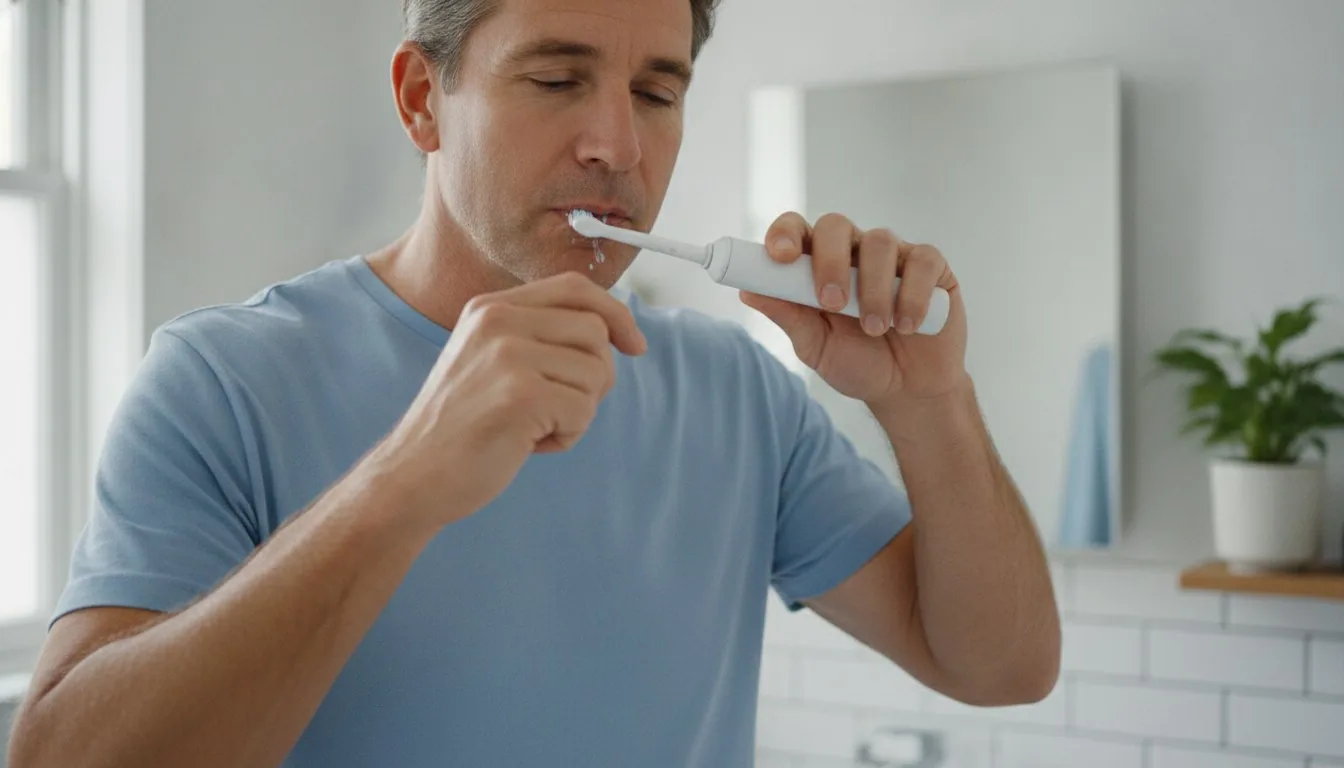
The toothbrush aisle turns a cheap decision into a small existential crisis. Somewhere between the bargain multipack and the brush with five vibration modes, most people just want to know if the extra cost actually buys cleaner teeth or just buys a nicer bathroom counter.
For electric vs manual toothbrush, the electric toothbrush wins on the numbers: a Cochrane review of 56 trials found rotation-oscillation electric brushes cut plaque by about 11% and gingivitis by about 6% within one to three months versus manual brushing. A manual brush used correctly, twice daily, still meets the American Dental Association's bar for effective cleaning.
| Spec | Electric toothbrush | Manual toothbrush |
|---|---|---|
| Plaque reduction vs the other type (1-3 months) | About plaque scores than manual, per the Cochrane review, for rotation-oscillation models | Baseline; no automated advantage, result depends entirely on technique |
| Gingivitis reduction vs the other type (1-3 months) | About gingivitis scores than manual, per the same Cochrane review | Baseline; effectiveness tracks technique and consistency |
| Built-in timing feedback | Many models pulse or beep at 30-second intervals to pace a full 2-minute brush | None; timing relies entirely on the person brushing |
| Pressure feedback | Some models include a sensor that signals or reduces power when pressing too hard | None; overbrushing pressure has no built-in warning |
| ADA acceptance standard | Can earn the ADA Seal of Acceptance under the same evaluation criteria as manual | Can earn the ADA Seal of Acceptance under the same evaluation criteria as electric |
| Portability and reliability | Needs charging or batteries; a dead battery mid-trip means no working brush | No power source needed; works identically anywhere, anytime |
| Ongoing maintenance | Handle purchased once, brush heads replaced roughly every 3-4 months | Whole brush replaced roughly every 3-4 months, no separate parts |
| Quick Facts | |
|---|---|
| Plaque reduction, powered vs manual (1-3 months) | ~11% (Cochrane review, Quigley Hein/Turesky index) |
| Trials reviewed | 56 randomized trials, 5,068 participants |
| Recommended brushing time | 2 minutes, twice daily (ADA) |
| Toothbrush/brush-head replacement interval | every 3-4 months, or sooner if frayed (ADA) |
Electric vs manual toothbrush: what the research actually measured
A large Cochrane review found electric toothbrushes with a rotation-oscillation head modestly outperform manual brushes on plaque and gingivitis scores, though the size of the benefit is small in absolute terms.
Shopping for a specific model? See top-rated electric toothbrushes models — 10 models compared on the specs that decide it.
The most-cited evidence on this question comes from the Cochrane Oral Health Group, which pooled 56 randomized trials covering 5,068 participants brushing with either a powered or a manual toothbrush. The reviewers weren't grading brushes on vibe; they used standardized clinical indices, the Quigley Hein (Turesky) index for plaque and the Löe and Silness index for gingivitis, the same scoring systems dental researchers have used for decades to make studies comparable.
The headline number is an 11% reduction in plaque and a 6% reduction in gingivitis for powered brushes over manual ones, measured in the one-to-three-month window, with evidence rated moderate quality. That is a real, statistically detectable difference, not a rounding error, but it is also not the dramatic gap that toothbrush marketing sometimes implies. Among powered brush designs, the rotation-oscillation action, where the head spins in one direction and then the other, was the one with enough consistent trial data behind it to draw a firm conclusion; other electric mechanisms like sonic or ultrasonic brushes had thinner or more mixed evidence in the same review.
Why brushing technique closes most of the gap
An electric toothbrush cannot fix bad habits by itself, but its built-in timer and pressure feedback tend to correct the two mistakes, brushing too fast and brushing too hard, that most limit a manual brush's effectiveness.
Here's the part the plaque percentages don't fully explain. The ADA recommends brushing for two full minutes, twice a day, and most people underestimate how long two minutes actually feels standing at a sink. A manual brush has no way to tell you that you stopped early. Plenty of electric models build in a timer that pulses or beeps at 30-second intervals, nudging you through all four quadrants of your mouth instead of camping out on your front teeth and calling it done.
Pressure is the other habit an electric brush can correct that a manual one simply can't flag. Brushing too hard doesn't clean better, it just wears down enamel and pushes gums back over time, and it's a genuinely common failure mode with manual brushing since there's no feedback loop telling you to ease off. Some electric toothbrushes include a pressure sensor that pauses or signals when you're pressing too firmly, which matters more than people expect for anyone already dealing with sensitive teeth or gum recession. None of this means a manual brush can't do the job. It means a manual brush puts the entire burden of timing and pressure control on the person holding it, and an electric one automates part of that discipline away.
Where a manual toothbrush still holds its own
A manual toothbrush costs less to keep running, needs no charging or batteries, travels without a plug, and performs identically to an electric brush when technique and timing are already dialed in.
It would be dishonest to write electric vs manual toothbrush as a one-sided electric advertisement, because a manual brush genuinely does hold up in specific situations. There's no battery to die mid-trip, no charging dock to pack, and no motor to eventually wear out; a manual brush is also the more forgiving option for young kids still learning the motion, since there's no vibration or handle weight to get used to. The ADA has been consistent that both brush types are acceptable and can earn the ADA Seal of Acceptance under the same review standard, which is a meaningful signal that the agency isn't picking a side.
The honest caveat buried in the Cochrane numbers is that an 11% plaque reduction and a 6% gingivitis reduction are averages across a wide mix of studies and populations, not a guarantee for any one person. Someone who already brushes for a full two minutes twice daily with gentle pressure and decent technique may see little practical difference switching to electric, because they're already doing the things the electric brush automates. The research gap tends to widen most for people who currently brush inconsistently, too briefly, or too hard, which is arguably a more useful way to decide than staring at percentages alone.
Are electric toothbrushes better than manual for specific situations
Electric toothbrushes tend to show the clearest advantage for people with fixed braces, limited hand dexterity, or a habit of brushing too hard, since the built-in timing and pressure feedback address those specific failure points directly.
The question of whether electric toothbrushes are better than manual gets more useful once you split the electric vs manual toothbrush choice by situation instead of asking in the abstract. People wearing fixed braces have more surface area and more places for plaque to hide around brackets and wires, and evidence on powered brushing in orthodontic patients has shown lower plaque scores and less gum bleeding compared with manual brushing in that population specifically. Anyone with arthritis, limited grip strength, or a condition that makes the small wrist motion of manual brushing tiring will usually get a more thorough clean from a device that does the oscillating motion for them.
Gum recession and tooth sensitivity are the other case where the electric side pulls ahead, mainly because of the pressure sensor rather than the brushing motion itself. A sensitive or gum-care mode that automatically reduces power when you press too hard is a direct answer to a problem manual brushes have no mechanism to solve. None of this makes a manual brush wrong for these groups, only less forgiving of the mistakes that these situations make more likely.
The upkeep and cost side of the decision
A manual toothbrush is replaced as a whole unit every 3 to 4 months for a low ongoing cost, while an electric toothbrush requires an upfront handle purchase followed by recurring brush-head replacements on roughly the same schedule.
The ADA recommends replacing a toothbrush, manual or electric, every 3 to 4 months, or sooner if the bristles look frayed or splayed, because worn bristles simply clean less effectively no matter what's driving them. With a manual brush, that replacement is the whole cost of ownership: a new brush, done. With an electric brush, the handle is a one-time purchase across a value tier from budget to premium, and the brush head becomes the recurring cost afterward, typically replaced on that same 3-to-4-month cadence.
It's worth being upfront that this makes an electric toothbrush a bigger commitment than a manual one, both in upfront outlay and in remembering to keep a stock of replacement heads on hand. If the electric vs manual toothbrush upkeep math still leans electric for you, our electric toothbrush buying guide breaks down what separates entry-level electric models from the higher tiers, and our roundup of the best electric toothbrushes compares specific models against each other once you've decided electric is the direction you want to go.
The electric toothbrush has the better-documented edge, with a Cochrane review linking rotation-oscillation models to modestly lower plaque and gingivitis scores than manual brushing. Even so, the gap is small and driven mostly by timing and pressure habits an electric brush automates, so a manual brush used correctly for a full two minutes twice daily closes most of the difference on its own.
Frequently asked questions
Are electric toothbrushes better than manual toothbrushes for gum disease?
Do dentists recommend electric or manual toothbrushes?
Can a manual toothbrush clean teeth as well as an electric one?
Is an electric toothbrush worth it for someone with braces?
How long should you brush your teeth with an electric or manual toothbrush?
How often should I replace my toothbrush or brush head?
Sources & references
- Powered/electric toothbrushes compared to manual toothbrushes for maintaining oral health — Cochrane
- Toothbrushes — American Dental Association (ADA)
- Oral Hygiene — National Institute of Dental and Craniofacial Research (NIDCR)