How to curl short hair with a curling iron
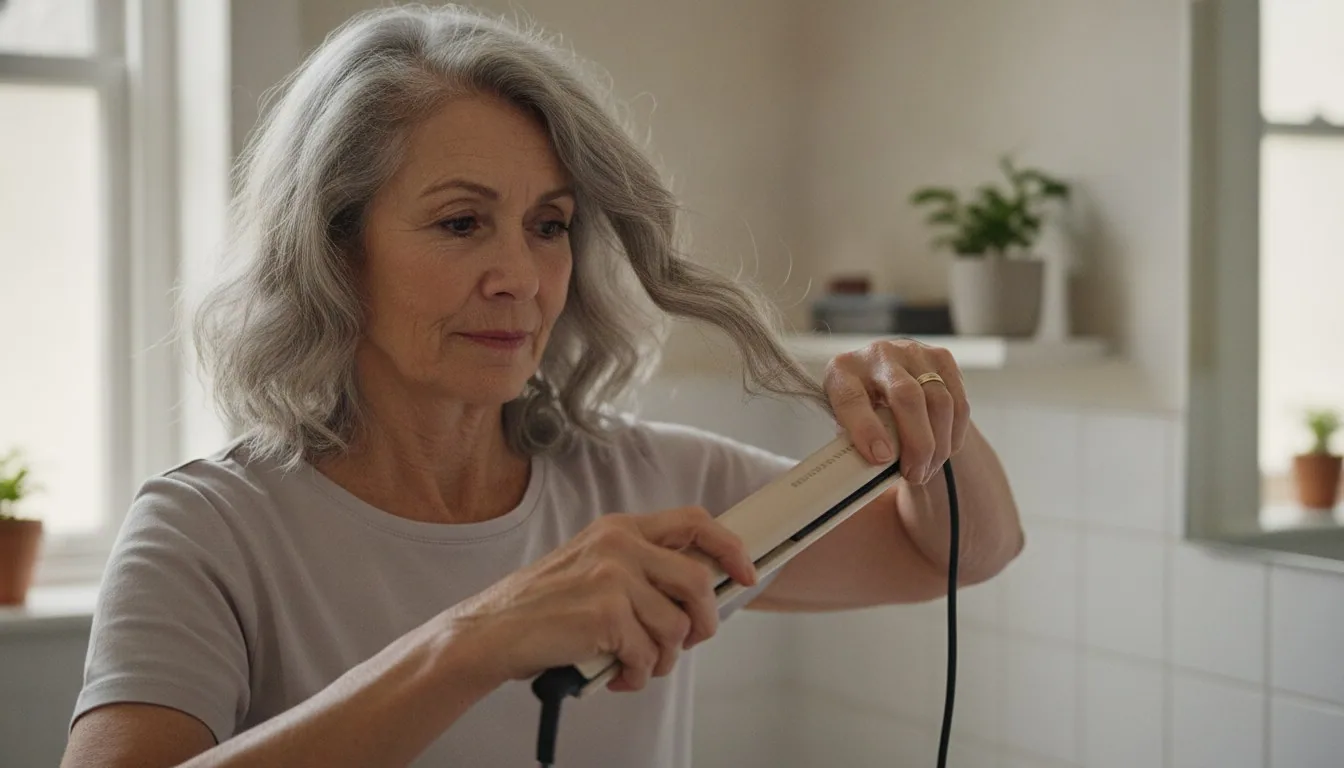
- Use a barrel between about a half inch and one inch for pixie or short-bob lengths - anything wider just won't grip short strands long enough to form a curl.
- Hold each section for one to two seconds, not five or ten; the American Academy of Dermatology specifically recommends brief contact time to limit heat damage.
- Let curls cool completely, untouched, before brushing or finger-combing - disturbing a warm curl is the fastest way to lose it.
- Bobs and lobs generally do better on a slightly larger barrel (1 to 1.5 inches) worked in four sections rather than the tighter barrel a pixie needs.
- Prior research cited in hair-damage studies has tested curling irons at contact temperatures as high as 180 degrees C (356 F); dialing your iron to low or medium heat and skipping a day or two between styling sessions genuinely matters.
Unplug the unit before any cleaning or filter work.
Detangle and dry your hair completely
Start with hair that's fully dry - damp hair steams under a curling iron's heat, and that steam does more damage than dry heat alone. Run a wide-tooth comb through to clear any knots so sections wrap evenly instead of catching.
Apply a heat protectant and pick your heat setting
Work a heat protectant through before you touch the iron, then choose a low or medium heat setting rather than defaulting to the highest number. Fine or fragile short hair curls fine on lower heat; only thick or coarse strands typically need the higher end of the dial.
Choose a barrel sized to your cut
Pixie and cropped lengths generally need a barrel between a half inch and three-quarters of an inch so hair can wrap fully around it. Bobs and lobs curl better on a slightly larger barrel, around one to one-and-a-half inches.
Section your hair before you start
Split hair into three or four zones - nape, sides and crown works for most short cuts - and clip everything out of the way except the section you're curling. Working section by section keeps curls consistent instead of random.
Clamp mid-section and roll toward your face
Hold the iron vertically, clamp about halfway down the section rather than at the root, and roll the barrel until the ends wrap in. Stop rolling with about an inch of hair left outside the clamp so you can slide the iron out straight.
Hold for one to two seconds, then release
Keep the section against the barrel for a second or two - brief contact is what dermatology guidance on heat styling actually recommends, not five or ten seconds. Slide the iron out without unrolling the curl you just formed.
Let every curl cool before touching it
Move on to the next section and leave finished curls alone; the shape sets as hair cools back to room temperature. Touching a warm curl too early is the fastest way to lose the definition you just created.
Break up curls and set with a light product
Once everything has cooled for a few minutes, shake curls loose with fingers or a wide-tooth comb rather than a bristle brush. A light mist of texture or hold spray keeps short curls defined without weighing them down.
| Quick Facts | |
|---|---|
| AAD-recommended curling iron dwell time | 1 to 2 seconds per section |
| AAD-recommended flat-iron frequency | no more often than every other day |
| PMC study's own oven-test temperature | 60 degrees C / 140 F |
| Lab-tested flat iron damage threshold | above 200 degrees C / 392 F |
| Typical barrel range for pixie-length hair | 0.5 in to 0.75 in (13-19 mm) |
| Typical barrel range for bob or lob-length hair | 1 in to 1.5 in (25-38 mm) |
Short hair curls on a different set of rules
Shorter strands have less weight to pull a curl straight, so the barrel size and hold time that work on long hair often over-curl or under-curl a pixie or bob.
Shopping for a specific model? See the best flat irons we tested — 10 models compared on the specs that decide it.
A curling iron doesn't know how long your hair is. It applies heat to whatever wraps around the barrel, for however long you hold it there. Curl formation is really a tug-of-war between the shape the iron sets and the weight of the hair pulling it back out afterward, and short hair simply doesn't have much weight to fight with.
That cuts both ways. Good, because short hair curls faster and holds shape with less heat than a long layer would need. Bad, because the margin for error shrinks - a barrel that's too wide, or a hold that runs a second too long, shows up immediately as either no curl at all or an overdone ringlet.
Most general curling tutorials are written with shoulder-length or longer hair in mind, which is part of why curling short hair with a standard-length technique goes sideways so often. Matching barrel size, section width and hold time to what's actually on your head fixes most of that - not a different tool.
How to curl short hair with the right barrel size
Pixie cuts generally need a barrel between a half inch and three-quarters of an inch, while bobs and lobs curl better on a one-to-one-and-a-half-inch barrel; a small barrel curling iron for short hair is the single biggest fix for curls that won't form.
Barrel diameter decides how many times a section can wrap around the iron, and wrap count is what actually builds the curl's shape. A pixie or cropped cut might only be two to three inches long in places - wrap that around a 1.25-inch barrel and it barely makes it around once. A half-inch to three-quarter-inch barrel lets the same short length wrap fully, which is why a small barrel curling iron for short hair produces a visible curl instead of a gentle bend when you curl short hair this length.
Bobs and lobs sit in a different spot. There's enough length to wrap a 1 to 1.5 inch barrel two full times, which produces a softer, more natural-looking curl than cramming a longer bob onto a tiny barrel - that tends to over-curl just the ends into ringlets that clash with the rest of the cut. If you're shopping for a tool rather than working with what's already in the bathroom drawer, our guide to short-hair curling irons breaks down barrel sizes by cut length in more detail.
One trade-off worth planning for: smaller barrels mean smaller sections, which means more sections total and a longer overall styling time than a long-hair routine, even though each individual curl sets faster. Budget for that rather than getting frustrated halfway through.
Prep steps that decide whether curls last
Dry, product-free hair holds a curl longer than damp or heavily coated hair, and a heat protectant applied before you start is cheap insurance against the temperatures curling irons actually reach.
Curling iron makers rarely publish exact contact temperatures, but a hair-damage study hosted on the National Institutes of Health's PubMed Central archive gives some sense of the range involved. The study's own lab testing damaged hair fibers at 60 degrees C (140 F); it also cites earlier research that ran curling irons at 180 degrees C (356 F) for 15 seconds across repeated heat cycles and measured changes in tensile strength, plus a separate straightening-iron study above 200 degrees C (392 F) that found measurable damage to the outer cuticle. Short hair is more exposed to that heat too, since there's less length to spread a section's surface across - the same barrel touches proportionally more of each strand.
The American Academy of Dermatology's guidance is blunt: leave a curling iron in place for only a second or two, and reach for a low or medium heat setting instead of the highest one. Its specific frequency advice is aimed at flat irons - no more often than every other day - but the same logic holds for a curling iron, since repeated high heat breaks down keratin's structure regardless of which tool delivers it.
Practically, that means starting with completely dry hair (damp hair steams, and that steam does more damage than the direct heat alone), running a heat protectant through before you touch the iron, and picking a heat setting based on hair thickness instead of defaulting to the highest number because it seems faster. Fine, short hair rarely needs the top setting; coarse or coily short hair might need it more often.
Sectioning and the actual wrap
Divide short hair into three or four zones before you start, work from the nape upward, and wrap each section away from your face for a result that reads as natural rather than uniform.
Random sections produce random curls. This is the part most tutorials skip when they explain how to curl short hair for a pixie or crop: split hair into zones first - nape, sides, crown is a reasonable three-way split for very short cuts, while nape, two side sections and a crown section works better once there's bob-length hair to manage. Clip everything but the section you're working on out of the way.
Hold the iron vertically, clamp near the mid-length of the section (not right at the root, which scalds the scalp without adding curl), and roll the barrel toward your face until the ends wrap in. A couple of curling short hair tips that actually help here: rotate your wrist in one steady motion rather than several jerky ones, and stop rolling once you've got about an inch of hair left outside the clamp so you can slide the iron straight out without unrolling what you just built.
Direction matters more on short hair than long hair, because there's less length to disguise an inconsistent pattern. Curl sections at the crown and top away from the face, and alternate direction slightly between adjacent sections lower down - it reads as movement instead of a helmet.
Curling a bob without losing its shape
A bob or lob curls best in four sections with a 1 to 1.5 inch barrel, held vertically and released without pulling the curl apart immediately.
How to curl a bob with a curling iron differs slightly from pixie technique, mostly because there's enough length to actually shape rather than just bend. Four sections - top, bottom, left, right - is the standard split, with the bottom layer divided again into pieces roughly an inch wide so each curl stays defined instead of collapsing into one wide wave.
Detangle before you start. Knots inside a section stop hair from wrapping evenly and show up later as a kink instead of a curl. Once a section is wrapped and held, some people pin the curl against the head with a clip and let it cool in place for a couple of minutes before releasing - it's an extra step, but it noticeably extends how long the curl holds compared with releasing immediately.
Curling every section in the same direction tends to look flat on a bob specifically, since the blunt ends already create a uniform line; stacking uniform curl direction on top of that reads as styled-stiff rather than styled-soft. Mixing direction section by section, especially toward the face-framing pieces, breaks that up.
Setting the curl so it survives the day
Let every curl cool completely before touching it, then break the shape up gently with fingers or a wide-tooth comb rather than a bristle brush.
The single most common way to ruin a good curl is impatience - running fingers or a brush through it while it's still warm. Hair holds its new shape through hydrogen bonds that form as it cools from the iron's heat back down to room temperature; disturb that process early and the bond never fully sets.
Once everything is curled and has cooled for a few minutes, a light mist of a texture or hold product and a shake-out with fingers is usually enough for short hair. A vent brush works if you want a softer, more blended wave instead of distinct ringlets, though brushing too aggressively loosens curl definition on shorter lengths faster than it would on long hair, simply because there's less length holding the shape together.
For anyone comparing tools for this specific job rather than working with what they've got, our roundup of the best curling irons covers barrel materials and heat controls side by side, which matters more on short hair than long hair because the margin for error is smaller.
Trouble spots and the honest limits of a curling iron
Bangs, the nape and any layer shorter than about two inches are the hardest parts of a short cut to curl, and a curling iron cannot fix hair that's too damaged or too fine to hold a curl at all.
Bangs and face-framing pieces are usually the shortest hair on a short cut, which makes them the first sections to slip off a barrel that's even slightly too wide. A three-eighths to half-inch barrel, held briefly and released quickly, handles these better than forcing them onto whatever barrel is doing the rest of the head.
The nape is the opposite problem. It's often the most rushed part of a styling routine, done last when patience is running low, and it sits close enough to the neck that people cut hold time short simply because the heat feels uncomfortable there - which produces a weaker curl in that spot than everywhere else.
It's fair to be honest about limits, too. A curling iron cannot compensate for hair that's chemically over-processed, extremely fine and slippery to begin with, or simply too short in a given spot to wrap the barrel at all - no amount of technique fixes a curl with nothing to grip onto. In that situation, a lightweight texturizing product before styling does more than another pass with the iron.
Frequently asked questions
What size curling iron is best for short hair?
How long should you hold a curling iron on short hair?
Why won't my short hair hold a curl?
How do you curl a bob with a curling iron?
How often can you curl short hair with a curling iron without damaging it?
Sources & references
- Hair styling without damage — American Academy of Dermatology
- Establishment of Heat-Damaged Model for Hair — PubMed Central (National Institutes of Health)