| Quick Facts | |
|---|---|
| Heat transfer methods | Conduction, convection, radiation |
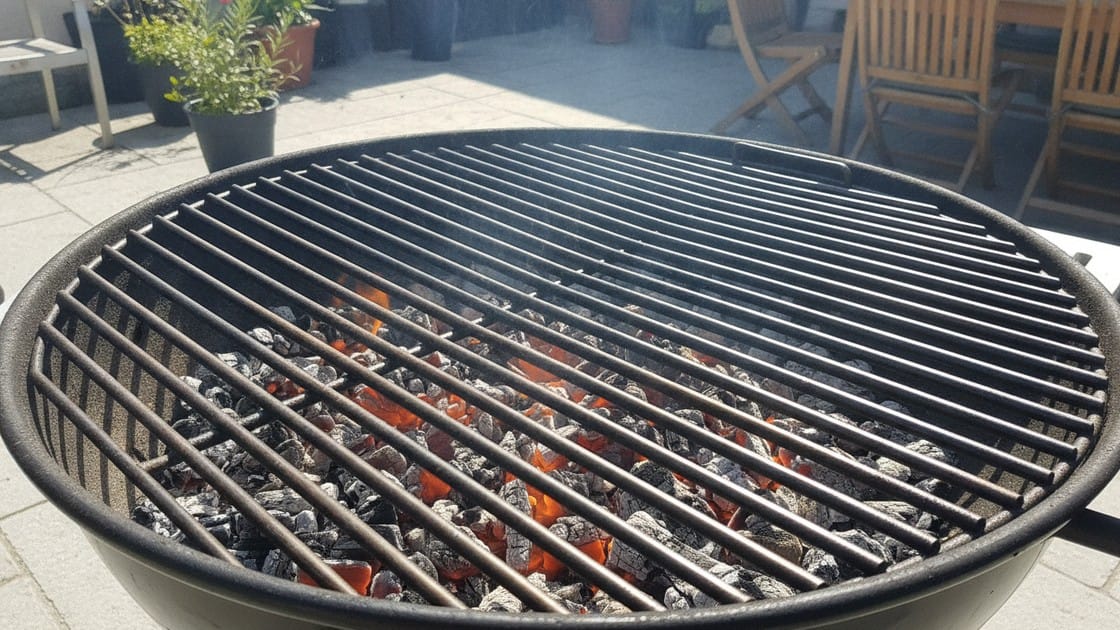
| What the bars do | Conduct heat on contact, creating the marks |
| What the fire does | Radiates heat directly to the food |
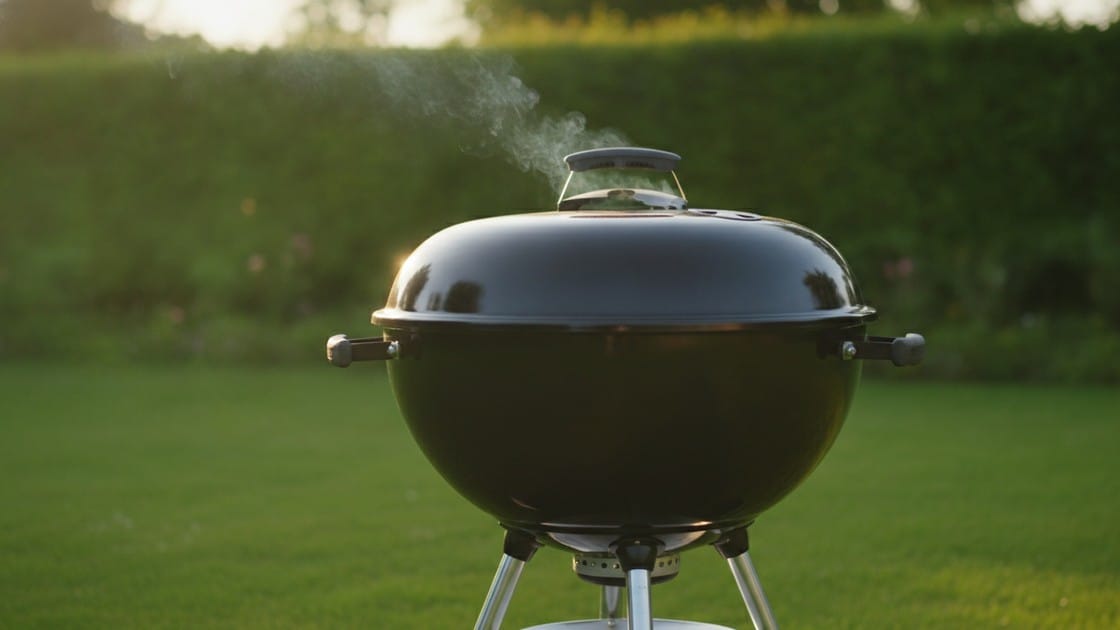
| What the lid does | Traps hot air, turning the grill into an oven |
| Source of smoke flavour | The food's own fat burning below |
| One BTU | Heat to raise one pound of water by 1 degree F |
| One BTU, in scale | About the energy of one burning match |
| What BTU rating measures | Fuel burned per hour, not heat delivered |
How do grills work: three ways heat gets into food
Conduction through the bars, convection through hot air, and radiation straight from the glowing fire.
<p>Start with a fire and a piece of meat above it. Ask how the heat crosses the gap, and there are only three answers.</p><p>The first is touch. Where the meat rests on a hot bar, heat moves straight across, the way a hand warms on a mug. That is conduction, and it is why bars leave dark stripes rather than an even colour.</p><p>The second is air. The fire heats the air around it, the hot air rises past the food and gives up some of its heat on the way. That is convection, the same thing your oven does with a fan.</p><p>The third is the one people underestimate. Glowing coals and hot metal throw out heat as invisible rays that travel in straight lines, exactly like the warmth you feel standing near a bonfire. That is radiation, and it needs no contact and no air movement.</p><p>Once you see grills work through all three at once, the rest of it stops being mysterious. Every design choice is really about changing the mix.</p>
Why the lid changes the machine
An open grill cooks mostly by radiation from below. A closed grill traps hot air and starts cooking like an oven.
<p>Leave the lid up and most of the hot air escapes immediately. What is left is radiation from the fire hitting whatever faces it, plus conduction from the bars. The top of the food is barely cooking at all, which is why you have to keep turning things.</p><p>Drop the lid and the hot air has nowhere to go. Now it circulates, and the food is being heated from every side at once. The grill has become an oven with a smoky atmosphere.</p><p>This is the difference between grilling a burger and roasting a whole chicken outside. Thin food goes on with the lid up, because it only needs the fierce heat from below and it will be done before anything else matters. Thick food needs the lid down, because the middle can only be reached by surrounding it with heat.</p><p>It also explains preheating. A closed grill is heating its air, its metal and its bars, and all of that stored heat is what a cold steak lands on.</p>
Where the smoke and the flavour come from
Fat drips from the food onto the heat, burns, and rises back as smoke that sticks to the surface.
<p>The flavour people associate with grilling is not the fuel. Charcoal barely smells of anything once it is glowing. The smoke that matters comes from the food itself.</p><p>The National Cancer Institute describes the mechanism precisely. Fat and juices from meat cooked over a heated surface or an open fire drip down, cause flames and smoke, and the smoke then adheres to the surface of the meat.</p><p>So a grill runs a loop. Food loses fat, the fat burns below, and the products of that burning come back up and land on the food. That is why lean chicken breast tastes less grilled than a fatty chop, and why a solid griddle plate produces a different flavour entirely.</p><p>The same loop is why flare-ups happen. A sudden run of fat hits the fire and burns all at once. Those compounds are worth limiting, and the NCI notes that keeping meat out of direct flame and turning it often both help.</p>
The other thing burning fuel makes
Combustion gives off carbon monoxide as well as heat, which is why a fuel-burning grill is an outdoor appliance.
<p>Heat is not the only output. Burning charcoal, gas or wood also gives off carbon monoxide, and that gas is the reason a grill belongs outside and nowhere else.</p><p>The Consumer Product Safety Commission puts the problem in one line. As charcoal burns it can give off carbon monoxide, you cannot see it, you cannot smell it, and it can kill you. There is no warning sense to fall back on, which is what makes it different from smoke.</p><p>So the rule follows from the mechanism rather than from caution. CPSC warns never to use charcoal to cook or provide heat inside enclosed areas such as tents, campers, vans, cars, trucks, homes, garages or mobile homes. Open air is the only condition that disperses the gas.</p><p>Two details catch people out. Ventilation is not a fix, because an open door or a cracked window does not clear it fast enough. And the fuel keeps producing it after cooking ends, since coals take a long time to burn out completely. Coals are out when they are cool to the touch, and not before.</p>
What a BTU rating actually measures
A BTU is a unit of heat energy, so the rating tells you fuel burned per hour, not heat delivered to the food.
<p>Gas grills are sold on a BTU number, and it is the most misread figure on the box. The US Energy Information Administration gives the definition plainly. One BTU is the amount of heat needed to raise the temperature of one pound of water by one degree Fahrenheit. As a sense of scale, the EIA compares a single BTU to the energy released by burning a match.</p><p>So a BTU rating is a measure of how fast the burners can consume fuel. It says nothing about whether that heat reaches your food or leaks out of a thin, badly sealed body.</p><p>A well-built grill with a lower rating will out-cook a flimsy one with a higher rating, because insulation, lid fit and heavy grates all decide how much of the heat stays where you want it. Two grills burning the same fuel per hour can behave completely differently.</p><p>The useful version of the number is BTUs against cooking area, not BTUs alone, which we cover in <a href="/grills/best/">our grill buying guide</a>.
How grills fail, and what that says about the design
Fuel leaks and accumulated grease are the two failure modes, and both follow from how the machine is built.
<p>Every part of a grill that makes it work also gives it a way to go wrong, and the numbers show which ways matter.</p><p>The first is the fuel path. A gas grill carries pressurised fuel through a hose, a regulator and a set of fittings, and any of those can leak. The National Fire Protection Association reports that gas grills were involved in an average of 9,235 home fires per year, and that leaks or breaks caused 6 percent of gas grill structure fires and 13 percent of outside gas grill fires. Charcoal has no fuel path to leak, which is one genuine advantage of a simpler machine.</p><p>The second follows from the drip loop that makes the flavour. Fat that misses the fire collects below, and the NFPA found the grill had not been cleaned in roughly one fifth of grill fires. The mechanism that gives you smoke is the same one that fills the tray.</p><p>Placement is the third. Nearly a quarter of grill structure fires start on an exterior balcony or open porch, because a machine designed to radiate heat outward is sitting against something that burns.</p>
Gas, charcoal and pellet do the same job differently
The three fuels change how the heat is produced and controlled, but not the physics that carries it into the food.
<p>Gas burns in metal burners under the grates. Turning a knob changes the fuel flow immediately, so the heat is adjustable in seconds. Most gas designs put a metal barrier over the burners, which catches drippings and vaporises them, recreating some of the smoke loop that a bare flame would give.</p><p>Charcoal burns as a bed of glowing solid fuel. It radiates strongly and reaches higher surface temperatures, and it is controlled by air rather than by a knob. Open the vents and it burns harder, close them and it settles.</p><p>Pellet cookers feed compressed wood pellets into a small burn pot with an auger, and a fan circulates the heat. That makes them the most oven-like of the three and the easiest to hold at a low temperature for hours.</p><p>Underneath, all three grills work identically. They make heat, and it arrives by touch, by air and by radiation. Which fuel suits you is covered in <a href="/grills/">our guide to the grill types</a>, and if smoke flavour is the priority start with <a href="/grills/charcoal/">charcoal</a>.