
| Quick Facts | |
|---|---|
| EPA ideal indoor humidity | 30-50% relative humidity, never above 60% |
| CDC humidity ceiling | 50% relative humidity, held all day |
| EPA dry-out window | 24-48 hours after a leak or spill |
| HEPA filtration standard (EPA) | captures at least 99.97% of particles at 0.3 microns |
Air purifier vs dehumidifier: what each machine is actually built to do
A dehumidifier lowers relative humidity by condensing water out of the air; an air purifier filters particles, including mold spores, out of the air already in the room.
Shopping for a specific model? See our full air purifier roundup — 10 models compared on the specs that decide it.
The two machines solve different halves of a mold problem, and most of the confusion starts because both get sold as general 'clean air' appliances. A dehumidifier works like a small refrigeration unit. It draws room air across a cold coil, condenses the water vapor into a collection tank, and pushes drier air back out. Nothing in that process filters anything; it changes the humidity reading on the wall, not the particle count in the air.
An air purifier does the opposite job. Air passes through a filter stack, usually a pre-filter, sometimes an activated carbon layer, and a HEPA stage that traps particles as small as 0.3 microns. That size range covers mold spores along with dust and pollen. What a purifier cannot do is touch how much water vapor sits in the room; it has zero effect on humidity. Mixing up the two jobs is the most common reason people buy the wrong machine first, then wonder why the smell hasn't changed. That distinction also explains why a purifier rated for a much bigger room than the one it's in still won't touch a damp closet or a leaking window sill.
Why an air purifier alone rarely solves a mold problem
The EPA states plainly that portable air cleaners don't address the moisture that causes mold, so filtering the air without drying the room only treats a symptom.
The U.S. Environmental Protection Agency is direct about this in its guidance on residential air cleaners: portable air cleaners and furnace filters do not address the cause of mold and musty odors, because that cause is a moisture problem in the building itself. A purifier can capture spores that are already circulating, which is genuinely useful once the underlying issue is handled. Running one next to a wall that is still wet is closer to sweeping a floor while the leak underneath keeps going.
This is the part most buying advice skips. If a room smells musty and nobody has traced where the water is coming from, an air purifier will make the air feel cleaner without ever touching the reason it isn't. The EPA's separate mold guidance is equally blunt: solving a mold problem starts with finding and stopping the moisture, then physically cleaning what has already grown. An appliance running in the corner, however capable its filter is, does not substitute for either step. Buying a bigger, more expensive purifier instead of tracking down the leak is a common detour that a five-minute look behind the baseboard could have avoided.
The humidity number that actually stops mold
EPA guidance keeps indoor relative humidity between 30% and 50%, capped at 60%; CDC sets a stricter 50% ceiling all day, and that range is where a dehumidifier does its work.
Numbers help more than instinct here. The EPA's mold guidance recommends keeping indoor relative humidity below 60%, and ideally in the 30 to 50% range, because mold needs sustained moisture to establish new colonies. The Centers for Disease Control and Prevention is a little stricter: no higher than 50% relative humidity, held there all day, with an air conditioner or dehumidifier doing the work of keeping it down.
Timing matters just as much as the target number. The EPA notes that drying wet or damp materials within 24 to 48 hours of a leak or spill is usually enough to stop mold from establishing at all, a window a dehumidifier can close faster than an open window or a box fan, especially in a basement with little outside air exchange. A cheap hygrometer is the only reliable way to know which side of that range a room actually sits on. Guessing by how the air feels is not a good substitute. Two days of dampness is a shorter window than most people assume, especially behind a wall or under flooring where air barely moves.
When an air purifier is actually the right call
Once the moisture is under control, or the issue is airborne allergens rather than active growth, a HEPA air purifier earns its place by filtering spores and other particles out of daily air.
There is a real use case here, and it is not a small one. After mold has been physically cleaned and the leak repaired, spores can linger in carpets and soft furnishings and keep recirculating for weeks. A HEPA filter captures at least 99.97% of particles at 0.3 microns, the EPA's own definition of the standard, and mold spores fall inside that range along with dust and pollen. Running a purifier through that recovery period is a legitimate way to bring particle counts down faster than normal air exchange would manage on its own.
It is also the better tool when what's actually bothering someone is general mold sensitivity or an allergy response rather than a wet room, sneezing near a damp basement door with no visible growth or smell, for example. For anyone weighing options in that category, our mold air purifier picks compare filtration and coverage across current models built for exactly this kind of airborne-particle problem. Either way, the filter needs replacing on a schedule, since a saturated HEPA stage stops trapping new particles and just holds onto the ones it already caught.
Running both in a truly damp room
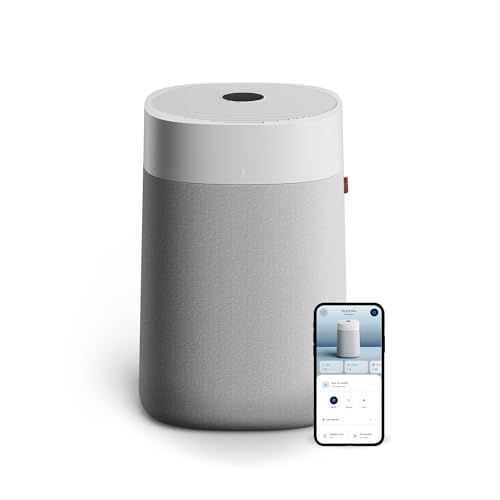
In an actively humid space like a basement or bathroom, the two machines split the job: the dehumidifier lowers the humidity and the purifier clears what's already airborne, and neither substitutes for fixing a leak.
Basements and bathrooms are where this question stops being theoretical. Both trap moisture through poor airflow, cold surfaces, and regular water exposure, and both are common mold complaint spots. Running a dehumidifier to hold humidity inside the EPA's target range while a purifier handles particles already circulating covers both halves of the problem at once, rather than asking one machine to do a job it was never built for.
Neither device fixes a structural problem. A cracked foundation, a failed vent fan, or a slow plumbing leak keeps feeding moisture into a room regardless of how good the equipment running inside it is, and mold keeps coming back until that gets repaired. If a room is otherwise dry and the only concern is everyday air quality, our air purifier hub is a reasonable starting point for models sized to different rooms and needs. A dehumidifier or purifier bought only to mask a known leak is a stopgap at best, not a fix.