| Quick Facts | |
|---|---|
| Industry baseline for a full carpet deep clean | every 12 to 18 months (Carpet and Rug Institute Seal of Approval standard) |
| American Lung Association recommendation | deep clean carpets and rugs annually using dry steam (hot water extraction) cleaning |
| Dry soil removed by routine vacuuming | 90 to 95 percent by weight (Carpet and Rug Institute) |
| House dust mite allergen reduction, HEPA vacuum only | 80.8 percent (Journal of Environmental Monitoring, 2008, 50 homes) |
| House dust mite allergen reduction, HEPA vacuum plus dry steam cleaning | 85.5 percent (same study) |
| Carpet age linked to higher pollutant load | 10+ years old, or shag/high-pile styles (American Lung Association) |
How often should you deep clean carpet, by household type
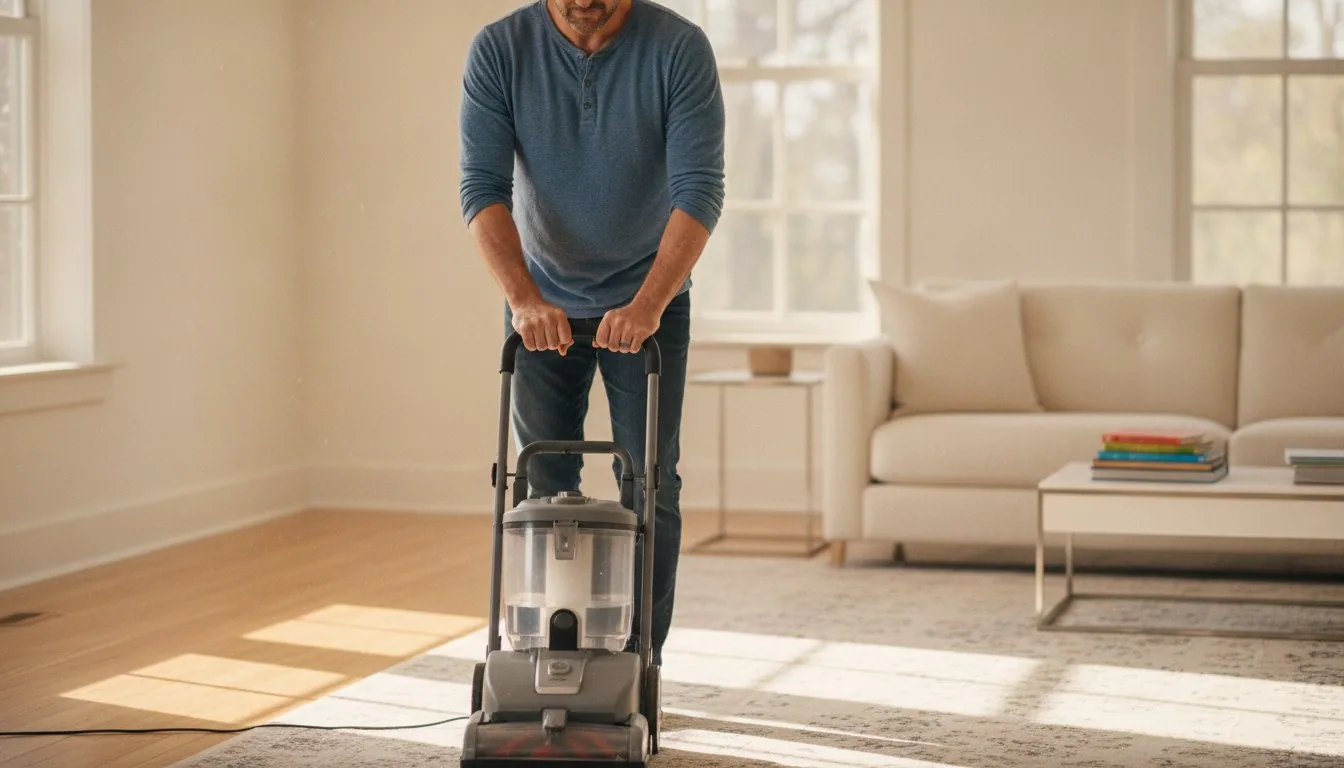
Most households land on a full deep clean every 12 to 18 months, with pets, kids, and heavy foot traffic pushing that number toward the shorter end and quiet, low-traffic rooms able to stretch longer.
Shopping for a specific model? See the best carpet cleaners we tested — 10 models compared on the specs that decide it.
The Carpet and Rug Institute, the trade group behind the Seal of Approval testing program, sets the baseline at a deep clean every 12 to 18 months by a certified provider. The American Lung Association draws the line a bit tighter, recommending carpets and rugs get deep cleaned annually using dry steam cleaning, which is another name for hot water extraction. That's the practical answer to how often you should deep clean carpet in a typical household: once a year at minimum, every eighteen months at most, with the gap depending on what actually happens on the floor day to day.
Households with pets shed dander and track in more outdoor debris than a childless, petless home, so leaning toward the shorter end of that window makes sense even without a single hard number attached to it. The same logic applies to a house full of kids, anyone who wears shoes indoors, or a living room that doubles as the main hallway. For a typical living room and bedroom routine without those pressures, our guide to the best carpet cleaners for everyday home use narrows the field down by price tier and floor space, which ends up mattering more than brand once you know your interval.
Multi-pet households tend to need more from a machine than a single cat or a calm older dog. Stronger suction, a bigger tank, and settings built around dander and accidents change the shortlist, and our pet-focused carpet cleaner picks lean toward exactly that kind of extraction power.
Why deep cleaning beats vacuuming alone
Vacuuming lifts most of the loose surface dirt, but only hot water extraction reaches the allergens and dust mite debris trapped down in the pile and backing.
Routine vacuuming does more of the job than people give it credit for. The Carpet and Rug Institute puts the number at 90 to 95 percent of dry soil removed by weight when vacuuming happens on a normal schedule. What a vacuum can't do is pull embedded, moisture-bound allergens out of the fibers, which is where deep cleaning earns its keep.
A 2008 study published in the Journal of Environmental Monitoring measured this directly across 50 urban homes. HEPA vacuuming alone cut house dust mite allergen levels by 80.8 percent; adding dry steam cleaning to the same homes pushed that reduction to 85.5 percent. The gap between the two methods wasn't statistically dramatic in that particular study, but both numbers point to the same conclusion: a vacuum-only routine already handles most of the load, and hot water extraction closes the remainder rather than replacing it.
None of this makes vacuuming optional once a deep clean is booked. The two jobs solve different problems on different timelines, and skipping either one lets the other's gap widen.
Signs your carpet needs a deep clean now, not on schedule
A lingering odor after airing the room out, visible graying along walking paths, or allergy symptoms that ease up once you leave the house are all reasons to move a deep clean up, regardless of the calendar.
A carpet on a fixed 12-to-18-month clock still needs the occasional exception. A musty smell that doesn't fade after a day of open windows usually means moisture or soil has worked past what a vacuum reaches. Visible graying or matting along the path between the couch and the kitchen is dirt that vacuuming has stopped removing, not just ordinary wear.
Carpet age matters too. The American Lung Association notes that carpets older than 10 years, along with shag and other high-pile styles, typically carry higher levels of trapped pollutants and allergens than shorter-pile, newer carpet. If any of that sounds familiar, that's your carpet telling you it's time, regardless of how often you should deep clean carpet on paper.
How often should carpet be professionally cleaned versus a DIY deep clean?
A professional using hot water extraction usually reaches higher temperatures and stronger vacuum lift than a rented or owned home machine, but a home machine lets you clean on your own schedule instead of waiting for an appointment.
The Carpet and Rug Institute's 12-to-18-month standard is written around a certified Seal of Approval provider, which is worth knowing when you're weighing a professional booking against a rental. Professional equipment generally runs hotter water and pulls harder vacuum suction than most consumer machines, and that extra power matters most for deep, set-in soil.
A home machine trades some of that power for control. You can run it the day a pet has an accident instead of scheduling around a technician, and repeat spot cleaning between full sessions costs nothing extra once you own the machine. If you're leaning toward doing it yourself, our full comparison of carpet cleaners breaks down which machines are built for whole-room jobs and which are sized for quick spot work instead.
Whichever route you pick, the same interval logic applies: shorter for pets, kids, and heavy traffic, longer for a guest room nobody actually walks on.
Deep cleaning around furniture and rugs
Yes to both: most carpet cleaners have hose attachments that work around furniture legs without a full room clear-out, and many machines are rated for area rugs as long as the rug's fiber can handle water and heat.
Can carpet cleaners clean around furniture, or do I need to empty the room first? For most jobs, no full clear-out is required. Upright machines with a hose and hand tool attachment reach under and around furniture legs, along baseboards, and into corners the main cleaning head can't swing into. Heavier pieces like sofas and bookcases usually just get worked around; lighter chairs, ottomans, and side tables are worth shifting temporarily so the floor underneath gets the same full pass as the rest of the room.
Can carpet cleaners clean rugs, or only wall-to-wall carpet? Many machines handle both, but the rug's material decides the setting. Synthetic and stain-resistant area rugs generally tolerate the same hot water extraction as installed carpet. Natural fibers like wool, jute, or sisal are a different story: check the care label first and test a hidden corner for colorfastness and shrinkage before running a full pass, since some of those fibers react badly to heat and heavy moisture.
What a deep clean can't fix
Deep cleaning resets soil and allergen load, but it won't undo carpet aging, permanently set dye stains, or furniture-crushed pile, and skipping proper dry time can create a mildew problem instead of solving one.
It's fair to expect a lot from a deep clean, but not everything. Dye stains that have already bonded with the fiber, sun-faded patches, and pile crushed under furniture for years typically stay put no matter how hot the water or how many passes the machine makes. Deep cleaning resets soil and allergen buildup; it doesn't reverse the carpet's age.
Dry time matters more than most people expect. A carpet that stays damp too long, especially with the pad underneath still wet, can turn a good deep clean into a mildew problem. Good airflow, an open window or a fan, and enough time before furniture goes back are what keep the fix from becoming a new problem. There's no perfect substitute for knowing your own carpet, but if you're still unsure how often you should deep clean carpet, err toward the shorter end of the range rather than the longer one.