Best MacBook Pros of 2026: 10 Compared

Ten Apple laptops sit in this lineup, and the gap between them is wider than the matching aluminum shells suggest. One runs an A18 Pro chip meant for everyday tasks; another packs an M5 Pro with a 15-core CPU. Picking well means reading the chip, the memory, and the display class against what you actually do all day, not just the year on the box.
Every machine here carries the Apple name, yet they split into three clear families: the lightweight MacBook Air, the workhorse MacBook Pro, and the newer, more affordable MacBook Neo. The M5 Air pulls double duty as a daily driver with real headroom, while the Pro models lean on the M5, M5 Pro, and even an M1 Pro renewed unit for heavier creative and AI workloads. Down the price ladder, the A18 Pro MacBook Neo covers the basics without asking much from your wallet. That spread is the whole point of the list. To assemble it, we pulled the current specs, product images, and Amazon pricing for the ten most relevant models, then scored each on raw capability, value for the money, and how cleanly it fits a common buyer. Memory, storage, chip generation, and display type did most of the sorting. The ranking you see reflects that weighting, so a higher position signals a stronger overall package, not simply a bigger number on the spec sheet.
The short version: The Apple 2026 MacBook Air 13-inch Laptop takes the top spot, pairing the M5 chip with 16GB unified memory, a 13.6-inch Liquid Retina display, and Wi-Fi 7 in a build rated up to 18 hours of battery life. If you want to spend the least, the Apple 2026 MacBook Neo 13-inch Laptop with the A18 Pro chip is the best-value choice.
- Top overall: the Apple 2026 MacBook Air 13-inch Laptop, with an M5 chip, 16GB unified memory, 512GB SSD, and up to 18 hours of battery life.
- Best value: the Apple 2026 MacBook Neo 13-inch Laptop, running the A18 Pro chip with 8GB memory and a 256GB SSD.
- Most powerful: the Apple 2026 MacBook Pro Laptop with the M5 Pro chip, 15-core CPU, 16-core GPU, 24GB memory, and a 14.2-inch Liquid Retina XDR display.
- All ten models are Apple, splitting into MacBook Air, MacBook Pro, and MacBook Neo families.
- Unified memory spans 8GB to 32GB and SSDs range from 256GB to 1TB, so configuration matters as much as model name.
Our Top 3 Picks

- M5 chip built for AI tasks
- 16GB unified memory, 512GB SSD
- 13.6-inch Liquid Retina display, 1 billion colors
- Wi-Fi 7, Touch ID, 12MP Center Stage camera
- Up to 18 hours of battery life

- M4 chip for fast multitasking and editing
- Large 15.3-inch Liquid Retina display, 1 billion colors
- 16GB unified memory
- Up to 18 hours of battery life

- M5 Pro chip, 15-core CPU and 16-core GPU
- 24GB unified memory, 1TB SSD
- 14.2-inch Liquid Retina XDR display
- Built for on-device AI, including LLM inference
- Wi-Fi 7
Full Comparison — All 10 Macbook Pro
| Image | Product | Features | Price |
|---|---|---|---|
Editor's Choice |
| Check Price on Amazon Read Full Review | |
Best Value |
| Check Price on Amazon Read Full Review | |
Premium Pick |
| Check Price on Amazon Read Full Review | |
 |
| Check Price on Amazon Read Full Review | |
|
| Check Price on Amazon Read Full Review | |
|
| Check Price on Amazon Read Full Review | |
 |
| Check Price on Amazon Read Full Review | |
 |
| Check Price on Amazon Read Full Review | |
 |
| Check Price on Amazon Read Full Review | |
 |
| Check Price on Amazon Read Full Review |
How They Compare
Top picks — strengths at a glance
Brands compared
All 10, Reviewed
This 13-inch Air runs the M5 chip with 16GB unified memory and a 512GB SSD, and Apple frames it as built for AI work in a genuinely portable shell. The 13.6-inch Liquid Retina display supports 1 billion colors, while Wi-Fi 7, Touch ID, and a 12MP Center Stage camera round out a current spec sheet. It tops the list because nothing else matches its mix of modern chip, memory, and weight at this tier.
- M5 chip built for AI tasks
- 16GB unified memory, 512GB SSD
- 13.6-inch Liquid Retina display, 1 billion colors
- Wi-Fi 7, Touch ID, 12MP Center Stage camera
- 8GB-only buyers will find it more than they need
- Lacks the Liquid Retina XDR display of the 14-inch Pro models
Stepping up to a 15.3-inch Liquid Retina display, this 2025 Air pairs the M4 chip with 16GB unified memory and a 256GB SSD. Apple rates it for up to 18 hours of battery and notes the same performance whether plugged in or on battery. It lands at second for delivering a roomy display and ample memory without the price of the Pro tier.
- M4 chip for fast multitasking and editing
- Large 15.3-inch Liquid Retina display, 1 billion colors
- 16GB unified memory
- Up to 18 hours of battery life
- 256GB SSD is smaller than the 512GB top Air and 1TB Pro models
- Older M4 chip versus the M5 in the leading Air
Built around the M5 Pro chip with a 15-core CPU and 16-core GPU, this 14-inch Pro carries 24GB unified memory, a 1TB SSD, and a 14.2-inch Liquid Retina XDR display. Apple says its silicon is designed to run demanding on-device AI like LLM inference and training, with up to 2x faster SSD. It earns the premium slot as the most capable single configuration on the list.
- M5 Pro chip, 15-core CPU and 16-core GPU
- 24GB unified memory, 1TB SSD
- 14.2-inch Liquid Retina XDR display
- Built for on-device AI, including LLM inference
- At roughly 3.53 lb, heavier than the 2.71 lb 13-inch Air
- More machine than light everyday users need
This 2025 Pro runs the M5 chip with a 10-core CPU and 10-core GPU, backed by 24GB unified memory and a 1TB SSD behind a 14.2-inch Liquid Retina XDR display. Apple highlights a more powerful GPU with a Neural Accelerator built in and notes that apps like Microsoft 365 and Adobe Creative Cloud run fast in macOS. It sits fourth as a strong creative machine just below the M5 Pro flagship.
- M5 chip, 10-core CPU and 10-core GPU
- 24GB unified memory, 1TB SSD
- 14.2-inch Liquid Retina XDR display
- More powerful GPU with a Neural Accelerator built in
- Standard M5 rather than the higher-core M5 Pro in the top Pro
- At about 3.42 lb, less portable than the 13-inch Air
Mechanically close to its higher sibling, this 2025 Pro keeps the M5 chip with a 10-core CPU and 10-core GPU, the 1TB SSD, and the 14.2-inch Liquid Retina XDR display, but steps down to 16GB unified memory. The Neural Accelerator-equipped GPU and all-day battery rating carry over. It places fifth as a way into the XDR Pro line with less memory and a lower outlay.
- M5 chip, 10-core CPU and 10-core GPU
- 1TB SSD storage
- 14.2-inch Liquid Retina XDR display
- GPU with a Neural Accelerator in each core
- 16GB memory versus the 24GB on the higher-ranked 14-inch Pro configs
- About 3.42 lb, heavier than the lighter Air picks
The most affordable of the 2025 XDR Pro trio keeps the M5 chip, 10-core CPU, 10-core GPU, 16GB unified memory, and 14.2-inch Liquid Retina XDR display, but pairs them with a 512GB SSD. Apple's same Neural Accelerator GPU and all-day battery claims apply. It ranks sixth as the lowest-cost route into the XDR Pro display, trading SSD capacity for value.
- M5 chip, 10-core CPU and 10-core GPU
- 14.2-inch Liquid Retina XDR display
- GPU with a Neural Accelerator in each core
- 16GB unified memory
- 512GB SSD, half the 1TB on the higher-ranked Pro configs
- 16GB memory rather than 24GB on the top Pro picks
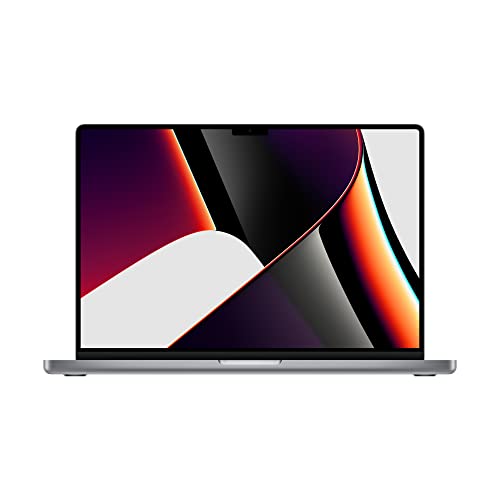
This Renewed Late 2021 model runs the M1 Pro chip with up to a 10-core CPU, up to a 32-core GPU, and a 16-core Neural Engine, paired with 16GB RAM and a 512GB SSD in a 16-inch body. Apple cites up to 17 hours of battery life and a 1080p FaceTime HD camera. It lands at seventh as the budget path to a large display and pro-class cores, with the caveat of older silicon.
- M1 Pro chip with up to 10-core CPU
- Up to 32-core GPU for graphics-intensive apps
- 16-core Neural Engine, up to 17-hour battery life
- Large 16-inch screen, 16GB RAM and 512GB SSD
- Heaviest model here at about 4.63 lb
- Sold Renewed rather than new
- Older M1 Pro chip versus the M5 generation above it
The MacBook Neo runs the A18 Pro chip with 8GB unified memory and a 256GB SSD, framed by Apple as ready the moment you open it for everyday tasks and apps. It carries a Liquid Retina display, a 1080p FaceTime HD camera, up to 16 hours of battery, and a choice of colors including this Indigo finish. It earns the best-value label as the most affordable way into the lineup here.
- A18 Pro chip for everyday tasks and AI
- Up to 16 hours of battery life
- Liquid Retina display
- Lightweight at about 2.71 lb
- 8GB unified memory, the least in the lineup
- 256GB SSD limits local storage
- 1080p FaceTime HD camera rather than the 12MP Center Stage on the top Air
This 2026 Pro runs the M5 chip with a 10-core CPU and 10-core GPU, but stands apart with 32GB unified memory, the most on this list, alongside a 1TB SSD and a 14.2-inch Liquid Retina XDR display. Apple describes the silicon as built to run on-device AI like LLM inference and training. It ranks ninth despite the big memory, reflecting its standing against the higher-scoring picks.
- 32GB unified memory, the most here
- M5 chip, 10-core CPU and 10-core GPU
- 1TB SSD, 14.2-inch Liquid Retina XDR display
- Built for on-device AI, including LLM inference
- Standard M5 rather than the M5 Pro in the top-ranked Pro
- About 3.42 lb, heavier than the 13-inch Air
Identical in spec to its Indigo sibling, this MacBook Neo carries the A18 Pro chip, 8GB unified memory, a 256GB SSD, a Liquid Retina display, and a 1080p FaceTime HD camera, in a Blush finish. Apple rates it for up to 16 hours of battery and pitches it at everyday tasks. It closes the list at tenth as an affordable, color-led pick for light use.
- A18 Pro chip for everyday tasks and AI
- Up to 16 hours of battery life
- Liquid Retina display
- Lightweight at about 2.71 lb
- 8GB unified memory, the least in the lineup
- 256GB SSD limits local storage
- 1080p FaceTime HD camera rather than the 12MP Center Stage on the top Air
8 Things to Consider Before Buying Macbook Pro
Before you commit, line up the chip, the unified memory, the storage, and the display class against the work you do most. The recurring spec themes across these ten laptops, Apple silicon, unified memory, battery life, Apple Intelligence, and display quality, are exactly what separates a casual pick from a creative one. The factors below break those down so you can match a model to your routine.
Our Final Verdict
The Apple 2026 MacBook Air 13-inch Laptop earns the overall nod for blending an M5 chip, 16GB unified memory, Wi-Fi 7, and a sub-three-pound build into one tidy package. When the budget is tight, the Apple 2026 MacBook Neo 13-inch Laptop with its A18 Pro chip handles everyday tasks at the lowest entry point here. Creators and developers who want the most muscle should look at the Apple 2026 MacBook Pro Laptop with its M5 Pro chip, 15-core CPU, 16-core GPU, 24GB memory, and Liquid Retina XDR display. None of these is a wrong answer; the right one depends on whether you prize portability, price, or raw on-device AI power.
Frequently Asked Questions
Which MacBook is the best overall pick here?
The Apple 2026 MacBook Air 13-inch Laptop ranks first. It combines the M5 chip, 16GB unified memory, a 512GB SSD, a 13.6-inch Liquid Retina display, Wi-Fi 7, and Touch ID, and Apple rates it for up to 18 hours of battery life, which makes it the most balanced choice across this group of ten.
What is the most affordable option in this lineup?
The Apple 2026 MacBook Neo 13-inch Laptop is the entry point. It runs the A18 Pro chip with 8GB unified memory and a 256GB SSD, a 1080p FaceTime HD camera, and up to 16 hours of battery life, all aimed at everyday tasks rather than heavy creative work.
Which model should creators or developers buy?
Look at the Apple 2026 MacBook Pro Laptop with the M5 Pro chip. It carries a 15-core CPU, a 16-core GPU, 24GB unified memory, a 1TB SSD, and a 14.2-inch Liquid Retina XDR display, and Apple describes its silicon as built to run on-device AI workloads like LLM inference and training.
How much memory and storage do these MacBooks come with?
Unified memory runs from 8GB on the MacBook Neo models to 32GB on one 2026 MacBook Pro, with 16GB and 24GB options between. Storage spans 256GB up to 1TB. Match the larger configurations to editing, multitasking, or local app libraries, and the 8GB models to lighter day-to-day use.
Is the 13-inch MacBook Air a better buy than the 14-inch MacBook Pro?
For most buyers, yes. The 13-inch Air ranks above every 14-inch Pro here on our value-weighted scoring, weighs about 2.71 lb, and pairs the M5 chip with 16GB memory and Wi-Fi 7. Step up to a Pro only if you need the Liquid Retina XDR display or the extra cores in the M5 Pro for sustained heavy work.
Are any of these MacBooks renewed rather than new?
One is. The Apple MacBook Pro Late 2021 with the M1 Pro chip, a 16-inch screen, 16GB RAM, and a 512GB SSD is sold Renewed. It offers a larger display and an older pro chip, but at roughly 4.63 lb it is the heaviest model here and carries the shortest feature list of the bunch.
Related Guides


