Best MacBooks of 2026: 10 Compared

Sorting ten Apple laptops by what they actually do, rather than by sticker shock, is harder than it sounds when nearly every model promises the same battery life and the same bright display. The gap between them lives in the chip, the memory, and the screen tier. Pin those down and the right pick stops being a guess.
Every machine in this roundup wears the Apple badge, so the real decision isn't brand loyalty — it's silicon and screen. You've got the M5 in the newest Air and Pro, the M4 in last year's 15-inch Air, the A18 Pro inside the colorful MacBook Neo, and an Intel Core i5 holding down the renewed 2020 Pro. Memory splits the field too: most carry 16GB unified memory, while the two Neo models run 8GB. Knowing which combination matches your workload is most of the battle. We pulled the live specs, imagery, and Amazon listings for the ten most relevant MacBooks, then scored each on raw capability, how far your money stretches, and how cleanly it fits a real use case. A 13-inch Air built for everyday portability ranks against a 14.2-inch Pro with a Liquid Retina XDR display and a renewed Intel machine meant purely for thrift. What follows is the at-a-glance verdict, the head-to-head detail, and a frank read on where each one slips.
The short version: The Apple 2026 MacBook Air 13-inch Laptop earns the top spot for pairing the M5 chip, 16GB unified memory, and Wi-Fi 7 in a 2.71-pound frame rated up to 18 hours of battery life. For buyers watching the bottom line, the renewed Apple 2020 MacBook Pro is the best value, carrying 16GB of RAM and a 512GB SSD on an Intel Core i5.
- Best overall is the Apple 2026 MacBook Air 13-inch Laptop, with the M5 chip, 16GB unified memory, and Wi-Fi 7.
- Best value is the renewed Apple 2020 MacBook Pro, carrying 16GB of RAM and a 512GB SSD on an Intel Core i5.
- The premium pick, the Apple 2025 MacBook Pro Laptop, adds a 10-core CPU, 10-core GPU, and a Liquid Retina XDR display.
- All ten are Apple laptops; memory is 16GB on every model except the two 8GB MacBook Neo picks.
- MacBook Air models are rated up to 18 hours of battery life; the MacBook Neo is rated up to 16 hours.
Our Top 3 Picks

- M5 chip built for AI
- 16GB unified memory and 512GB SSD
- 13.6-inch Liquid Retina display, 1 billion colors
- Wi-Fi 7 and Touch ID
- Up to 18 hours of battery life

- Apple M4 chip for multi-app work
- 15.3-inch Liquid Retina display, 1 billion colors
- 16GB unified memory
- Built for Apple Intelligence
- Up to 18 hours of battery life

- M5 with 10-core CPU and 10-core GPU
- 14.2-inch Liquid Retina XDR display
- 16GB unified memory and 512GB SSD
- Built for Apple Intelligence
- Runs Microsoft 365 and Adobe Creative Cloud fast
Full Comparison — All 10 Macbook
| Image | Product | Features | Price |
|---|---|---|---|
Editor's Choice |
| Check Price on Amazon Read Full Review | |
Best Value |
| Check Price on Amazon Read Full Review | |
Premium Pick |
| Check Price on Amazon Read Full Review | |
 |
| Check Price on Amazon Read Full Review | |
 |
| Check Price on Amazon Read Full Review | |
 |
| Check Price on Amazon Read Full Review | |
 |
| Check Price on Amazon Read Full Review | |
 |
| Check Price on Amazon Read Full Review | |
 |
| Check Price on Amazon Read Full Review | |
 |
| Check Price on Amazon Read Full Review |
How They Compare
Top picks — strengths at a glance
Brands compared
All 10, Reviewed
This 13-inch Air leads the pack by stacking the M5 chip on top of 16GB unified memory, a 512GB SSD, and Wi-Fi 7 in a 2.71-pound Midnight shell. The 13.6-inch Liquid Retina display supports 1 billion colors, and a 12MP Center Stage camera with Touch ID rounds out the kit. It earns the #1 slot because nothing else here matches its blend of current silicon, capacity, and portability.
- M5 chip built for AI
- 16GB unified memory and 512GB SSD
- 13.6-inch Liquid Retina display, 1 billion colors
- Wi-Fi 7 and Touch ID
- 13.6-inch screen is smaller than the 15.3-inch Air picks
- Single 512GB tier may feel tight for heavy media libraries
Want the roomier 15.3-inch Liquid Retina screen without paying for the latest chip? This 2025 Air runs the M4 with 16GB unified memory and a 256GB SSD, and it's rated up to 18 hours of battery life. A 12MP Center Stage camera and Touch ID carry over. It lands at #2 as a sensible step into a larger display.
- Apple M4 chip for multi-app work
- 15.3-inch Liquid Retina display, 1 billion colors
- 16GB unified memory
- Built for Apple Intelligence
- 256GB SSD is half the storage of the top 13-inch pick
- M4 is a generation behind the M5 leaders
Creative and pro workloads are the brief here. This 14.2-inch Pro runs the M5 with a 10-core CPU and 10-core GPU, backed by 16GB unified memory and a 512GB SSD in Space Black. Its Liquid Retina XDR display is the only XDR panel in this group, and the listing calls out that apps like Microsoft 365 and Adobe Creative Cloud run fast on Apple silicon. It's our premium pick.
- M5 with 10-core CPU and 10-core GPU
- 14.2-inch Liquid Retina XDR display
- 16GB unified memory and 512GB SSD
- Built for Apple Intelligence
- Heaviest pick here at about 3.42 pounds
- More machine than light everyday users need
Everyday browsing, writing, and light apps are exactly what this MacBook Neo targets. The A18 Pro chip handles routine tasks and the AI capabilities you need, paired with 8GB unified memory and a 256GB SSD in an Indigo finish with a color-coordinated keyboard. It's rated up to 16 hours and uses a 1080p FaceTime HD camera. At #4, it's the affordable on-ramp to the lineup.
- A18 Pro chip for everyday tasks and AI
- Liquid Retina display
- Up to 16 hours of battery life
- Color-coordinated keyboard in Indigo
- 8GB unified memory, half what the Air models carry
- 256GB SSD limits large file storage
Pure value drives this one. The renewed 2020 MacBook Pro runs a 2.0GHz Intel Core i5 with 16GB of RAM and a 512GB SSD, a 13-inch Space Gray machine for shoppers who care more about cost than the newest chip. It carries the shortest spec sheet of the group, but the storage and memory still cover real work. It's the budget anchor at #5.
- 16GB of RAM for multitasking
- 512GB SSD of storage
- 2.0GHz Intel Core i5 processor
- 13-inch Space Gray design
- Intel Core i5 instead of newer Apple silicon
- No Apple Intelligence or Liquid Retina display listed
- Renewed condition rather than new
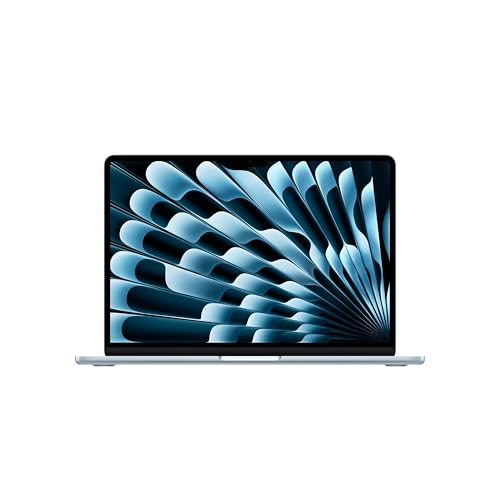
This is the Sky Blue version of our top 13-inch Air, carrying the identical M5 chip, 16GB unified memory, 512GB SSD, and Wi-Fi 7. The 13.6-inch Liquid Retina display supports 1 billion colors, with a 12MP Center Stage camera and Touch ID on board. It sits at #6 mainly because it duplicates the leader's loadout in a different color.
- M5 chip built for AI
- 16GB unified memory and 512GB SSD
- 13.6-inch Liquid Retina display, 1 billion colors
- Wi-Fi 7 and Touch ID
- Color variant of a higher-ranked identical pick
- Single 512GB and 16GB configuration only
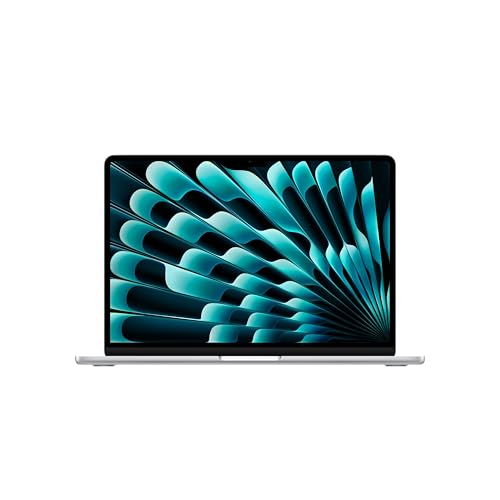
Silver is the only thing separating this 13-inch Air from our #1 pick. It runs the M5 chip with 16GB unified memory, a 512GB SSD, Wi-Fi 7, a 12MP Center Stage camera, and Touch ID, with a 13.6-inch Liquid Retina display. It ranks #7 as another color twin of the leading configuration.
- M5 chip built for AI
- 16GB unified memory and 512GB SSD
- 13.6-inch Liquid Retina display, 1 billion colors
- Wi-Fi 7 and Touch ID
- Color variant of a higher-ranked identical pick
- No configuration choices beyond the finish
This is the 15-inch route to M5 performance. It combines the M5 chip with 16GB unified memory and a 512GB SSD behind a 15.3-inch Liquid Retina display, plus Wi-Fi 7, a 12MP Center Stage camera, and Touch ID in Midnight. At about 3.33 pounds it trades some portability for screen real estate, landing at #8.
- M5 chip built for AI
- 15.3-inch Liquid Retina display, 1 billion colors
- 16GB unified memory and 512GB SSD
- Wi-Fi 7 and Touch ID
- Heavier than the 13-inch Airs at about 3.33 pounds
- Priced above smaller M5 Airs with the same memory and storage
This MacBook Neo brings the A18 Pro chip to a Blush finish with a color-coordinated keyboard, aimed at everyday tasks and apps. It pairs 8GB unified memory with a 256GB SSD, a Liquid Retina display, and a 1080p FaceTime HD camera, and it's rated up to 16 hours. It sits at #9 as the second budget Neo in the lineup.
- A18 Pro chip for everyday tasks and AI
- Liquid Retina display
- Up to 16 hours of battery life
- Color-coordinated keyboard in Blush
- 8GB unified memory limits heavier multitasking
- 256GB SSD fills quickly with large files
A 15.3-inch Liquid Retina display in a cheerful Sky Blue shell is the draw here, driven by the M4 chip with 16GB unified memory and a 256GB SSD. A 12MP Center Stage camera and Touch ID are included, and it's rated up to 18 hours of battery life. It ranks #10 as a color variant of the M4 Air on the smaller storage tier.
- Apple M4 chip for multi-app work
- 15.3-inch Liquid Retina display, 1 billion colors
- 16GB unified memory
- Built for Apple Intelligence
- 256GB SSD is the smaller storage tier
- M4 chip rather than the newer M5 in the top Airs
8 Things to Consider Before Buying Macbook
Start with the chip and the memory, because those two numbers decide how long this laptop stays fast. Then weigh screen size and storage against portability, since a 13-inch Air and a 15-inch Air feel very different in a bag. Our ranking already folds these trade-offs together, so a higher slot signals a stronger spec-to-price balance.
Our Final Verdict
The Apple 2026 MacBook Air 13-inch Laptop takes the win on the strength of its M5 chip, 16GB unified memory, 512GB SSD, Wi-Fi 7, and a sub-three-pound build rated up to 18 hours. The renewed Apple 2020 MacBook Pro is the value play — 16GB of RAM and a 512GB SSD for buyers who'll happily trade the latest chip for thrift. If you want the ceiling, the Apple 2025 MacBook Pro Laptop brings the M5 with a 10-core CPU and 10-core GPU plus a 14.2-inch Liquid Retina XDR display. Be honest about your workload before you spend: the 8GB Neo models and the 256GB Airs save money but give up headroom you can't reclaim later.
Frequently Asked Questions
What is the best MacBook overall?
The Apple 2026 MacBook Air 13-inch Laptop is our top pick of the ten we compared. It combines the M5 chip, 16GB unified memory, a 512GB SSD, a 13.6-inch Liquid Retina display, and Wi-Fi 7, all in a 2.71-pound design rated up to 18 hours of battery life.
Which MacBook is the best value?
The renewed Apple 2020 MacBook Pro is the value choice. It pairs 16GB of RAM with a 512GB SSD and a 2.0GHz Intel Core i5, which makes it the budget route for shoppers who don't need the newest Apple silicon or the longer feature list of the M-series models.
How much memory do these MacBooks have?
Eight of the ten ship with 16GB of memory. The exceptions are the two Apple 2026 MacBook Neo 13-inch models, which carry 8GB of unified memory. Because memory is built in and can't be upgraded later, choose your capacity at purchase based on how many apps you run at once.
What's the difference between the MacBook Air and the MacBook Pro picks here?
The Air models — both M5 and M4 — emphasize portability and are rated up to 18 hours of battery life with Liquid Retina displays. The Apple 2025 MacBook Pro steps up to the M5 with a 10-core CPU and 10-core GPU and a 14.2-inch Liquid Retina XDR display, aimed at heavier professional and creative work.
Which MacBook is best for AI features?
The M5-based models, including the Apple 2026 MacBook Air 13-inch and the Apple 2025 MacBook Pro, are marketed as built for AI and support Apple Intelligence. The A18 Pro MacBook Neo also lists the AI capabilities you need for everyday tasks. The Intel-based 2020 MacBook Pro is the one to skip if AI capability is a priority.
Are the more expensive MacBooks worth it?
Not for everyone. The Apple 2026 MacBook Air 13-inch Laptop outranked pricier models in our comparison by hitting the best balance of chip, memory, and portability. Step up to the Apple 2025 MacBook Pro Laptop only if you specifically need its 10-core GPU and Liquid Retina XDR display.
Related Guides


