| Quick Facts | |
|---|---|
| Vascular measure used in the UIC trial | brachial artery flow-mediated dilation (ultrasound) |
| Checkpoints where massage group showed improved blood flow | 90 minutes, 24, 48, and 72 hours post-exercise |
| Exercise-only group's blood flow recovery time | 72 hours to normalize |
| Time for massage group's muscle soreness to resolve | 90 minutes |
| Study publisher | Archives of Physical Medicine and Rehabilitation, 2014 |
What actually happens to blood flow during a massage
Kneading and compression trigger vasodilation, a widening of blood vessels, which is the primary mechanism behind any circulation boost from massage.
Shopping for a specific model? See the best massager we tested — 10 models compared on the specs that decide it.
For decades the explanation you'd hear was almost plumbing-like: massage physically squeezes blood out of a tight muscle, and fresh blood rushes in when the pressure releases. That image is intuitive, which is probably why it stuck, but it isn't what current physiology research points to as the dominant mechanism.
The more supported explanation involves the smooth muscle lining blood vessel walls. Mechanical pressure and the friction of massage techniques prompt these vessels to relax and widen, a process called vasodilation. Wider vessels mean less resistance, which means more blood moves through the area per minute. Some of the research on this also points to nitric oxide release from the endothelium, the thin cell layer lining blood vessels, as part of what triggers that widening.
Heat matters too, even though it's a secondary factor. The friction generated by hands-on techniques, or by a vibrating or heated massage device, raises skin and tissue temperature slightly, and warmer tissue tends to vasodilate on its own. None of this is exotic. It's the same basic vascular response your body has to a hot shower or a sauna, just delivered through mechanical pressure instead of ambient heat.
What the strongest study on massage and circulation actually found
A controlled trial at the University of Illinois at Chicago measured blood flow with ultrasound after exercise and found the massage group's vascular function improved at every checkpoint over three days, while the exercise-only group's initially dropped.
Most massage-and-circulation claims online cite research loosely, without naming the study. One specific trial is worth naming: researchers led by Shane Phillips at the University of Illinois at Chicago had healthy but sedentary adults exercise their legs to soreness on a leg press, then gave half of them a Swedish massage. The team measured brachial artery flow-mediated dilation, an ultrasound-based measure of how well an artery widens in response to increased blood flow, at 90 minutes, 24 hours, 48 hours, and 72 hours after exercise.
The massage group's vascular function improved at every one of those checkpoints. The exercise-only group actually showed reduced blood flow capacity right after the workout, and it took the full 72 hours to normalize. The massage group also reported no lingering soreness by 90 minutes post-treatment, while the untreated group was still sore a full day later.
Here's the detail that undercuts the simplest "massage pumps blood through the muscle" theory: a third group that received massage without doing any exercise first showed circulation improvements similar in size to the group that exercised and got massaged. That's a strange result if the whole mechanism were local, mechanical squeezing of a worked muscle. It suggests something more systemic is going on, possibly involving the nervous system's role in vascular tone, though the study wasn't designed to isolate that pathway. Research in this area continues to be published, including work looking at how massaging one limb affects blood flow measurements elsewhere in the body, which points the same direction without fully settling the question.
The honest limits of the evidence
The circulation boost from massage is real but typically temporary and local, and researchers still describe the overall evidence base as limited by small samples and inconsistent measurement methods.
It would be easy to read the UIC findings and conclude massage is a proven, durable circulation treatment. That overstates it. Most of the literature on massage and blood flow measures effects over hours or a few days, not months, and sample sizes in this niche of exercise physiology tend to run small, often a few dozen participants per arm. That's enough to detect a real effect, but not enough to say how it holds up across ages, fitness levels, or massage techniques.
There's also a genuine scientific disagreement about how much of the benefit is really circulatory versus how much is explained by reduced muscle tension, lower cortisol, or simple relaxation, all of which can shift blood flow readings without meaning the underlying vascular disease process has changed. Reviews of massage and blood pressure research have flagged this directly, noting that the field needs more methodologically rigorous trials before the mechanisms can be considered settled.
So the fair summary: massage produces a measurable, biologically plausible circulation effect backed by at least one well-designed trial, and it's reasonable to feel good about that. It is not evidence that massage treats peripheral artery disease, deep vein thrombosis, or chronic venous insufficiency, and nobody studying this seriously claims that it does.
Where caution is warranted: neuropathy and existing circulatory conditions
People with diabetic neuropathy, blood clots, or diagnosed vascular disease should check with a clinician before adding regular massage, because pressure that helps a healthy limb can carry real risk in a compromised one.
Diabetic peripheral neuropathy is the population where this gets nuanced fast. Research specifically on massage for neuropathy is described by reviewers as scarce, and what exists carries caveats. Reduced sensation in the feet means a person may not feel that pressure is too aggressive until after tissue damage has occurred, and unnoticed cuts or skin breaks raise infection risk if equipment isn't clean.
There's an additional wrinkle for insulin-dependent patients: because massage can improve circulation and lower stress, it may also speed up how quickly insulin lowers blood sugar, which is a real hypoglycemia consideration, not a theoretical one. None of this means foot massage is off-limits for people managing diabetes. It means the standard advice, checking with a healthcare team before adding it to a routine, is the right call rather than a throwaway disclaimer.
The same logic extends to anyone with a diagnosed clotting disorder or vascular condition. Vigorous pressure over an area with a suspected clot is a genuinely bad idea, and that's a case where a gentler, doctor-approved approach matters more than chasing a stronger circulation effect.
How a massage device can improve blood circulation at home
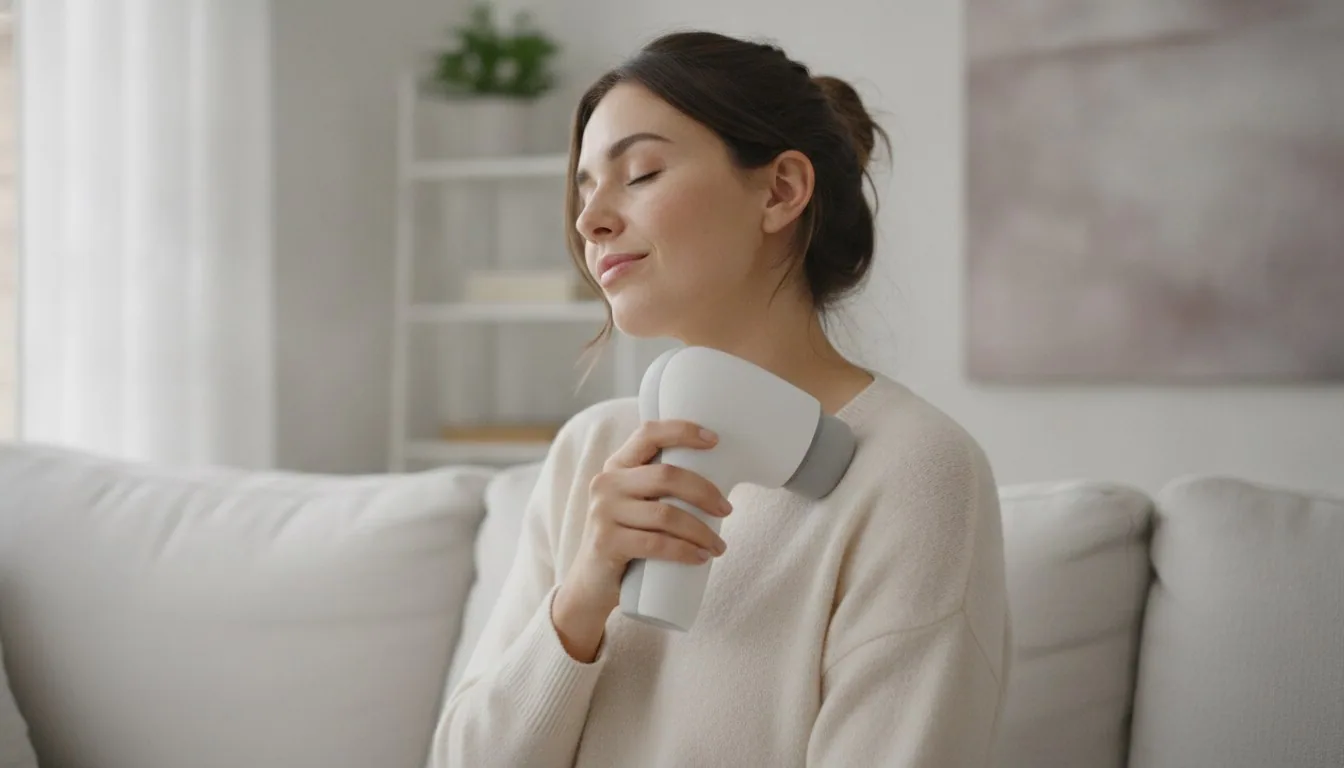
A massage device reproduces the mechanical-pressure and vibration side of the effect reasonably well, but it can't replicate a trained therapist's ability to read tissue and adjust pressure in real time.
The mechanism section above, mechanical pressure plus vasodilation plus a bit of heat, doesn't require a licensed therapist to trigger. A percussion device, a shiatsu-style unit, or a heated foot massager applies the same basic pressure-and-heat combination that a hands-on session does, which is part of why so many people reach for one after a long day on their feet or a hard workout.
The trade-off is judgment. A therapist adjusts pressure based on how tissue feels under their hands, second by second. A device runs a fixed or pattern-based routine, which is fine for general relaxation and localized soreness but is exactly why the neuropathy cautions above still apply to self-massage tools, maybe more so, since there's no professional in the room monitoring the response. If you're comparing options for that kind of at-home use, our guide to the best foot massagers walks through what to look for if your priority is your feet and lower legs specifically, and our hand massager buying guide covers the smaller devices built for hands and forearms. For a wider view across chair units, percussion guns, and other formats worth considering for general circulation and recovery use, our roundup of the best massagers is the better starting point, and the broader massager buying guide is worth a read if you're still deciding which device category fits your routine at all.