| Quick Facts | |
|---|---|
| Static vs kinetic friction (Georgia State University HyperPhysics) | static coefficient is normally higher than kinetic, so a topper resists starting to slide but keeps going once it does |
| Rubber's grip advantage (HyperPhysics) | a tire's static grip on dry road is near 0.8, versus wood-on-wood at about 0.4, far above near-frictionless foam on a smooth sheet |
| Twin vs twin XL size gap (Buyer Reports feed) | twin is about 39 by 75 inches; twin XL (dorm size) is about 39 by 80 inches, a 5-inch length gap |
| Deep-pocket topper fit (Buyer Reports feed) | mattress-pad-style toppers with elastic deep-pocket skirts fit mattresses roughly 8 to 21 inches deep |
| Older-adult fall context (CDC) | more than 1 in 4 adults age 65+ fall each year; CDC lists throw rugs and floor clutter among trip hazards |
Why does my mattress topper keep sliding off?
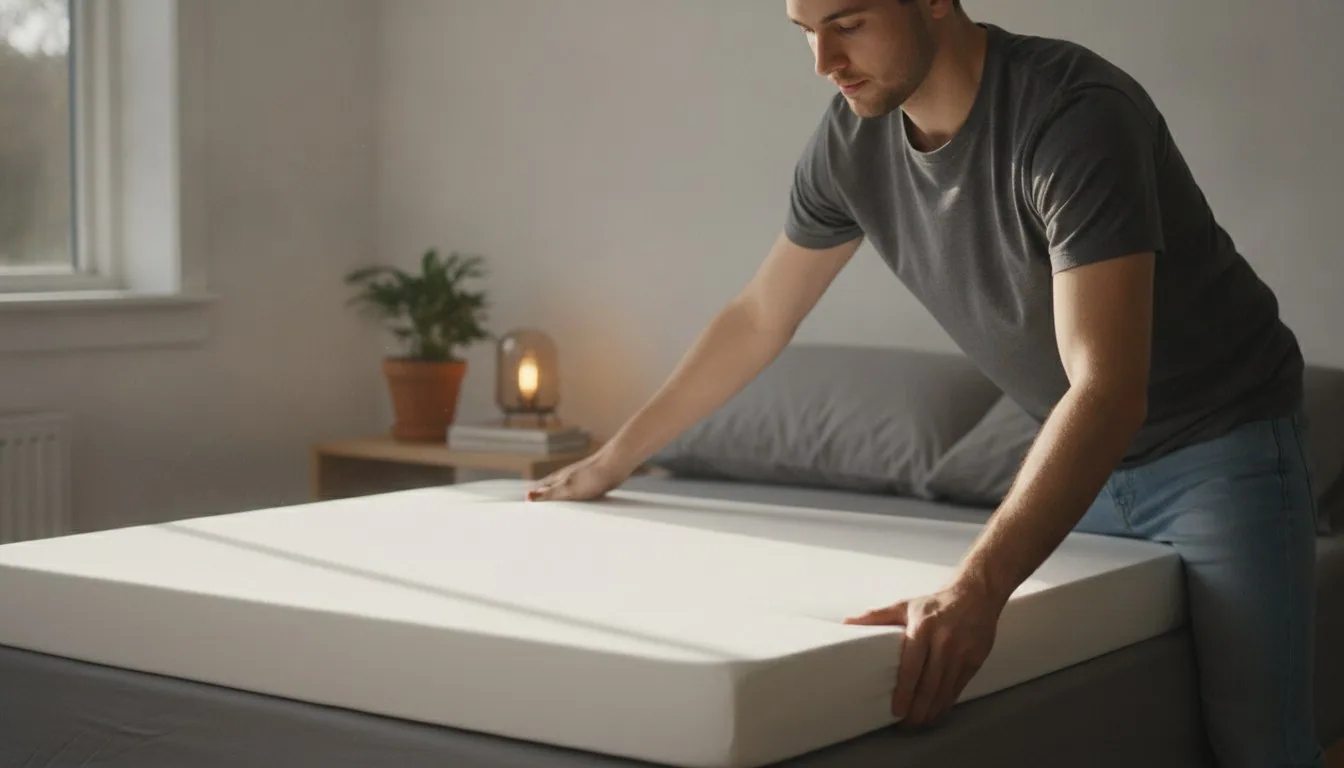
A topper slides when there isn't enough friction between it and the sheets below, and that usually comes from one of two things: a slick surface pairing or a topper that's the wrong size for the mattress.
Shopping for a specific model? See top-rated mattress topper models — 10 models compared on the specs that decide it.
If you have ever asked why does my mattress topper keep moving, the short answer is friction, or the lack of it. Two smooth surfaces pressed together, a foam slab on a tightly woven sheet, barely grip each other, so your own shifting through the night nudges the topper along a little at a time. Georgia State University's HyperPhysics resource points out that the static coefficient of friction, the grip you have to overcome to start something sliding, is normally higher than the kinetic coefficient that governs it once it is already moving. In plain terms, the topper resists the first shove but slides easily after that, which is how a small nudge at midnight becomes a corner hanging off the frame by morning.
The second cause is size. A twin topper measures roughly 39 by 75 inches; a twin XL, the standard dorm size, runs 39 by 80. Drop the shorter one on the longer bed and there is five inches of slack for it to drift into. Satin, silk, and slippery microfiber sheets make either problem worse, since they cut the grip even further. Sort out which cause you are dealing with and the right fix picks itself.
How to keep a mattress topper from sliding: the fixes
The single most effective fix is a rubberized non-slip pad, the same open-weave material sold as a rug gripper or shelf liner, laid between the topper and the mattress or fitted sheet.
The workhorse fix is a rubberized non-slip pad, the open-weave rubber matting sold cheaply as a rug gripper or shelf liner. Cut it to the footprint of the mattress and lay it directly under the topper. Rubber is about the grippiest everyday material there is; for a sense of scale, HyperPhysics puts a tire's static grip on dry road near 0.8, worlds above the near-frictionless contact of foam on a smooth sheet. That extra friction is exactly what keeps a mattress topper in place once you add it back into the stack.
A full-size rug pad is the tidy version, but a few strips of shelf liner under the corners and down the center do most of the work for less. If you would rather not buy anything, thin lines of clear silicone caulk piped onto the underside of the topper and left to cure overnight create the same rubbery, high-grip dots; it is fiddlier and permanent, but it costs next to nothing. Whichever route you take, the goal stays the same: swap a slick contact for a grabby one so the topper stops migrating. Budget-tier grippers work as well here as anything pricier, since all you are buying is texture.
Anchoring the topper from above: sheets and straps
A deep-pocket fitted sheet pulled tight over both the topper and the mattress clamps the two together, and elastic sheet straps at the corners add a second line of defense.
Friction underneath handles most of the job; a sheet over the top finishes it. A deep-pocket fitted sheet, sized to swallow the mattress plus the extra two to four inches a topper adds, pulls the whole sandwich tight so the layers stop sliding independently. Skip a standard-depth sheet here, because a topper can push total height past what that sheet was cut for, and a sheet that pops off a corner at 2 a.m. lets the drift start over.
Elastic sheet straps, sometimes sold as sheet suspenders or garters, clip to the sheet's corners and run under the mattress to hold that tension. Some toppers sidestep the problem by design: mattress-pad styles come with an elastic deep-pocket skirt that stretches around the mattress, the kind rated to fit depths of roughly 8 to 21 inches, and a few use an edged border built to hold the topper in place without shifting. If you are shopping for a standard single bed rather than fighting with what you already own, our twin mattress topper guide covers the sized-to-fit options that need less rigging in the first place.
Dorm beds, guest beds, and other slippery cases
Thin dorm and institutional mattresses are the worst offenders, since their slick, sometimes plastic-coated surfaces give a topper almost nothing to grip and are usually the extra-long twin XL size.
Dorm rooms are where this problem peaks. The mattresses are thin, often wrapped in a wipe-clean vinyl or treated ticking that a foam topper simply glides across, and they are twin XL rather than regular twin, so a hand-me-down twin topper ends up both too short and too slippery. A rubberized pad underneath is close to mandatory here, not a nice-to-have. The same holds for guest beds, sofa beds, and hospital or adjustable bases with their coated, easy-clean surfaces.
The biggest single win, though, is buying the right size from the start. A twin XL topper that actually matches the 39-by-80-inch bed has far less room to wander than a twin one fighting for grip on a longer frame. Our dorm mattress topper guide walks through the picks built for those thin twin XL beds, and if you want the wider field of extra-long options, the twin XL mattress topper guide compares them side by side. Match the size, add friction under it, and even a notoriously slick dorm bed will hold a topper still.
When a sliding topper is worth fixing sooner
Beyond the nightly nuisance, a topper that bunches and shifts creates uneven support and, for anyone unsteady on their feet, a sleep surface that moves underfoot at the edge of the bed.
For most people a sliding topper is only aggravating. It is still worth fixing promptly, for two reasons. First, a topper that migrates leaves parts of the bed doubled up and parts bare, so the cushioning you paid for ends up in the wrong places and pressure points come back. Second, stability. A bed whose top layer shifts as you sit on the edge is a poor anchor for standing up, and that matters more with age.
The CDC reports that more than one in four adults 65 and older fall each year, and its home-safety guidance flags loose floor coverings and clutter among the things worth getting rid of or securing. A topper is not a rug, but the same logic covers any part of the bed that slides when you lean on it. The durable answer is choosing a topper matched to the bed and the sheets before it ever reaches the bedroom; our mattress topper hub lays out the types and sizes so the next one grips instead of wandering.