How to winterize and store a pressure washer
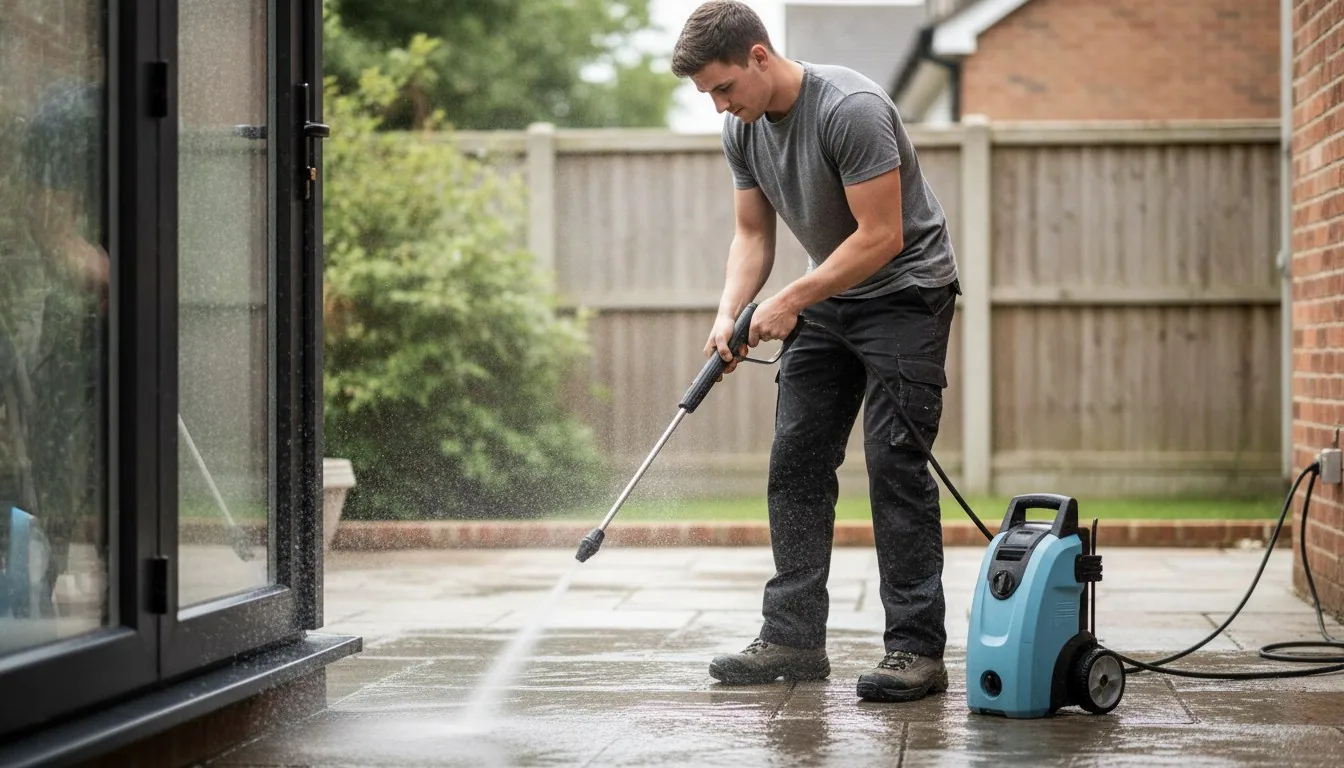
- Standing water is the real threat: a pump or hose that still holds water when it drops below 32°F (0°C) can crack from the inside, and you often won't know until spring.
- A pump saver or RV antifreeze, never automotive antifreeze, is the cheapest form of insurance for the pump's seals and O-rings.
- Gas models need a fuel stabilizer and a full drain or run-dry cycle; purging the pump by running the engine should always happen outdoors, never in a closed garage.
- Electric and battery-powered pressure washers skip the fuel step entirely but still need the water side fully cleared before storage.
- Store the unit somewhere dry, off bare concrete if possible, and away from anywhere rodents could reach the hoses.
Unplug the unit before any cleaning or filter work.
Shut off the water and relieve pressure
Disconnect the garden hose from the inlet, then pull the trigger on the gun for several seconds until the hissing stops. This releases trapped pressure and air before you start disconnecting anything else.
Drain the pump, hose, and wand completely
Uncouple the high-pressure hose and the wand, holding each end up so gravity clears any trapped water, especially around threaded fittings. Bump the trigger briefly with everything disconnected so the pump itself purges what's left inside.
Push pump saver or RV antifreeze through the pump
Connect a pump saver bottle (or propylene glycol-based RV antifreeze) to the water inlet and squeeze until the fluid appears at the discharge side. Never substitute automotive antifreeze, which damages seals and is toxic if it leaks or is ingested.
Treat the fuel system on gas models
Add a fuel stabilizer and run the engine outdoors for a couple of minutes so treated fuel reaches the carburetor, or drain the tank and carburetor dry if you'd rather not deal with stale gas. Check the oil level while you're in there and top it off if low.
Pull and store the battery on battery-powered models
Remove the battery pack before storage and keep it somewhere dry and room-temperature rather than in an unheated shed. Check the charge level occasionally over winter, since a pack left fully drained for months may not recover fully.
Clean nozzles, filters, and any soap injector
Rinse each quick-connect nozzle to clear mineral buildup, and check the mesh filter at the water inlet for leaves or grit. Flush an X-Jet or other downstream chemical injector separately with clean water so soap residue doesn't crystallize in the tube.
Store it dry, elevated, and protected
Keep the machine off bare concrete on a scrap of wood or a shelf, coil the hose loosely instead of kinking it, and tuck hose ends away from areas where rodents could chew through them. A spot that stays above freezing is ideal but not always available.
| Quick Facts | |
|---|---|
| Water's freezing point | 32°F / 0°C |
| CO level linked to disorientation/unconsciousness (CPSC) | 150-200 ppm |
| Recommended extension ladder angle (CDC/NIOSH) | about 75 degrees |
| Ethylene glycol antifreeze (ATSDR) | odorless, sweet-tasting, toxic if swallowed |
| Weight, compact electric pressure washer (feed data) | about 13.2 lb |
| Weight, full-size 212cc gas pressure washer (feed data) | about 63 lb |
When you need to winterize a pressure washer
A pressure washer needs winterizing any time it will sit unused through freezing temperatures, because water left in the pump, hose, or wand can freeze, expand, and crack the housing before you ever pull the trigger again.
Shopping for a specific model? See top-rated pressure washers models — 10 models compared on the specs that decide it.
Water expands by roughly nine percent as it turns to ice, and a pressure washer pump is not built to absorb that kind of internal pressure. The pump head, the check valves, and even the fittings on a garden hose hold small pockets of water even after you think everything is drained, and those pockets are exactly where the first crack shows up. One hard freeze is often enough; you don't need a whole season of subfreezing nights, just one night where a trapped pocket of water goes solid inside a sealed chamber.
This is why the smart move is to winterize a pressure washer as soon as overnight lows start flirting with freezing, not after the first snow already caught you off guard. Fall is also prime season for reaching for a pressure washer for cleaning gutters one last time before leaves stop falling; if that's on your list, do it before the steps below, not after, since you'll want full pressure for the job and don't want to redo the draining process twice. If you're up a ladder for that gutter pass, keep an extension ladder set at roughly a 75-degree angle. The CDC's National Institute for Occupational Safety and Health points to an incorrect setup angle as the cause of about 40 percent of ladder falls, and a rail that's still wet from the job you just finished is not the place to find that out.
Draining every drop of water from the pump, hose, and wand
Disconnect the water supply, squeeze the trigger until pressure stops hissing out, then run the machine dry for a few seconds so the pump itself pushes out whatever is left inside.
Start by shutting off the water supply and disconnecting the garden hose from the inlet. Pull the trigger on the gun for several seconds until the hissing stops; that's trapped air and pressure releasing, not water, and skipping this step is how people end up with a face full of cold water they didn't expect. Uncouple the high-pressure hose and hold one end up so gravity pulls whatever is left down and out, then do the same with the wand and any nozzles, since threaded fittings are notorious for trapping a surprising amount of water.
With everything else disconnected, bump the trigger and let the pump run dry for a few seconds, just enough to clear the internal chambers, not so long that the pump runs without any lubrication at all. If you'd rather watch this part than read it, plenty of pressure washing videos on YouTube show the drain-and-purge sequence in real time, though the written steps here cover the same ground plus the pump saver step that follows.
Pushing pump saver or RV antifreeze through the pump
A pump saver or non-toxic RV antifreeze coats the pump's internal seals and O-rings, displacing any leftover water and protecting rubber components from cracking in the cold. Automotive antifreeze should never touch the pump.
A pump saver is a small bottle of glycol-based fluid designed to thread onto the pump's water inlet. Squeeze it through until you see the fluid come out the discharge side, and you've displaced whatever water was hiding in the chambers while coating the seals and O-rings in a protective film. That film matters even in climates that rarely freeze, since rubber seals dry out and crack from sitting empty for months, not just from ice. It's arguably the most useful low-cost step in the whole process of learning how to winterize a pressure washer the right way instead of just draining it and hoping for the best.
One warning worth repeating: automotive antifreeze isn't a substitute for a real pump saver, and the reason goes beyond performance. Automotive antifreeze runs on ethylene glycol, and per the CDC's Agency for Toxic Substances and Disease Registry, ethylene glycol is odorless but sweet-tasting, which is exactly the combination that makes it dangerous around curious pets and small children; the agency's toxicology profile links ingestion to kidney damage and effects on the nervous system, lungs, and heart. RV and marine antifreeze, by contrast, is typically propylene glycol-based and far less toxic, which is why it shows up as the safer alternative when a dedicated pump saver isn't on hand. Either way, cap the bottle and store it up out of reach when you're done.
Handling the engine, fuel, and battery on gas versus electric models
Gas pressure washers need a fuel stabilizer run through the system plus an oil check before storage, while electric and battery models mainly need the water side handled and, for battery tools, the pack removed and stored indoors.
Gas engines are the extra layer of work. Pour in a fuel stabilizer and run the engine for a couple of minutes so treated gasoline reaches the carburetor, not just the tank; stale ethanol-blended fuel left sitting all winter is a common reason gas engines refuse to start in spring. Draining the tank and carburetor dry is the more thorough option if you'd rather skip stale fuel altogether. While you're in there, check the oil level and top it off if low, since a dry crankcase over a long storage period invites rust. One rule matters regardless of the weather: never run the engine indoors to purge the pump. The Consumer Product Safety Commission has documented gasoline-powered tools poisoning people with carbon monoxide in garages and other enclosed spaces, and its guidance is blunt: do not use gasoline-powered tools and engines indoors. CO levels above roughly 150 to 200 parts per million can cause disorientation and unconsciousness.
Electric and battery-powered machines are simpler here; no fuel, no oil, no exhaust to worry about. That doesn't mean skipping the water side, though, since the pump inside an electric unit freezes just as easily as one bolted to a gas engine, so the draining and pump saver steps still apply in full. Our gas pressure washer guide and our electric pressure washer guide both break down what else separates the two if you're weighing a replacement instead of nursing an aging machine through another winter. For battery-powered models, pull the pack out before storage, keep it dry and at room temperature rather than in an unheated shed, and check the charge level occasionally, since a pack left fully drained for months may not recover.
Cleaning nozzles, filters, and the soap or X-Jet system
Detach and rinse every nozzle, clear the inlet water filter of debris, and flush any downstream soap injector or X-Jet with clean water so dried detergent doesn't clog the orifice by spring.
Pull each quick-connect nozzle off the wand and rinse it under a tap. The tiny orifice in a pressure washer nozzle is easy to clog with mineral buildup or grit, and a partially blocked nozzle is one of the more common reasons people think their machine has lost pressure when it's really just dirty. Check the small mesh filter where the garden hose connects to the inlet, too; leaves and grit collect there over a season of use, and a clogged inlet filter starves the pump of water, which is its own kind of damage.
If your setup includes an X-Jet or a similar downstream chemical injector for pressure washing soap application, flush it separately with clean water rather than assuming the pump drain covers it. Soap concentrate left sitting in that narrow injector tube over winter tends to crystallize, and a crystallized injector is a clogged one; you'll find that out the first time you try to lay down foam next spring and nothing comes out.
Choosing where and how to store it for the off-season
Store a drained, treated pressure washer somewhere dry and, if possible, above freezing, off bare concrete, away from where rodents can reach the hoses, and somewhere you can actually lift if it's one of the heavier full-size models.
An unheated garage or shed works fine as long as it stays dry and the machine isn't sitting directly on bare concrete, which wicks up ground moisture and speeds up rust on the frame and fittings. A scrap of wood or a cheap shelf under the base solves that in about thirty seconds. Coil the high-pressure hose loosely rather than kinking it tightly around the frame, since a hose bent sharply at one point for months is more likely to crack there later. If mice are a problem in your storage area, tuck the hose ends and any exposed rubber somewhere they can't easily gnaw through; rodents chewing on hose and wiring is a genuinely common off-season failure.
Worth factoring in before you pick a spot: pressure washers vary a lot in size and weight, which affects where you can realistically put one and whether you'll want help moving it. A compact electric unit can weigh as little as around 13 pounds, light enough to hang on a hook, while a full-size gas model built around a 212cc engine can run past 60 pounds, which changes the calculus for a high shelf. If your current machine is on its last legs and you're weighing whether to nurse it through one more winter, our pressure washers buying guide compares current gas, electric, and specialty models side by side so you're not guessing.
Bringing a winterized pressure washer back out in spring
Reverse the process: reconnect the hose, run water through before adding pressure, check oil and fuel on gas models, and watch for a pulsing spray or weak pressure, which usually means a valve froze or a seal needs replacing.
Reconnect the garden hose and let water run through the machine for a few seconds before you reattach the high-pressure hose and pull the trigger; this flushes out the last of the pump saver fluid so it doesn't end up sprayed across your driveway or your grass. On a gas model, check the oil, add fresh fuel if you drained the tank in fall, and run through a normal start sequence. If it sputters, that's usually stale fuel rather than anything you did wrong over winter. Electric and battery units should power on and build pressure within the first few seconds of holding the trigger.
If the spray pulses instead of running smooth, or the gauge never seems to build even with a clean nozzle attached, that's often a sign a check valve froze and cracked despite your best efforts. It's worth troubleshooting before assuming the whole pump is shot; a lot of what looks like pump failure after winter storage turns out to be one stuck or damaged valve rather than the entire unit.
Frequently asked questions
How cold does it have to get before I need to winterize a pressure washer?
Can I use regular car antifreeze instead of a pump saver?
Do electric pressure washers need winterizing the same way as gas ones?
Do I really need to bother if I live somewhere that barely freezes?
What does it mean if my pressure washer needs a valve replacement after winter?
Should I just pay someone to do this instead of doing it myself?
Sources & references
- ToxFAQs for Ethylene Glycol — Agency for Toxic Substances and Disease Registry (ATSDR), CDC
- Carbon Monoxide Questions and Answers (CPSC Document #466) — U.S. Consumer Product Safety Commission (CPSC)
- Ladder Safety — National Institute for Occupational Safety and Health (NIOSH), CDC