| Quick Facts | |
|---|---|
| Beef, pork, veal, lamb steaks and chops | 145 degrees F (62.8 C), rest 3 minutes |
| Ground meats | 160 degrees F (71.1 C) |
| All poultry | 165 degrees F (73.9 C) |
| Fish and shellfish | 145 degrees F (62.8 C) |
| Leftovers and reheating | 165 degrees F (73.9 C) |
| Hold cooked food at | 140 degrees F (60 C) or warmer |
| Discard after | 2 hours, or 1 hour above 90 degrees F |
| Where to measure | Thickest part, away from bone and fat |
What temperature to grill meat, cut by cut
Whole cuts 145 degrees Fahrenheit with a three minute rest, ground meat 160, poultry 165.
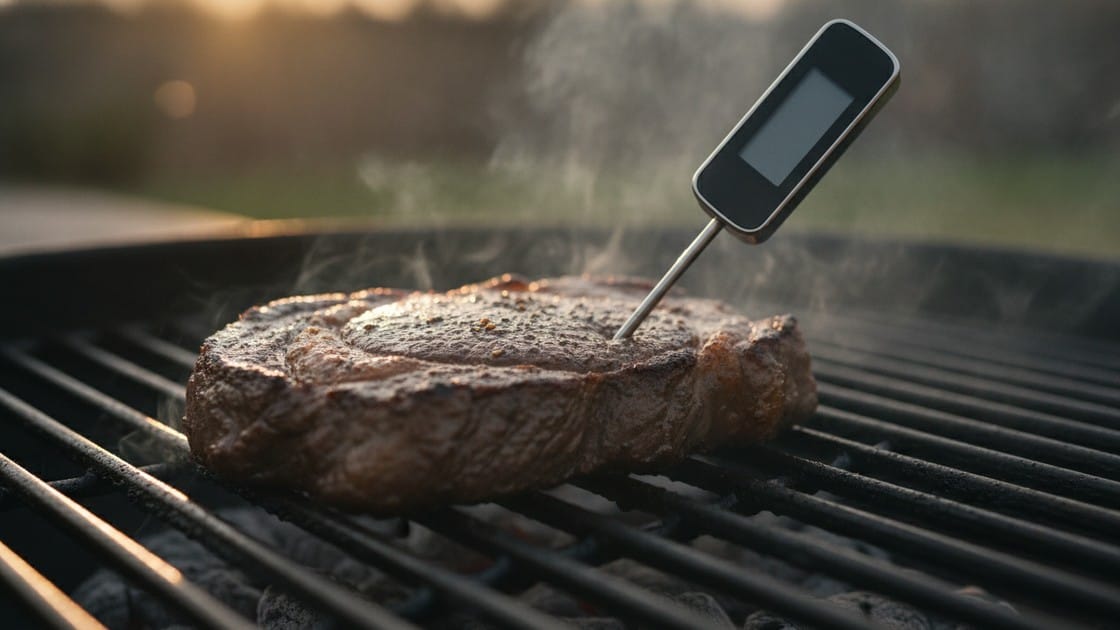
The USDA publishes one chart for this, and it is short enough to memorise. Whole cuts of beef, pork, veal and lamb, meaning steaks, chops and roasts, are done at 145 degrees Fahrenheit, or 62.8 degrees Celsius, and then need to rest for at least three minutes.
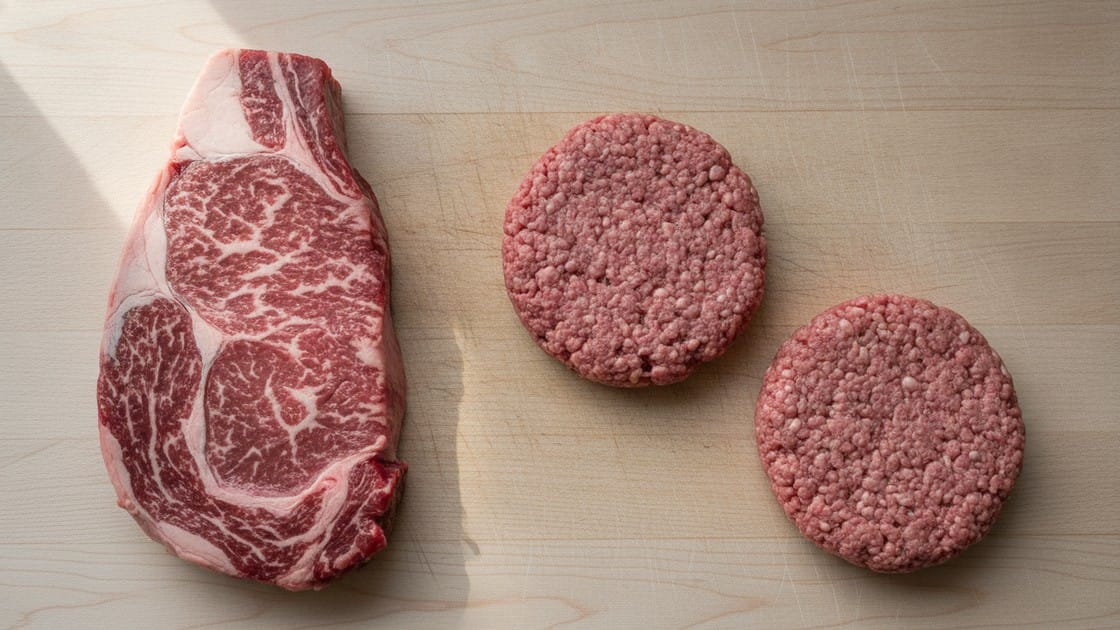
Ground meat is different. All raw ground beef, pork, lamb and veal go to 160 degrees Fahrenheit, which is 71.1 degrees Celsius. There is no rest time attached to that number.
Poultry is the highest and the simplest. Every part of it goes to 165 degrees Fahrenheit, or 73.9 degrees Celsius. Breasts, thighs, wings, a whole bird, ground poultry, all the same figure.
Fish and shellfish sit at 145 degrees Fahrenheit. Anything you are reheating, including leftovers and fully cooked hot dogs or burgers, goes to 165 degrees Fahrenheit or until it is steaming hot.
Take the reading in the thickest part of the meat, and keep the probe away from bone, fat and gristle. Those conduct heat differently and will lie to you.
Why ground meat needs more heat than a steak
Grinding moves surface bacteria into the middle, so the middle now has to get hot enough to deal with them.
This looks inconsistent until you think about where the bacteria are. On a whole steak they are on the outside surface, because that is the only part that has been handled and exposed. The inside of an intact muscle is effectively sealed.
So a steak only needs its surface treated, and the grill does that immediately. The 145 degree figure with a rest gives the whole piece a margin.
Now grind that same steak. The grinder takes the outside and mixes it right through the middle. What used to be a surface problem is now spread evenly through the burger. The centre has to reach a safe temperature on its own, and that is why the number goes up to 160.
Same animal, same meat, different number, and the reason is mechanical rather than arbitrary. It is also why a rare burger is a different proposition from a rare steak.
The rest time is part of the temperature
Three minutes at 145 degrees Fahrenheit finishes the job the heat started.
The USDA does not say 145 degrees. It says 145 degrees and allow to rest for at least three minutes. The rest is not a serving suggestion.
Two things happen during it. The meat keeps rising in temperature for a short while, because the hot outside is still passing heat inward after you take it off. And the time held at that temperature does its own work, since food safety depends on temperature and duration together, not temperature alone.
Practically, take the meat off the grill, leave it somewhere warm, and do not cut it for three minutes. Cutting early lets the juice run out and ends the process before it has finished.
Ground meat has no rest requirement because 160 degrees is high enough to be immediate. Poultry is the same at 165.
Colour is not a doneness test
Grilled meat browns fast on the outside, so appearance runs ahead of the actual internal temperature.
The USDA makes the point directly. Meat and poultry cooked on a grill tends to brown quickly on the outside, so a food thermometer is what tells you the food has reached a safe minimum internal temperature.
A grill is unusually good at fooling you here. The heat is fierce and it is close, so the crust darkens in minutes while the centre is still climbing. A chicken thigh can look finished and be well short.
Pink is just as unreliable in the other direction. Smoke can leave a pink ring in meat that is fully cooked, and some fully cooked poultry stays slightly pink near the bone. Neither means undercooked, and neither means safe.
One thermometer removes all of it. Buy an instant-read model, use it in the thickest part, and stop guessing. It is the cheapest upgrade a grill can get, and it is covered in our grill buying guide.
The rest of the chart, for everything else on the grate
Fish 145, eggs 160, casseroles and leftovers 165, and reheated ham depends on where it was packed.
Meat is not the only thing that goes on. The same USDA chart covers the rest of the grate, and the numbers are worth knowing before you need them.
Fish and shellfish are done at 145 degrees Fahrenheit, the same figure as a steak. Eggs go to 160 degrees Fahrenheit, which matters for anything cooked in a pan on the side burner.
Ham has two answers depending on its state. Fresh or smoked ham that is uncooked is treated like any whole cut, so 145 degrees Fahrenheit with a three minute rest. Ham that is already fully cooked and only being reheated goes to 140 degrees Fahrenheit if it came from a USDA-inspected plant, and 165 degrees Fahrenheit if it did not.
Anything mixed goes to 165 degrees Fahrenheit. That covers casseroles, stuffing and every leftover, and it is the one number to fall back on when you are not sure which category something belongs in.
The mistakes that undo a correct temperature
Partial cooking, slow serving and mishandled leftovers put safe food back at risk.
The first one is explicit in USDA guidance, in capital letters. Never partially grill meat or poultry and finish cooking it later. Half-cooking something and putting it back in the fridge leaves it warm inside for long enough to matter.
The second is what happens after cooking. Cooked meat should be kept hot until it is served, at 140 degrees Fahrenheit or warmer. Setting it to the side of the grill rack works, away from the coals so it does not carry on cooking.
The third is leftovers. Discard any food left out more than two hours, and only one hour when it is above 90 degrees Fahrenheit outside. A hot afternoon halves your margin, which is exactly when a barbecue is likely to be running.
Two handling rules sit alongside the temperatures. Keep meat and poultry refrigerated until you are ready to use them, and take out only what goes straight on the grill. And do not use the same platter, cutting board or utensils for raw and cooked food, because bacteria in raw meat and its juices can contaminate what you have just cooked.
Reheat anything fully cooked to 165 degrees Fahrenheit, or until it is steaming hot. If you are choosing between charcoal and gas, note that neither changes any of these numbers.