Gas vs Charcoal Grills
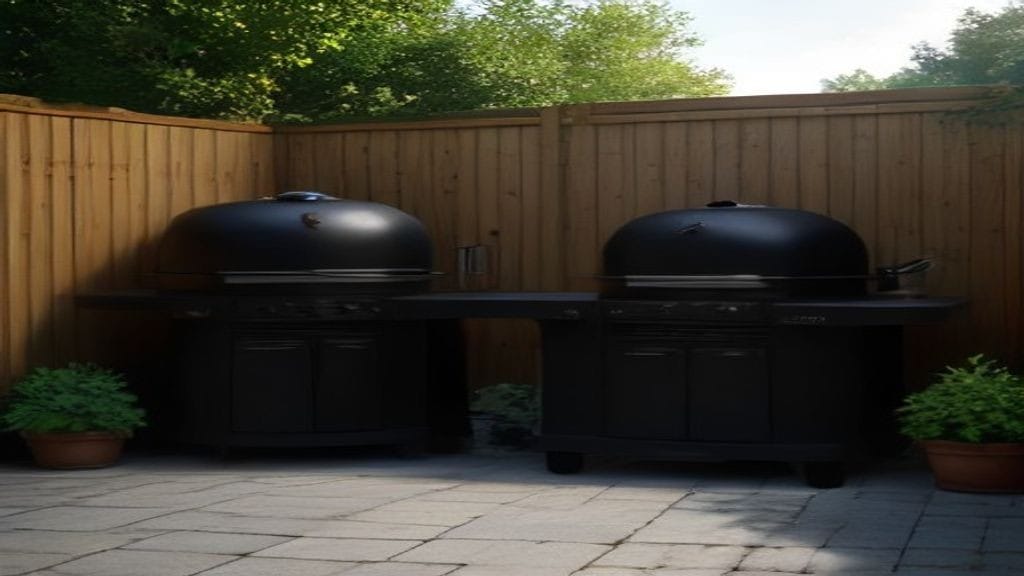
Ask two people which grill is better and you get an argument about flavour. Ask them how often they grill and you get the real answer. A gas grill is lit in seconds, so it gets used on a Tuesday. A charcoal grill takes half an hour to be ready, so it tends to wait for the weekend.
Buy a gas grill if you want to cook on weeknights, because it lights in seconds, holds a set temperature, and is finished when you close the lid. Buy charcoal if you want higher searing heat and smoke flavour, and you accept a 20 to 30 minute start-up plus ash to clear afterwards. Gas wins on convenience and control; charcoal wins on peak heat and taste.
| Spec | Gas grill | Charcoal grill |
|---|---|---|
| Time until ready to cook | About 10 minutes from pressing the igniter | About 20 to 30 minutes to light and ash over |
| Temperature control | Adjust the knob and heat responds within seconds | Shaped by vents and by moving coals, and it fades over time |
| Peak searing heat | Lower than a coal bed on most home models | Higher at the grate, which builds a harder crust |
| Smoke flavour | Burner covers catch drips and burn them, which gets close | Drips land straight on coals, and wood chunks can be added |
| Clean-up | Turn it off and walk away; grease cleaning on a schedule | Ash must cool fully and be emptied before the next cook |
| Purchase price | Higher, because of burners, valves and igniters | Lower, because the design is a bowl, grate, lid and vents |
| Cost per cook | Small, since one cylinder covers many sessions | Higher, since each cook burns a fresh load of charcoal |
| Quick Facts | |
|---|---|
| Hotter at the grate | Charcoal, which is why it sears harder |
| Cheaper to buy | Charcoal, because the design is far simpler |
| Safe minimum internal temperature | 145°F for beef, pork, veal and lamb steaks, chops and roasts, plus a rest |
| Main fire risks | Placement too close to the house, and grease build-up inside |
Heat you can dial against heat you have to build
Gas gives an adjustable flame you control with a knob; charcoal gives a fuel bed whose heat you shape by moving coals and air.
A gas grill burns propane or natural gas through metal burners. Turn the knob and more gas flows, so the flame grows and the grill gets hotter. Turn it down and the heat drops within seconds. That is a control loop you can steer while you cook. Charcoal works nothing like that. You light a pile of fuel, it burns toward its peak, then it fades over the next hour. You cannot turn charcoal down. You can only change how much air reaches it, using the vents, and air is what fire feeds on. Close the vents and the fire slows. Open them and it flares. That is a slower, coarser control, and it takes practice to read. The trade is real heat. Burning charcoal at the grate reaches temperatures most home gas burners do not, which is why a charcoal fire puts a harder crust on a steak. So gas gives you precision and charcoal gives you power.
Where the flavour difference actually comes from
Smoke flavour is made when fat drips onto a surface hot enough to burn it, not by the fuel itself.
People assume charcoal flavours the food directly. Mostly it does not. Burning charcoal gives off very little of its own aroma once it is fully lit and glowing. What happens is simpler. Fat and juice drip off the meat, land on the hot coals, and burn. That burning fat becomes smoke, the smoke rises back through the grate, and it settles on the food. So the flavour is made from your own food, and the fuel's job is to be hot enough to burn the drippings instantly. Charcoal is good at that because a bed of glowing coals sits directly under the meat. Gas grills copy the effect with metal bars or plates above the burners, which catch drips and burn them the same way. The result is closer than the argument suggests, though a charcoal bed still does it more completely. If flavour is your priority you can also add wood chunks to charcoal, which does add a genuine aroma of its own.
Time, effort, and the reason one grill gets used more
Gas is ready in about 10 minutes with nothing to clear afterwards; charcoal needs 20 to 30 minutes to light and ash removal later.
Count the whole job, not just the cooking. With gas you open the lid, turn the knob, press the igniter and wait roughly ten minutes for the grate to come up to heat. When you finish you turn the knob off and walk away. With charcoal you fill a chimney starter, light it, wait for the coals to ash over, tip them into the grill, and let the grate heat. That is twenty to thirty minutes before food touches metal. Afterwards the fire has to die out safely and the cold ash has to be emptied before the next cook, because ash left in the base holds moisture and rusts the grill from the inside. None of this is difficult. It is simply time, and time decides habit. Households that grill several times a week almost always own gas. Households that grill as an event on a Saturday often prefer charcoal, because the ritual is part of the appeal rather than a chore.
What each one costs to buy and to run
Charcoal grills cost less to buy and more per cook; gas grills cost more to buy and very little per cook.
A charcoal grill has almost nothing in it. A metal bowl, a grate, a lid and some vents. That simplicity keeps the purchase price low, and a basic kettle grill is one of the cheapest ways to cook outdoors. The running cost is where it turns around, because every cook burns a fresh load of charcoal that you buy by the bag. Grill twice a week through summer and the bags add up. A gas grill carries burners, valves, an igniter, a regulator and usually a larger frame, so it costs more on the day. Then a propane cylinder lasts many cooks, so the cost of each session is small. There is a maintenance difference too. Gas grills have parts that wear, including burners and igniters, and those are replaceable. A charcoal grill has almost nothing to fail, which is why old ones survive so long. Price the fuel for your real grilling frequency before deciding which is cheaper for you.
Safety, cleaning, and doing either one properly
Keep the grill well away from the house, clean out grease, and cook to a safe internal temperature rather than by colour.
Both fuels are safe when handled with the same habits. Grill fires tend to start for ordinary reasons: a grill too close to the house or something overhanging it, and a build-up of grease inside that eventually catches. So place the grill clear of walls, fences, and anything above it, and clean the grease out on a schedule rather than when you remember. On gas, check the hose and connections for leaks at the start of the season by brushing on soapy water and watching for bubbles. On charcoal, never add lighter fluid to coals that are already burning, and let the ash go fully cold before you empty it. Doneness is the part people get wrong most. Colour is a poor guide, because meat can brown outside while staying underdone inside. Use a probe thermometer. The USDA sets a safe minimum internal temperature of 145°F for beef, pork, veal and lamb steaks, chops and roasts, followed by a rest, and the same figure applies whichever fuel you used.
Which one to buy
Grill on weeknights and want it simple, buy gas; grill as a weekend event and want maximum sear, buy charcoal.
Start with frequency, because it predicts satisfaction better than flavour does. If you want to grill after work, buy gas. Ten minutes to heat and nothing to clean up is the difference between using it and not. If grilling is a weekend event where the process is part of the fun, buy charcoal, and buy a chimney starter with it so lighting is quick and clean. Then check two practical things. Storage and space, since a charcoal grill needs somewhere for fuel and cold ash. Fuel supply, since gas means keeping a spare cylinder so you never run dry halfway through cooking. If you genuinely want both, most people are better served buying a good gas grill first and adding a cheap kettle charcoal grill later. That order costs less than buying one expensive grill that tries to do everything.
Gas is the better buy for most households, because grilling on a weeknight only happens when the grill is ready in ten minutes and needs nothing afterwards. Charcoal is the better buy when grilling is a weekend event, when you want the hardest sear available at home, and when the lighting ritual is part of why you enjoy it.
Frequently asked questions
Does charcoal really taste better than gas?
How long does each type take to be ready?
Which grill gets hotter?
Is one cheaper than the other?
How do I know the food is cooked?
Sources & references
- Safe Minimum Internal Temperature Chart — U.S. Department of Agriculture, Food Safety and Inspection Service (FSIS)
- Grilling Fire Safety — National Fire Protection Association (NFPA)