Smoker vs grill: heat, time and what each is for
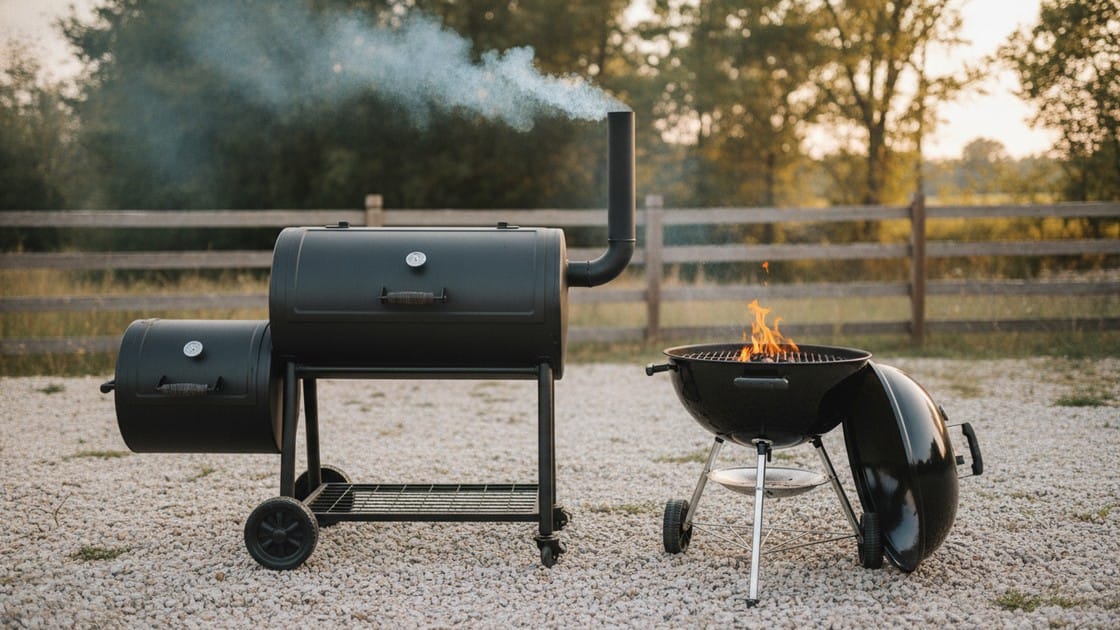
A grill cooks a steak in eight minutes. A smoker takes twelve hours to cook a shoulder. They both burn fuel and both cook meat, but they are trying to do opposite things, and one of them is not a slower version of the other.
In smoker vs grill terms, a grill puts food directly over the fire and cooks it fast with high heat. A smoker keeps the food away from the fire and cooks it slowly in warm smoke, held between 250 and 300 degrees Fahrenheit for safety.
| Spec | Smoker | Grill |
|---|---|---|
| Where the fire sits | Beside the food, cooking indirectly | Directly under the food |
| Operating temperature | Held at 250 to 300 degrees Fahrenheit | Far hotter, enough to sear in minutes |
| Time per cook | Several hours to overnight | Minutes per side |
| Tough cuts | Connective tissue softens over hours | Fast heat tightens the meat instead |
| Tender cuts | Gains nothing and loses moisture | Ideal; sears before drying out |
| Attention needed | Low once temperature is stable, but long | Constant while food is on |
| Weeknight practicality | Poor; the cook outlasts the evening | Good; dinner in under half an hour |
| Can the other do its job | Sears poorly; too cool for a crust | Smokes well with fire banked to one side and a water pan |
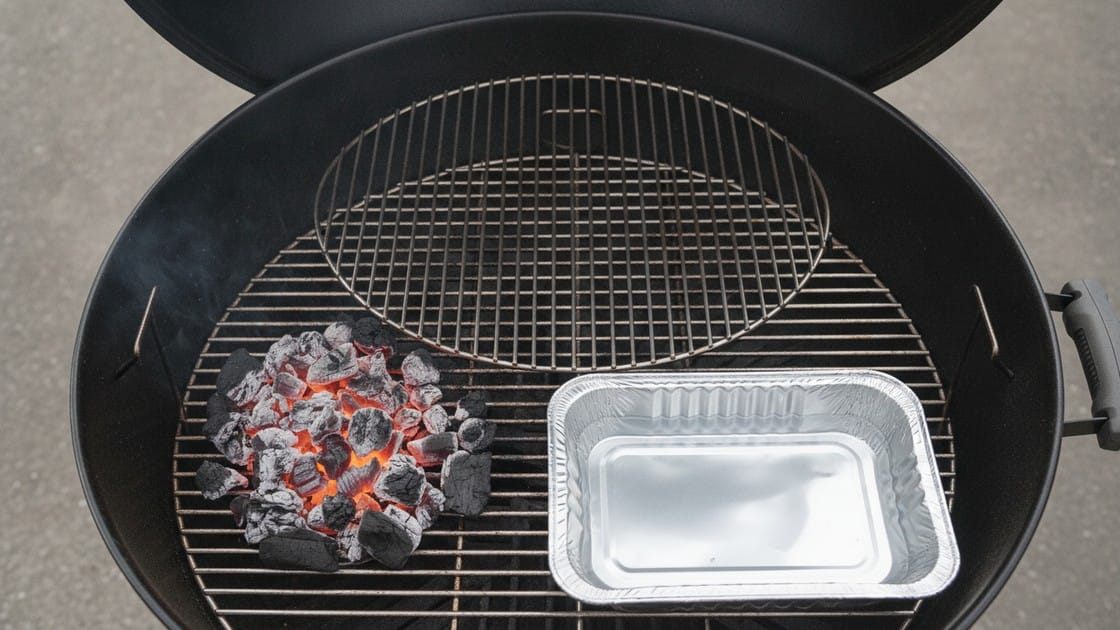
Smoker vs grill: the difference is where the fire sits
A grill puts the food over the fire. A smoker keeps the fire to one side and lets heat and smoke reach the food indirectly.
Put your hand over a candle and it burns quickly. Hold it beside the flame and it just gets warm. That is the whole smoker vs grill distinction, scaled up to dinner.
Grilling is direct cooking. The food sits above the heat, and the surface facing the fire gets very hot very fast. The USDA describes smoking differently, as cooking food indirectly in the presence of a fire. The fire is there, but it is not underneath.
Once the fire moves sideways, everything else follows. Heat arrives gently rather than fiercely. The air inside carries wood smoke instead of just hot air. And because nothing is being blasted, the food can stay in there for hours without burning.
So these are not two settings on one dial. They are two different cooking methods that happen to share a fuel.
Temperature and time, the numbers that separate them
A smoker is held at 250 to 300 degrees Fahrenheit for hours. A grill runs far hotter and finishes in minutes.
The USDA is specific about the smoker. The temperature inside should be maintained at 250 to 300 degrees Fahrenheit, or 121 to 149 degrees Celsius, for safety. That is a real floor, not a preference. Below it, food spends too long in the range where bacteria grow.
A grill sits nowhere near that. Bars over a live fire run hot enough to sear the outside of a steak in a couple of minutes a side, which is exactly what you want from it.
Time follows temperature. The USDA notes that smoking is done much more slowly than grilling, and that the result is meat that is tender and carries a natural smoke flavour. Hours instead of minutes is not patience for its own sake. It is what the low temperature requires.
Both methods finish on the same test, though. Cook to the safe internal temperature and check it with a thermometer, not with a clock.
Why slow heat fixes a tough cut
Long, gentle cooking breaks down the connective tissue that fast heat only tightens.
Some cuts are full of connective tissue. A brisket and a pork shoulder are the usual examples. That tissue is what makes the meat tough, and heat treats it in two very different ways depending on how long the heat lasts.
Hit it hard and fast, and the muscle fibres squeeze and the meat gets tighter. That is why a brisket straight off a hot grill is disappointing. Hold it warm for hours instead, and the connective tissue slowly turns soft and gelatinous. The meat gives way rather than resisting.
A steak has almost none of that tissue to start with, so it gains nothing from twelve hours of anything. It only loses moisture. That is the practical rule. Tough, fatty and cheap cuts reward the smoker. Tender cuts reward the grill.
The smoke itself is flavour, not tenderness. The tenderness comes from time at a low temperature.
Can one machine do both
Yes. A covered grill with the fire pushed to one side smokes well enough for most households.
You do not need two cookers to start. The USDA points out that smoking can be done in a covered grill with a pan of water placed beneath the meat or poultry.
The method is straightforward. Build the fire on one side only, put the food on the other, add a pan of water under it, and keep the lid down. The lid turns the grill into an oven. The water pan steadies the temperature and keeps the air damp so the surface does not dry out.
What you give up is control. A dedicated smoker holds a low temperature for hours without much attention. A converted grill drifts, so you will be adjusting vents and adding fuel. Pellet models sit in between, since they feed themselves and hold a set temperature, which is why they are often bought by people who want both. Our grill buying guide covers which models take the conversion well.
The safety rules that apply to both
Never cook something partway and finish it later, and keep cooked food at 140 degrees Fahrenheit until it is served.
Long cooks tempt people into a shortcut that USDA guidance rules out in plain terms. Never partially grill meat or poultry and finish cooking it later. Starting a shoulder on Saturday and finishing it Sunday leaves the middle warm for hours, which is exactly the condition the low-and-slow temperature floor exists to avoid.
That floor is why the smoker sits at 250 to 300 degrees Fahrenheit rather than lower. Going cooler to buy more time works against the safety margin, not for it.
After cooking, both methods have the same job. Keep the food hot until it is served, at 140 degrees Fahrenheit or warmer. On a grill that means moving it to the side of the rack, away from the coals, rather than leaving it over direct heat.
Leftovers follow one rule regardless of method. Discard anything left out more than two hours, and cut that to one hour when it is above 90 degrees Fahrenheit outside. A long smoke often ends on the hottest afternoon of the year, which is when that shorter limit applies.
Placement matters more with a smoker than a grill, simply because it runs so much longer. Both burn fuel, and burning fuel gives off carbon monoxide. CPSC warns never to cook with charcoal inside an enclosed area such as a garage, tent, camper or shed, because the gas has no smell and can kill. An overnight cook belongs in open air, not in a part-enclosed porch.
Which one to buy first
Buy the grill. Add a smoker only once you are regularly cooking the cuts that need one.
Buy the grill first, and it is not close. A grill cooks weeknight food. It handles steaks, chops, burgers, chicken pieces and vegetables, and it does it in the time you actually have on a Tuesday.
A smoker cooks weekend food. Twelve hours of attention for one meal is a hobby, and it is a good one, but it is not dinner after work. Buying it first is how a smoker ends up under a cover in the garage.
Add the smoker when the grill stops being enough. If you already cook brisket, ribs or shoulder several times a year on a converted grill and find yourself fighting the temperature every time, a dedicated smoker will fix that specific frustration. Until then the conversion is genuinely fine. Start with the fuel decision instead, which our guide to the grill types lays out, and look at charcoal models if smoke flavour is what pulled you here.
Buy the grill first, and it is not close. It cooks weeknight food in the time you actually have, and a covered grill with the fire banked to one side and a water pan underneath smokes well enough for most households. Add a dedicated smoker only once you are cooking brisket, ribs or shoulder often enough that fighting the temperature on a converted grill has become the annoying part.
Frequently asked questions
What temperature should a smoker be kept at?
Can I smoke on a normal gas grill?
Is smoked meat cooked all the way through?
Why does smoked meat take so long?
Does a pellet grill count as a smoker?
Sources & references
- Grilling Food Safely — USDA Food Safety and Inspection Service
- Safe Minimum Internal Temperature Chart — USDA Food Safety and Inspection Service
- Charcoal (Carbon Monoxide Information Center) — U.S. Consumer Product Safety Commission