
| Quick Facts | |
|---|---|
| HEPA capture efficiency | 99.97% of particles at 0.3 microns (EPA) |
| AHAM two-thirds CADR rule | a 200 sq ft room needs a smoke CADR of about 132 cfm (AHAM) |
| Ozone overshoot in one EPA test | 0.50-0.80 ppm produced in a 350 sq ft room, 5-10x the EPA's 0.08 ppm outdoor standard |
| Levoit Vital 200S-P coverage | up to 1,875 sq ft (feed: air-purifier/hepa, air-purifier/levoit) |
| Levoit Core 400S-P coverage | up to 1,733 sq ft (feed: air-purifier/levoit) |
| Shark Anti-Allergen NanoSeal capture claim | 99.98% of large, small, and micro particles (feed: shark-air-purifier/best) |
| GermGuardian Filter B composition | HEPA filter plus activated carbon pre-filters (feed: germ-guardian-air-purifier/best) |
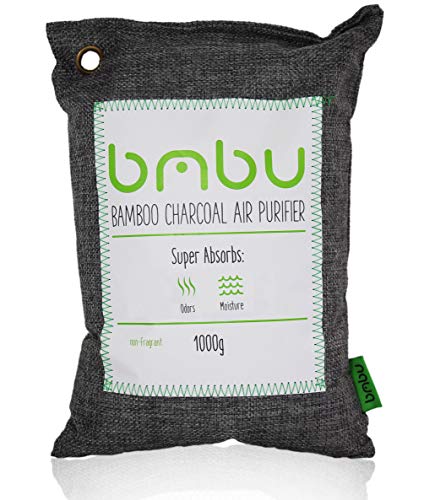
| bmbu bamboo charcoal bag size | 1000g bag (feed: charcoal-air-purifier/best) |
| hadlook ozone generator output | rated 48,000 mg/h (feed: ionic-air-purifier/best-r) |
HEPA: the mechanical baseline most purifiers build on
HEPA filters trap airborne particles mechanically rather than chemically, and the EPA defines the standard as capturing at least 99.97% of particles at 0.3 microns, the size that's hardest to catch.
Shopping for a specific model? See our air purifier buying guide — 10 models compared on the specs that decide it.
HEPA stands for "high efficiency particulate air" filter, a term the U.S. Department of Energy defined and the EPA now uses to set the bar for portable air cleaners. Particles smaller or larger than 0.3 microns get trapped at even higher rates, so that figure represents the worst case rather than a typical result. The filter itself is a dense, pleated mesh; air is pushed through it and particles get physically stuck, which is a different job than absorbing gas or killing anything living.
In practice, that mechanical design shows up across the HEPA lineup: Levoit's Vital 200S-P pairs a washable pre-filter with an AHAM Verifide HEPA stage, while VOOPNU markets an H13 triple-layer filter and MOOKA runs an H13 true HEPA stage behind a pre-filter and carbon layer. AHAM Verifide matters here because it's independent lab testing of the Clean Air Delivery Rate (CADR) for smoke, dust, and pollen — a manufacturer can print "HEPA" on a box without it, but the AHAM seal means a lab actually checked the claim. Our HEPA air purifier guide lines up ten of these models side by side if you want to compare specs directly.
True HEPA, H13 grades, and what the Levoit lineup shows
"True HEPA" and H13 are marketing language layered onto the same EPA-defined efficiency bar, and a brand lineup like Levoit's shows how that label typically travels with AHAM Verifide certification and coverage specs rather than a separate physical standard.
There isn't a second, stricter government filter class waiting behind the word "true." Manufacturers add "true HEPA" or reference an H13 grade to reassure buyers they meet or exceed the EPA's 99.97%-at-0.3-micron bar, but the term itself isn't independently regulated the way AHAM Verifide testing is. That's why the certification badge, not the adjective, is the detail worth reading twice.
Levoit's own catalog is a useful case study. The Vital 200S-P is AHAM Verifide, covers up to 1,875 square feet, and pairs a washable pre-filter with a built-in air quality monitor and a HEPA sleep mode. The Core 400S-P scales down slightly to 1,733 square feet but adds smart WiFi and auto mode around a 3-in-1 filter, and Levoit states it has been independently tested for performance, efficiency, and safety under that same AHAM Verifide program. Even the compact Core Mini-P sticks to the formula at desktop size: a 3-in-1 filter with an aroma pad, AHAM Verifide certified, aimed at smoke, pet dander, odor, and dust from a 2.2-pound unit. None of the three needs the word "true" to prove its filtration grade; the AHAM seal already does that. Our Levoit lineup breaks these models down individually.
Activated carbon and charcoal filters handle what HEPA can't
Activated carbon and bamboo charcoal adsorb gas molecules and odors, a job mechanical HEPA fiber cannot do because gas molecules pass straight through a particle filter regardless of pore size.
A HEPA filter is built to intercept solid and liquid particles. Gas molecules, including the ones responsible for cooking smells, smoke odor, and many volatile organic compounds, are small enough to slip through that same mesh untouched. Activated carbon solves a different problem: its surface is riddled with microscopic pores that gas molecules stick to, a chemical process called adsorption rather than filtration. That's why odor control and particle control are genuinely separate jobs, even when a single purifier appears to do both.
The charcoal category shows both ends of that idea. Passive products like the bmbu 1000g bamboo charcoal bag or the Moso Natural 200g air-purifying bag carry no motor or replaceable HEPA filter at all; they're just charcoal doing adsorption on its own, marketed for enclosed spaces like a car, closet, or RV. Powered purifiers in the same category, including entries from Levoit and MOOKA, add an activated carbon stage behind the HEPA layer specifically to catch what the particle filter leaves behind. Our charcoal air purifier guide compares both approaches side by side.
Ionic and ozone-generating types of air purifiers work without a filter at all
Ionic and ozone-generating purifiers charge airborne particles or react with the air chemically instead of pulling it through a filter, and the EPA warns that some models produce ozone at levels well above what's considered safe indoors.
An ionizer emits charged particles into the room; those ions attach to dust and other airborne matter, making it heavier so it falls out of the air onto furniture and floors rather than getting trapped in a cartridge. That's the mechanism behind products like the Ionic Pro Compact Air Purifier Tower, which advertises that you'll "never replace filters," and the Clarifion Air Ionizer, a filterless plug-in device using negative-ion technology. A true ozone generator goes further and deliberately produces ozone gas, which is what hadlook's Ozone Generator does at a rated 48,000 mg/h output, marketed across cars, basements, and industrial spaces.
The EPA's own testing found ozone generators can badly overshoot safe exposure even when used as directed: one unit rated for a 3,000-square-foot room produced 0.50 to 0.80 ppm of ozone in a 350-square-foot room, five to ten times the EPA's 0.08 ppm outdoor health standard, and the agency links that kind of exposure to chest pain, throat irritation, and worsened asthma symptoms. Not every ionic product carries that risk; Vedawind's small ionic purifier specifically markets itself as ozone-free, which is exactly the label to look for if you want the charged-particle mechanism without the ozone byproduct. Our ionic air purifier guide covers both ozone-generating and ozone-free models so you can see which is which.
UV-C light targets living things, not dust
Ultraviolet-C light is sometimes added to a purifier to damage the DNA of bacteria and viruses passing through the unit, but it does nothing to particles like dust, pollen, or pet dander, which is why it almost always rides alongside a HEPA or carbon stage instead of working alone.
UV-C is a specific band of ultraviolet light capable of damaging the genetic material of some microorganisms as air passes close to the bulb. It's a germicidal tool, not a capture tool: light doesn't grab a dust particle or a strand of pet hair, so a UV-C stage does nothing to the particulate load in a room. Its usefulness also depends heavily on exposure time and distance from the lamp, which is why a brief pass through a fast-moving airstream does less than sitting directly under a fixed germicidal light.
Because of that narrow job, UV-C is essentially always a secondary feature bolted onto a purifier that already handles particles through HEPA filtration and odors through activated carbon. None of the products in this cluster's feed data lean on UV-C as a primary mechanism, and that tracks with how the technology is generally marketed: as a bonus claim on the box, not the reason to buy the unit.
Two brand systems that combine mechanisms
Shark and GermGuardian both build purifiers around more than one mechanism in a single housing, pairing filtration with sensors or with a second filter material rather than leaning on one technology alone.
Shark's Air Purifier (the NeverChange Max line) pairs an Anti-Allergen NanoSeal filter, which the brand says captures 99.98% of large, small, and micro-sized particles, with a CleanSense IQ display that shows air quality changing in real time. It's rated for rooms up to 1,300 square feet and is built around a NeverChange filtration design meant to cut down on how often the filter itself needs swapping. That combination of a particle filter plus live sensor feedback is a different bet than a plain HEPA cartridge: you're paying as much for the display telling you what's happening as for the filter itself. Our Shark air purifier guide has the full spec rundown.
GermGuardian's air purifiers, including the AC4300BPTCA, AC4820, AC4825, AC4825E, AC4825W, AC4850PT, AC4870, and AC4900CA models, run on what the replacement-filter market calls a "Filter B" cartridge, and multiple aftermarket brands (isinlive, Pulluty, Cabiclean, Dreduxun, FFAC) sell four-pack and two-pack versions built specifically to fit those units. Filter B pairs a HEPA filter with activated carbon pre-filters in one piece, which is the HEPA-plus-carbon combination described earlier in this article, just packaged as a single swap-out part instead of two separate stages. Our GermGuardian air purifier guide has more on that model range.
