How to clean a grill, and why it matters
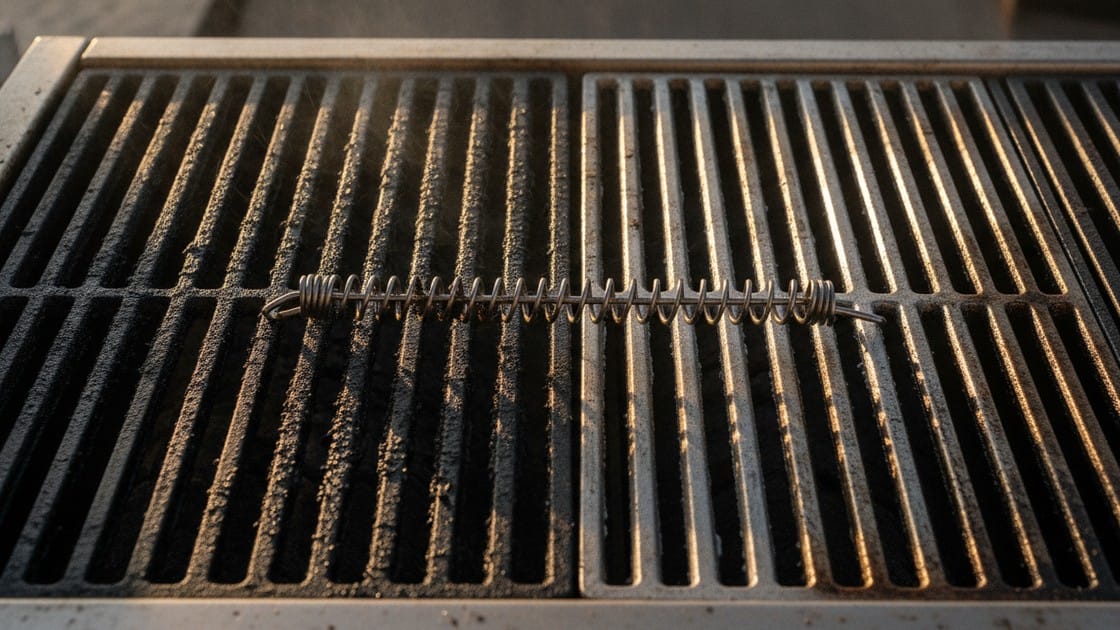
- Scrape the grates while they are still hot, straight after cooking.
- Empty and scrape the grease tray on a schedule, not when you remember.
- The grill had not been cleaned in about one fifth of grill fires.
- Wire brushes shed bristles that end up in food, and that has sent people to hospital.
- A rolled foil ball, a bristle-free scraper or a wooden scraper does the same job safely.
Unplug the unit before any cleaning or filter work.
Burn it off
After cooking, close the lid and run the grill at high heat for about ten minutes.
Scrape while hot
Work along the bars with a bristle-free scraper or a foil ball held in long tongs.
Wipe the bars
Run a damp cloth or paper towel over the grate with tongs to lift anything loose.
Oil cast iron grates
Add a thin coat of cooking oil so the metal does not rust between cooks.
Empty the grease tray
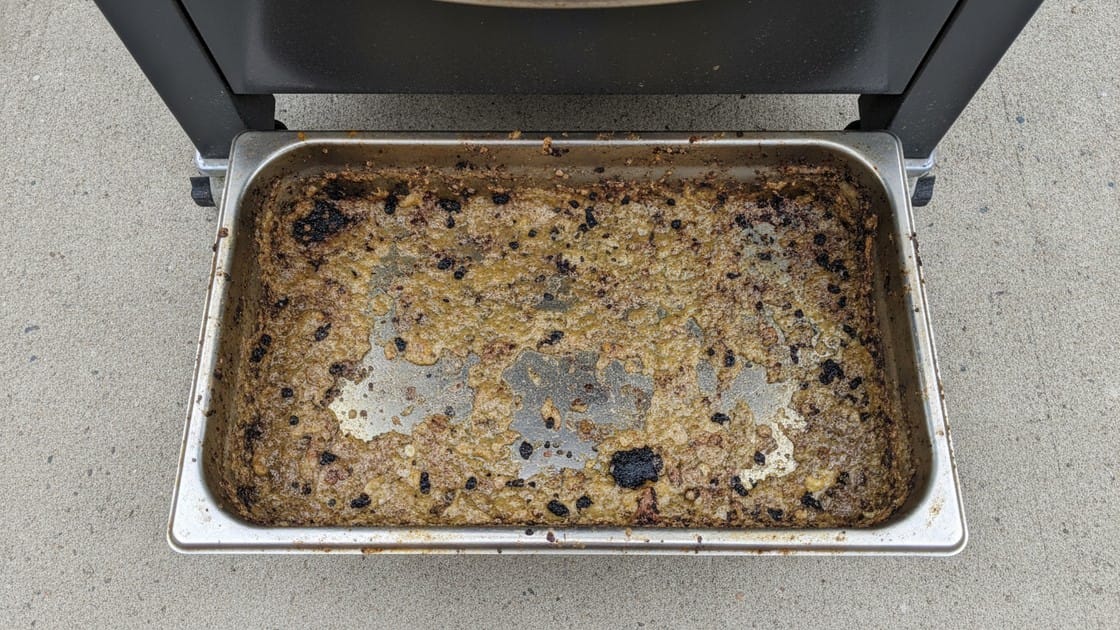
Pull the tray, scrape it into the bin and wash it in hot soapy water two or three times a season.
Clear the burners
With the gas off, brush the burner tubes along their length so the ports stay open.
Check before cooking
Look across the grate for stray bristles or carbon lumps before the food goes on.
| Quick Facts | |
|---|---|
| After every cook | Burn off 10 minutes, then scrape hot |
| Deep clean cadence | 2 to 3 times per season |
| Grills not cleaned in | About 20% of grill fires (NFPA, 2020-2024) |
| Gas grill home fires | 9,235 per year on average (NFPA, 2020-2024) |
| Grill injuries treated | 21,682 emergency room patients per year (CPSC data via NFPA) |
| Wire bristle ED visits | Estimated 1,698 across 2002 to 2014 |
| Most common bristle injury site | Oropharynx, 53.4% of cases |
| Safer tools | Foil ball, bristle-free coil scraper, wooden scraper |
How to clean a grill after every cook
Run it hot for ten minutes to carbonise the residue, then scrape the grates while they are still hot.
The easy version takes almost no effort if you do it at the right moment. Right after the food comes off, close the lid and leave the heat high for about ten minutes.
What that does is turn everything stuck to the bars into dry, brittle carbon. Sticky residue is hard to shift. Carbon flakes off. So the burn-off is not about sterilising anything, it is about changing the mess into something a scraper can remove.
Then scrape the bars while they are still hot. Cold grease sets like candle wax and grips the metal. Hot grease has not set yet.
Finish by wiping the bars with a cloth or paper towel held in long tongs, and then a light coat of cooking oil if the grates are cast iron. That is the whole routine, and doing it every time is what stops the deep clean from becoming a two hour job.
The grease tray is the part that starts fires
Fat collects below the grates, and built-up fat is the leading contributing factor in grill fires.
Everything you scrape off the bars, plus everything that dripped during cooking, ends up somewhere below. On a gas grill that is the burner covers and the grease tray. On a kettle it is the ash catcher and the bowl.
This is where the real risk sits. The National Fire Protection Association reports that the grill had not been cleaned in roughly one fifth of grill fires, and its own first maintenance instruction is to remove grease or fat buildup from the grills and in the trays below the grill.
Think about what that layer is. It is rendered animal fat, dried into a mat, sitting directly over a burner. It has a flash point like any other fat. On a hot day, with the lid closed and the burners running, it eventually reaches it.
Pull the tray out, scrape it into the bin, and wash it with hot soapy water. Do the same for the metal covers over the burners. Two or three times a season is enough for most households, and more if you cook fatty food often.
Why to stop using a wire brush
Wire brushes shed bristles that stick to the grates, transfer to food and get swallowed.
The standard grill brush has a real flaw. Its bristles loosen with age and heat, and a loose bristle left on a grate can end up embedded in food.
This is documented rather than theoretical. A study published in Otolaryngology–Head and Neck Surgery used the Consumer Product Safety Commission's national injury surveillance data and found 43 cases of wire bristle injury between 2002 and 2014, which extrapolated to an estimated 1,698 emergency department visits nationwide. The most common injury site was the oropharynx, the back of the throat, in 53.4 percent of those cases.
The timing is exactly what you would expect. Case counts were highest in June, July and August, peaking in July.
The numbers are small against the number of barbecues held. But the failure mode is nasty, it is invisible before it happens, and it is completely avoidable, which is a poor combination to accept for no benefit.
What to use instead
A tight ball of foil, a bristle-free coil scraper or a wooden scraper cleans grates with nothing to shed.
A crumpled ball of aluminium foil gripped in long tongs does the job and costs nothing. It is abrasive, it conforms to the bar shape, and there is nothing on it that can detach and stay behind.
Bristle-free brushes replace the wire with a tight metal coil or a solid scraping edge. Wooden grate scrapers work too, and they wear a groove matching your own bars after a few uses.
Whatever you use, add one habit. Look at the grate before the food goes on. A quick visual check across the bars catches a stray bristle, a lump of carbon or a patch you missed, and it takes two seconds.
If you are still using a wire brush, inspect it. Bend the bristles back with a cloth, and if any come away, replace it. Then wipe the grate with a damp cloth after brushing, which lifts anything loose that the brush left behind.
Where the grill stands matters as much as how clean it is
Nearly a quarter of grill structure fires start on a balcony or open porch, so placement is half the job.
A spotless grill in the wrong place is still a hazard, and the fire statistics make that plain. Nearly one quarter of grill structure fires start on an exterior balcony or open porch. Another 8 percent begin when an outside wall catches, and 3 percent start with structural framing.
So the placement rule is specific. Put the grill well away from the house, away from deck railings, and out from under eaves and overhanging branches. Those last two are the ones people miss, because a grill can sit a sensible distance from a wall and still be directly beneath something that burns.
Three more habits come from the same guidance. Keep children and pets at least three feet from the grilling area. Open the lid of a gas grill before lighting it, so gas cannot collect under a closed hood. Never leave a grill unattended while it is running.
Charcoal adds one of its own. Let the coals cool completely, then dispose of them in a metal container, and only ever use charcoal starter fluid, never added to a fire that is already lit.
The dangerous moment is putting it away. Coals take a long time to burn out completely, and they give off carbon monoxide the whole time. The Consumer Product Safety Commission is explicit that a warm grill must not be brought into a camper, because fumes can quickly fill the air even with the lid on, and that it is best to empty grills before storing them. A garage or a shed is the same enclosed space. Coals are out when they are cool to the touch, and a grill that still feels warm stays outside.
The deep clean, and how often
Two or three times a season, strip the grill down to the burners and clear every surface fat can collect on.
Start cold and with the gas disconnected. Lift the grates out and soak them in hot soapy water while you work on the rest.
Take out the metal covers above the burners and scrape both sides. Brush the burner tubes gently along their length so the gas ports are clear, never across them, since forcing debris into a port blocks it. Blocked ports give uneven flames and cold spots, which is usually the real reason a grill stops getting hot.
Scrape the inside of the lid. The flaking black material there is carbonised smoke rather than paint, and it belongs in the bin rather than on your food.
Empty the grease tray, wash it, and check the firebox floor underneath for anything that missed it. Then reassemble, reconnect, and run the grill hot for fifteen minutes before cooking. While the gas is off is also the moment to check the hose, which our guide to gas grills covers, and the same schedule applies whether you run charcoal or gas. Model differences are set out in our grill buying guide and the grill types explainer.
Frequently asked questions
How often should you clean your grill?
How do you clean a grill without a brush?
Are wire grill brushes actually dangerous?
Can I use oven cleaner on grill grates?
Why is my grill not getting hot enough?
Can I store a charcoal grill in the garage after cooking?
Sources & references
- Grilling Safety Facts and Resources — National Fire Protection Association
- Epidemiology of Wire-Bristle Grill Brush Injury in the United States, 2002-2014 — Otolaryngology–Head and Neck Surgery (Baugh TP, Hadley JB, Chang CWD), DOI 10.1177/0194599815627794
- Home Grill Fires report — National Fire Protection Association Research
- Charcoal Grill Safety Tips (CPSC 465) — U.S. Consumer Product Safety Commission
- Charcoal (Carbon Monoxide Information Center) — U.S. Consumer Product Safety Commission