Robotic vs suction pool cleaner
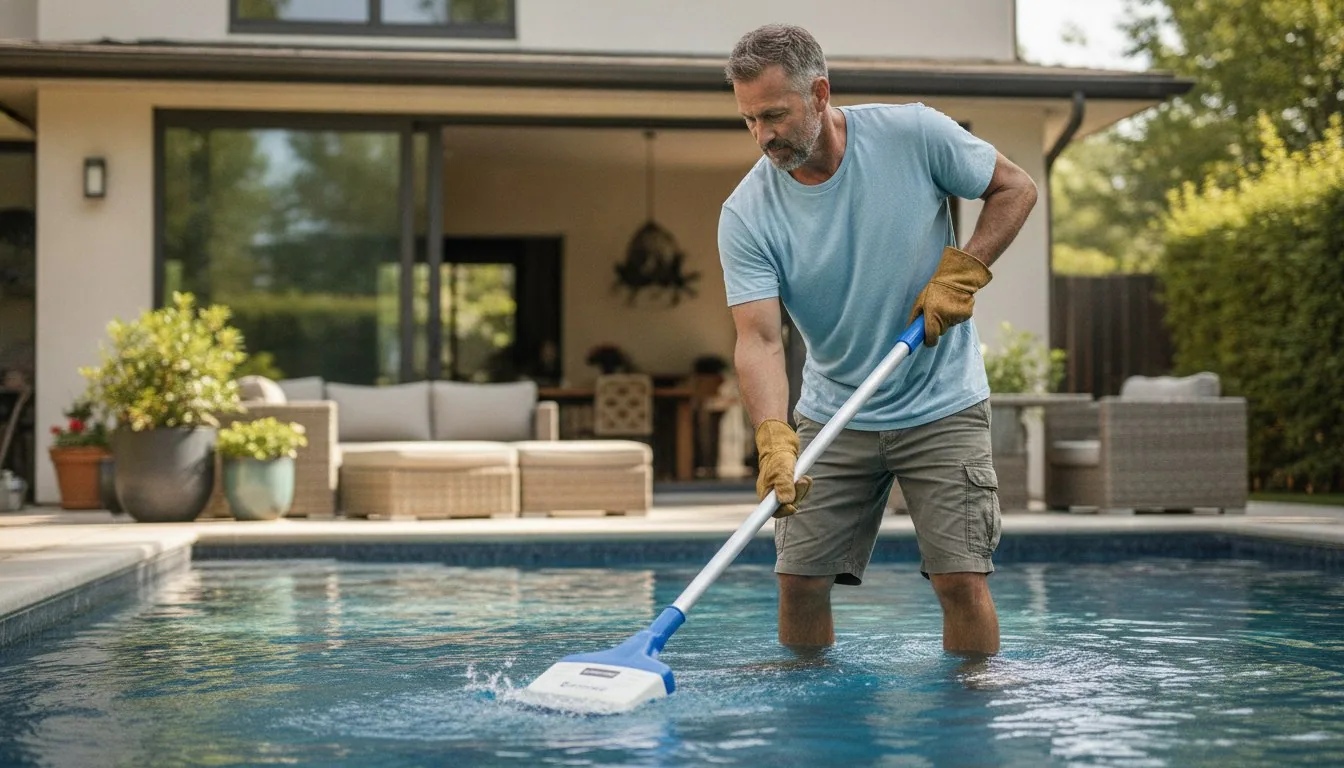
Every pool eventually forces the same fork in the road: automate the vacuuming, or keep leaning on the equipment you already own. The two machines that answer that question work in genuinely different ways, and the spec sheets rarely explain why one barely touches your electric bill while the other quietly taxes a pump that's already running. Picking the wrong one won't ruin your pool - it mostly means redoing this research next year.
The robotic pool cleaner vs suction pool cleaner choice comes down to how much of the work you want automated. Robotic units clean floors, walls, and waterlines while drawing far less electricity; suction-side cleaners typically sit in the budget tier and lean on your existing pump, trading some wall coverage and running efficiency for mechanical simplicity.
| Spec | Robotic pool cleaner | Suction pool cleaner |
|---|---|---|
| Cleaning coverage | Floor, walls, and waterline in most current models | Mostly the pool floor; wall climbing only on some models, and only at the right flow rate |
| Power source | Self-contained motor via a low-voltage transformer, independent of the pool pump | Draws suction from the pool's main or a dedicated booster pump |
| Typical annual energy draw | About 197 kWh/year in independent lab testing | About 1,675-2,989 kWh/year depending on filter-pump or booster-pump setup |
| Navigation | Onboard sensors or gyroscopes plan and steer the cleaning path | Moves passively, driven by water flow and hose drag |
| Mechanical complexity | Motors, circuit boards, and batteries; repairs usually need OEM parts | Hoses, diaphragms, and wheels; simple parts widely stocked |
| Retrieval and handling | Lifted out by hand after each cycle; roughly 8.6-24.6 lb across feed-tracked models | Stays attached to the hose; no wet unit to lift out |
| Setup requirement | Needs a nearby power outlet; no plumbing changes | Needs adequate pump flow and a skimmer or suction-line connection |
| Quick Facts | |
|---|---|
| Robotic cleaner weight range (feed) | 8.6-24.6 lb |
| Finest robotic filtration mesh (feed) | 3 microns (Aiper Scuba S1 dual-layer filter) |
| Longest suction cleaner hose reach (feed) | 39 ft (Polaris Lynx) |
| CPSC suction-entrapment incidents, 1990-2004 | 74 body entrapments (13 deaths), 43 hair entanglements (12 deaths) |
How a robotic pool cleaner and a suction pool cleaner actually work
A robotic pool cleaner is a self-contained machine with its own motor and filter; a suction pool cleaner has no motor of its own and instead borrows suction from your pool's existing pump through a hose.
Shopping for a specific model? See our pool cleaner buying guide — 10 models compared on the specs that decide it.
A suction-side cleaner is essentially a smart hose attachment. You connect it to your skimmer or a dedicated suction port, and the vacuum your pool pump already generates pulls the unit around the floor while debris travels back through the plumbing into the pool's own filter or basket. Hayward's Poolvergnuegen line covers a pool floor using patented turbine vanes and a set of pre-programmed steering reversals, all without a single onboard chip. Zodiac's MX6 pairs a cyclonic turbine with tread-like X-Trax that let it climb walls, but only once the flow rate is dialed in correctly - a detail that matters more than most buyers expect.
A robotic pool cleaner is the opposite: a self-contained unit that charges from a low-voltage transformer at a standard outlet, then runs its own brushless motors independent of the pool's pump entirely. Aiper's Scuba S1 steers itself with 11 high-precision sensors and a dual-path algorithm, while WYBOT's C1 uses gyroscope-based navigation to prioritize walls and waterlines before dropping to the floor. Debris goes into an onboard filter basket rather than the pool's main filtration system, which is the detail that drives almost every other difference in this comparison.
Suction side vs robotic pool cleaner: cleaning coverage that actually matters
Suction cleaners are built mainly for pool floors and occasionally walls; robotic cleaners are engineered to cover floors, walls, and the waterline in the same cycle.
Coverage is where the two categories diverge the most. A suction cleaner like the Polaris Lynx works a 15-inch-wide path and reaches with 39 feet of hose, which is plenty for a large in-ground floor, but it's still a floor-first tool - wall climbing on models like the Zodiac MX6 is conditional on flow rate, not guaranteed. Debris capture also depends on whatever filter your pool already runs, since a suction cleaner has no filtration of its own; anything smaller than your pool filter's rating just recirculates.
Robotic units carry their own filtration and tend to advertise multi-zone claims for a reason. The Aiper Scuba S1's dual-layer filter pairs a 3-micron ultra-fine layer with a 180-micron standard layer specifically so it can catch both leaves and fine sediment across the floor, walls, and waterline in one pass. Beatbot's Sora 10 pushes 6,800 GPH of suction through a 5-liter basket rated to hold roughly 650 leaves before it needs emptying, and iGarden's KN Series spreads suction across three brushless motors for a combined 17,000 LPH. None of that capacity matters if your pool is small and lightly used, but it's real headroom for a yard with mature trees.
Energy use and running costs, in tiers rather than dollar figures
Independent lab testing found robotic pool cleaners use a small fraction of the electricity that suction-side setups draw from the pool's pump, because the robot supplies its own low-voltage motor instead of running the main or booster pump.
The clearest data point here doesn't come from a manufacturer. A PG&E laboratory study, cited in ENERGY STAR's pool pump guidance, found that a robotic cleaner used about 197 kWh a year, while a cleaner running off the pool's filter pump used roughly 1,675 kWh, and one running behind a dedicated booster pump used about 2,989 kWh. That's not a marketing number - it's the practical result of a robot needing only its own small motor for a few hours, versus a suction cleaner needing the entire pump system at full output for the same stretch.
The spec sheet rarely puts it this bluntly, but that gap is the single biggest long-term difference between the two categories, and it holds regardless of which model you buy. It's also why suction-side cleaners tend to sit in the budget purchase tier while capable robotic units skew toward mid-range and premium: the robot is doing more electrically and mechanically inside its own housing. Runtime varies by design, too - a small handheld unit like the AQUAFYSH spa vacuum runs about 70 minutes per charge, a different use case entirely from an automatic in-ground cleaner running for as long as the pump stays on.
Installation and the maintenance routine each one demands
Suction cleaners hook into your existing plumbing and lean on the pool's own filter for upkeep; robotic cleaners need nothing but an outlet, but you handle their onboard filter and their weight yourself.
Getting a suction cleaner running means attaching its hose to a skimmer or a dedicated suction line and confirming your pump can supply enough flow - some older suction-side designs assumed a booster pump, though newer ones like the Polaris MAXX advertise an energy-efficient hydraulic design built to work with low-speed and variable-speed pumps alike. Ongoing maintenance mostly means keeping the pool's own skimmer basket and filter clear, since that's where the debris actually ends up, plus an occasional check of the hose for kinks or wear. That's the whole job, really - no batteries, no onboard basket to rinse.
A robotic cleaner skips the plumbing step entirely - you plug in the transformer, drop the unit in the water, and it's running. What it asks for instead is hands-on filter care: emptying and rinsing the onboard basket after every session, easier on larger-capacity models and more frequent on smaller ones. Weight is the part buyers underestimate; across the robotic models tracked in our roundups, units run anywhere from about 8.6 lb up to roughly 24.6 lb, and every one of those pounds comes out of the pool dripping wet at the end of a cycle. Our robotic pool cleaner guide breaks weight and basket capacity down model by model if that's the deciding factor for you.
Suction pool cleaner vs robotic pool cleaner: matching pool size and type
Suction cleaners scale well from small spa attachments to large in-ground floors; robotic cleaners are generally built for bigger pools or heavier leaf loads where independent navigation and larger onboard baskets pay off.
Pool size and type steer this decision more than most people plan for going in. On the suction side, the AQUAFYSH vacuum is built for hot tubs and small above-ground pools, with a spa-cleaning head that works in water as shallow as 0.6 feet, while Hayward's Poolvergnuegen is sized for in-ground pools up to 16 by 32 feet. That's a genuinely wide range within one category, and matching the specific model to your pool matters more than assuming all suction cleaners are interchangeable.
Robotic units lean toward the larger or messier end of the spectrum. Beatbot's Sora 30 is rated for pools up to 3,229 square feet, and ECOVACS's Ultramarine P1 covers up to 1,937 square feet - both built around the assumption that a bigger onboard basket and independent navigation will go longer between manual intervention. If your pool is a modest above-ground rectangle with light leaf litter, robotic or suction pool cleaner both get the floor clean, and it's honestly a budget call at that scale. Our suction pool cleaner guide lines up the models built specifically for that smaller, lower-maintenance job.
Safety and the suction fittings both categories share
Suction entrapment is a hazard tied to uncovered pool drains, not to attaching a suction-side cleaner hose to a skimmer, but the same engineering standard protects the fittings either device might connect to.
Two things get conflated online, and they shouldn't be: a suction-side pool cleaner and the suction-entrapment hazard tied to a pool's main drain are not the same risk. A U.S. Senate committee report on the Virginia Graeme Baker Pool and Spa Safety Act found that between 1990 and 2004, the Consumer Product Safety Commission logged 74 body-entrapment incidents, 13 of them fatal, and 43 hair-entanglement incidents, 12 of them fatal, with the trapping force at a blocked outlet reaching as much as 700 pounds per square inch. That's specifically about uncovered or blockable drains, and it's why the ANSI/PHTA/ICC-16 standard now governs suction outlet fitting assemblies - the covers and sumps a compliant pool is required to have regardless of what cleaner you attach.
A suction-side pool cleaner typically hooks into a skimmer or a separate dedicated suction line, not the main drain those incidents involve, but confirming your pool's suction ports are compliant before adding any suction-based accessory to an older setup is still a reasonable check. And neither cleaner type substitutes for supervision. The CDC lists drowning as the leading cause of death for children ages 1 to 4, with most of those deaths happening in home pools, and finds that a four-sided isolation fence cuts a child's drowning risk by 83 percent compared with a yard-perimeter fence. A cleaner working away at midnight doesn't change any of that.
Robotic or suction pool cleaner: which to actually buy
Buy a suction cleaner if your pool is small to mid-size and you're fine with the pool's own filter doing the collecting; buy a robotic cleaner if the pool is large, leaf-heavy, or you want the lowest possible hands-on time.
Strip away the marketing and the decision is fairly mechanical. A suction-side cleaner is the right fit for a smaller or mid-size pool where you don't mind the debris ending up in your existing filter and you're fine sitting in the budget purchase tier rather than mid-range or premium. A robotic cleaner earns its keep on a larger pool, a yard that drops a lot of leaves, or for an owner who wants wall and waterline coverage without adding a booster pump to the electric bill. Dolphin advertises more than 40 years behind its pool-cleaning lineup, and that legacy runs almost entirely through the robotic column; if that's the specific name you're after, our best Dolphin pool cleaner roundup lines up its current models by coverage, filtration, and weight.
Neither purchase is permanent in the way a pool deck is. Suction hoses crack, robotic brushes wear down, and filters of both kinds eventually need replacing - that's true of the whole category, not a flaw specific to one side. What actually changes the long-run math is the one variable most buyers skip past at the showroom: how much electricity the unit draws every time it runs, for as many seasons as you own the pool.
Robotic cleaners cover more surface area and run on a fraction of the electricity, which is hard to argue with over several pool seasons. Suction cleaners answer back with mechanical simplicity, easier DIY repairs, and a lower entry tier, a legitimate trade-off for a smaller pool or a tighter budget.
Frequently asked questions
Is a robotic pool cleaner better than a suction pool cleaner?
Do suction pool cleaners work with any pool pump?
Can a robotic pool cleaner replace my pool's pump and filter system?
Is it safe to add a suction-side pool cleaner to an older pool?
How often do you need to empty a robotic pool cleaner's filter?
Sources & references
- Pool Pumps — ENERGY STAR (U.S. EPA / U.S. Department of Energy)
- S. Rept. 110-182 - Virginia Graeme Baker Pool and Spa Safety Act — U.S. Senate Committee on Commerce, Science, and Transportation (via govinfo.gov)
- Risk Factors for Drowning — Centers for Disease Control and Prevention (CDC)