Griddle vs grill: which one you actually cook on
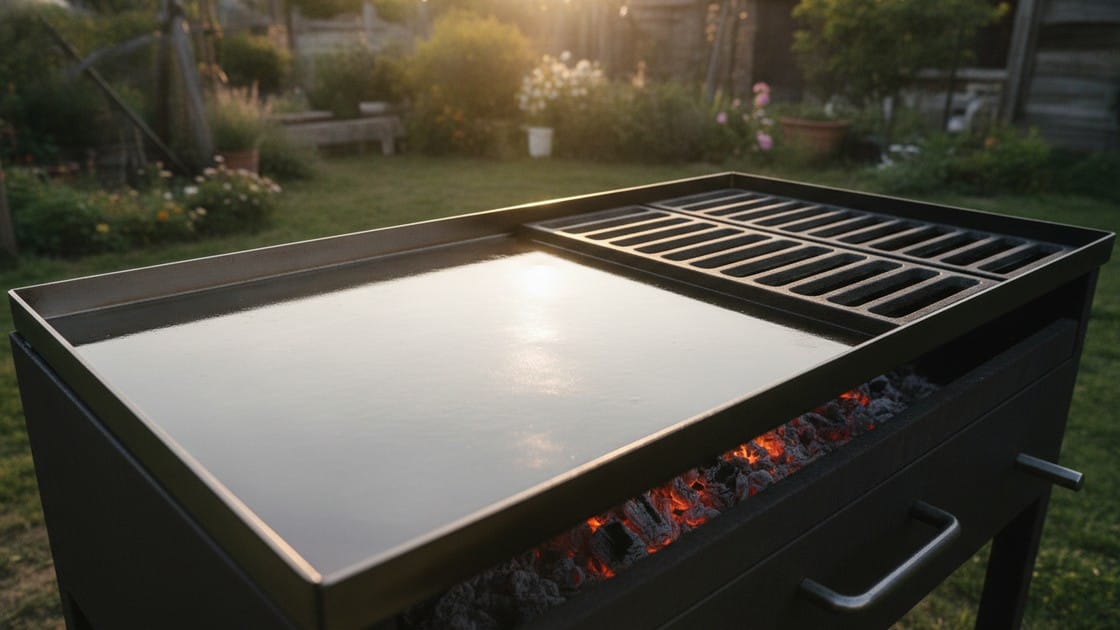
Both sit outside. Both run on gas. Both get hot enough to sear. The difference is what the food sits on, and that one difference changes what you can cook, how it tastes, and how much of dinner ends up in the fire.
The griddle vs grill choice comes down to the cooking surface. A griddle is a solid steel plate, so fat stays under the food and nothing falls through. A grill uses spaced bars over the fire, so fat drips down, burns, and rises back as smoke.
| Spec | Griddle | Grill |
|---|---|---|
| Cooking surface | Solid steel plate with no gaps | Spaced bars with open fire below |
| Where the fat goes | Stays on the plate around the food | Drips into the fire and burns |
| Smoke flavour | None; the drip-to-flame loop is broken | Yes; burning drippings return as smoke |
| Small and loose foods | Cooks eggs, shrimp, onions and rice directly | Needs a basket or foil tray |
| Thick cuts of meat | Sits in its own rendered fat | Fat escapes and radiant heat reaches the sides |
| Heat contact | Whole underside at once, giving an even crust | Bars only, giving marks and browning between them |
| Cleaning | Scrape and wipe hot every time, then re-oil | Grates plus the grease tray underneath |
| Rust risk | Bare steel spots if stored without a film of oil | Lower; grates are usually coated or cast iron |
| Quick Facts | |
|---|---|
| Best for small foods | Griddle |
| Best for thick cuts | Grill |
| Grills not cleaned in | About 20% of grill fires (NFPA, 2020-2024) |
Griddle vs grill: one surface is solid, the other is not
A griddle cooks on an unbroken steel plate. A grill cooks on spaced bars with open fire below.
Start with what your food is touching. On a grill, it rests on metal bars with gaps between them. Under those gaps is the fire. On a griddle, it rests on a flat steel plate, and the fire sits under the plate rather than under the food.
That single change decides almost everything else. Gaps let fat and juice fall through. A solid plate keeps them where they landed. So the griddle vs grill decision is not really about brand or price. It is about whether you want the drippings gone or kept.
The heat also arrives differently. Bars touch only a fraction of the food, so most of the cooking is done by hot air and by the glow of the fire. A plate touches the whole underside at once. That is why a burger picks up dark bar marks on a grill and an even brown crust on a griddle.
Where the flavour difference actually comes from
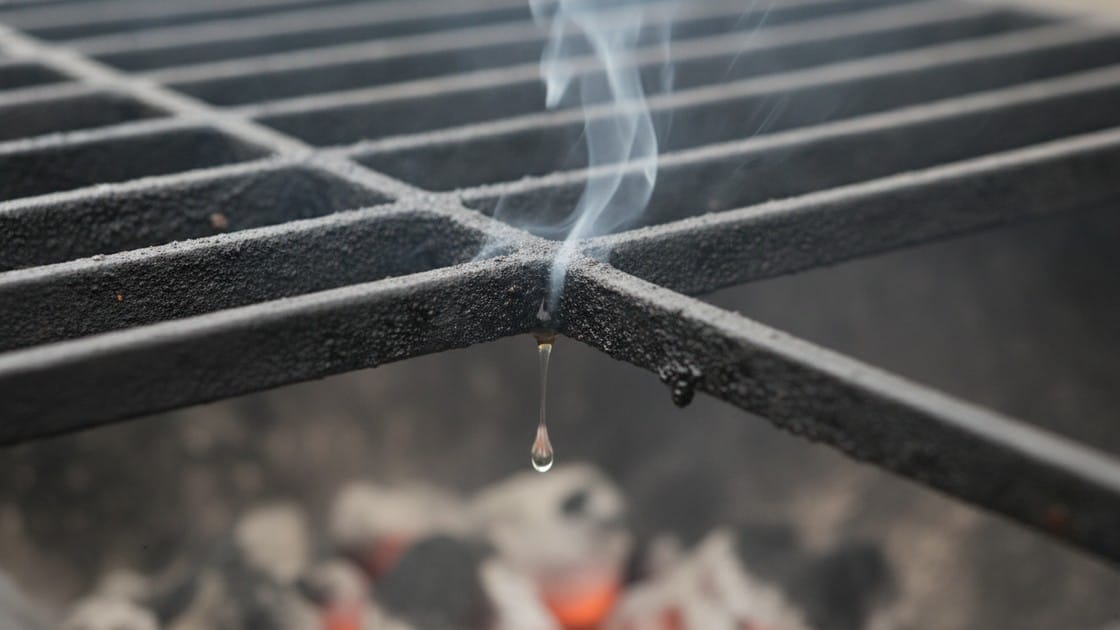
Grill flavour is smoke made from your own food's fat hitting the heat below.
People call it a charcoal taste, or a barbecue taste. The mechanism is more specific than that. The National Cancer Institute describes it plainly: fat and juices from meat cooked over an open fire drip down, cause flames and smoke, and that smoke then sticks to the surface of the meat.
So the flavour is a loop. The food loses fat. The fat burns. The smoke comes back up and lands on the food. Take away the gaps and you break the loop. On a griddle the fat has nowhere to fall, so it pools around the food and fries it instead.
Neither result is better. They are different dishes. A steak off the grates tastes of smoke. The same steak on a griddle tastes of browned beef and butter, closer to what a heavy pan gives you indoors.
There is a health angle worth knowing too. Those smoke compounds are polycyclic aromatic hydrocarbons, and the same NCI page notes that keeping meat out of direct flame is one way to reduce them. A griddle does that by design.
What each surface is genuinely good at
Griddles win on small, loose and wet foods. Grills win on thick cuts and anything you want smoky.
Think about what falls through a gap. Sliced onions fall through. Shrimp fall through. Rice, eggs, chopped peppers, smash burgers, pancakes, anything diced. On a grill these need a basket or a foil tray, which is really an admission that you wanted a flat surface.
A griddle handles all of it directly. It also handles the food you would never put on grates, like eggs for a crowd or a pile of hash browns. Breakfast is the clearest case. No one grills a pancake.
Now think about a thick steak or a rack of chicken thighs. Those want the opposite. They want fierce radiant heat, room for fat to escape, and the smoke that comes back with it. Bars give all three. A plate would leave them sitting in their own rendered fat.
The dividing line is size and moisture. Small and wet goes on the plate. Big and fatty goes on the bars.
Cleaning, and the part nobody mentions in the shop
A griddle is scraped and wiped while hot. A grill needs the grates and the tray underneath dealt with separately.
A griddle cleans the way a pan does. Scrape the surface while it is still hot, push the mess into the catch cup at the corner, wipe it, then put a thin film of oil back on. That film matters. Bare steel rusts, so a griddle that is stored dry and uncoated will spot.
A grill has two jobs instead of one. The bars need the burnt residue taken off, and the tray below needs the grease taken out. That second job is the one people skip, and it is not cosmetic. The National Fire Protection Association reports that the grill had not been cleaned in roughly one fifth of grill fires.
So the honest comparison is not that one is cleaner. It is that a griddle asks for a small effort every time, and a grill lets you postpone the effort until it becomes a hazard.
What does not change when you switch surfaces
The safe internal temperatures are identical, and a thermometer is still the only way to check them.
It is easy to assume a flat plate cooks more gently and needs different rules. It does not. Meat is meat, and the USDA figures apply whichever surface it sat on.
Whole cuts of beef, pork, veal and lamb still go to 145 degrees Fahrenheit with a three minute rest. Ground meat still goes to 160. Poultry still goes to 165. A smash burger on a griddle is ground meat, so it takes the higher number even though it looks thin enough to be obviously done.
The USDA also warns that food on a grill browns quickly on the outside, which is why a thermometer beats appearance. A griddle makes this worse rather than better, because the whole underside browns evenly and looks finished sooner.
One thing does change. Flare-ups stop. With no gaps for fat to fall through, there is nothing below to catch light, so a griddle removes the sudden flames that char food on grates. What replaces it is a pool of hot fat on the plate, which needs a catch cup that is not already full.
One rule covers both surfaces. Anything burning charcoal or gas is an outdoor appliance, and CPSC warns never to cook with charcoal inside an enclosed space such as a garage or a tent, because carbon monoxide has no smell and can kill. A flat plate does not change that.
Which one to buy
Buy the grill if you cook meat in thick pieces. Buy the griddle if you cook for a crowd or cook breakfast outside. Buy a combination unit if you want both without owning two machines.
Most people should buy the grill first. It does the thing that outdoor cooking exists for, it handles the cuts that are worth cooking outside, and the smoke loop is the reason the food tastes different from what your kitchen produces.
Buy the griddle first if your cooking is volume cooking. Feeding six people breakfast, cooking for children who want smash burgers, or making anything with onions and peppers in it, and the flat plate stops being a novelty.
If you cannot choose, a combination unit is not a compromise. Many gas models take a flat plate over part of the burner set, so you keep bars on one side and a plate on the other. Compare that against a dedicated model in our grill buying guide, and read how the fuel types differ before you settle on gas or charcoal. A half-and-half setup covers nearly every dinner a patio produces.
Buy the grill first if you cook meat in thick pieces, because the smoke loop is the reason food tastes different outdoors. Buy the griddle first if you cook in volume, feed a crowd breakfast, or cook the small loose foods that fall through bars. A combination unit with a plate over part of the burner set is not a compromise, and it covers nearly every dinner a patio produces.
Frequently asked questions
Is a griddle healthier than a grill?
Can I put a griddle plate on my existing grill?
Does food cook faster on a griddle?
Do griddles need seasoning like a cast iron pan?
Can you get grill marks on a griddle?
Sources & references
- Chemicals in Meat Cooked at High Temperatures and Cancer Risk — National Cancer Institute
- Grilling Safety Facts and Resources — National Fire Protection Association
- Grilling Food Safely — USDA Food Safety and Inspection Service
- Charcoal (Carbon Monoxide Information Center) — U.S. Consumer Product Safety Commission